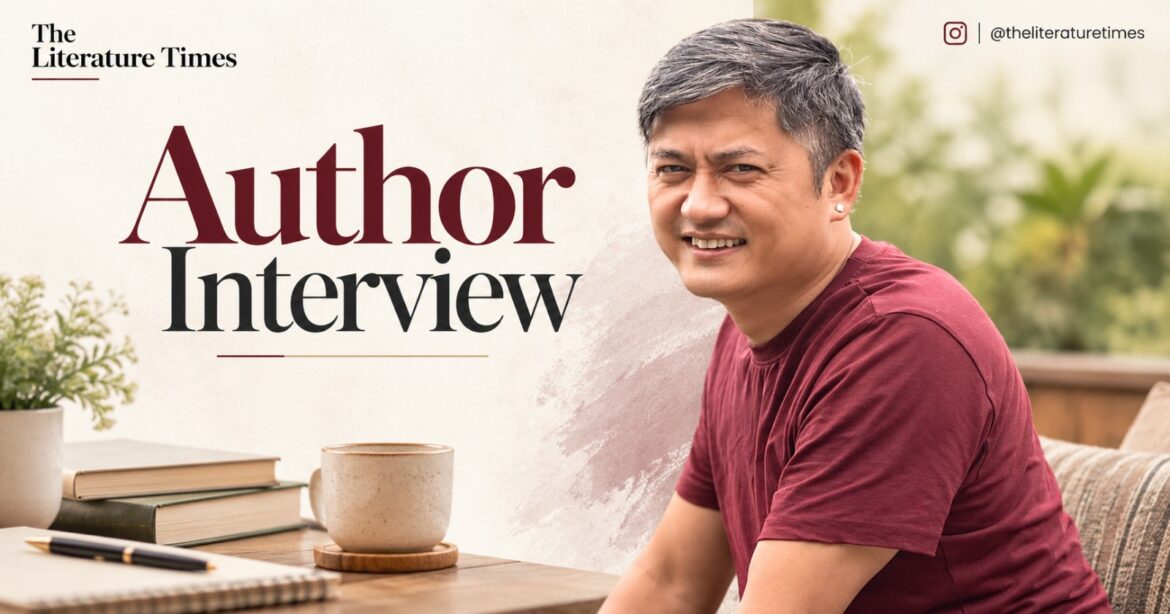
Prasanna Subba grew up in the hills of Darjeeling, an environment that seems to have nurtured his love for stories, music, travel, and observation. A banker by profession for more than a decade, his transferable career has taken him to different places and introduced him to people and experiences that have shaped his perspective. Alongside his professional life, Subba has remained connected to writing and music. He has been part of a band, written songs, and continues to write blogs whenever time permits. His poem “Destroyed and Broken” was also adapted into a song by his band. A keen traveller and reader, Subba enjoys meeting new people, listening to their stories, and recording his experiences through writing. His poetry collection Sunflower and the Moon: The Circle of Life brings together poems exploring love, self, loss, and restitution, reflecting different stages and emotions of the human journey.
The Literature Times: Sunflower and the Moon: The Circle of Life is divided into four sections, Love, Self, Lost and Restitution. What made you choose these four themes to represent the circle of life, and how do you see them connecting with one another?
Prasanna Subba: While working on this book I realised over time that the human emotions and phases are just circles. They keep repeating. It just that they are under different circumstances. Love is the basic human emotion. One always falls in love, not necessarily, but mostly, with another person. Love in different relations- father, mother, siblings, spouse, friend. It is the basic need. No matter how much one tries to conceal it, it is there. All the religion teaches love. Every God and every priests preaches love. The other teaching that is very common is to love the Self. To take care of the Self. You cannot pour from an empty cup. Taking care of self is, maybe, the highest form of love there is. That is how you can love the other person completely. We know that every living person, at a certain point in time, has felt lost. That’s how the third section of the book comes. Losing focus, losing direction, losing the meaning of life. Of all that losing yourself in others is probably the worst feeling. It feels great in the beginning, mind you. But during parting, it is the worst feeling there is. We are here temporarily and we have to part ways with the ones we love, no matter what. Placing “Restitution” in the fourth part of the book was difficult. Not many people find it. It is harder to find restitution than to live with regrets and failure. But this is the very message that I want my readers to understand- maybe restitution hasn’t come for you but it eventually will. Hang on and keep the hope alive. May every loving, selfless and lost soul find restitution sooner than later.
The Literature Times: Some of the poems in the collection date back to 1998, when you were still a student. What was it like revisiting these older poems while preparing the book, and did your understanding of those emotions change with time?
Prasanna Subba: The fact that there are poems which as as old as 25 years, makes it all the more exciting for me. I still know the emotions with which I penned down the words back then, but it is not as heavy or as beautiful as it felt. Now that I have this retrospective view on those days, I can understand the emotions in the real sense of it. Revisiting my old writings always brings back memories like a gentle breeze. There are no more hurricanes. I like to sit with my old writings and go through them regularly. Like I have said before, emotions have phases and they come back to the same person in circles with various intensity till the time he lives. Through these circles one gains experience. Emotion is always attached with someone or something- a subject. Emotions don’t change it wears out or starves to death for that particular subject. Then a new subject of interest appears and then the same emotions come around with new clothes with higher or lower frequency. Emotions are basic they don’t change.
The Literature Times: Your poetry explores emotions such as love, heartbreak, longing, insecurity, pain and healing. Was there a particular personal experience or period in your life that inspired the emotional landscape of this collection?
Prasanna Subba: I would be lying if I say that these poems don’t come from my personal experience. Yes, I have used a bit imagination to make it interesting but most of it comes through personal experiences. To tell you the truth, it’s not a particular experience that has shaped the entire book. These emotions have had a full circle in my life. Now I can say I have experienced all of these. So I am probably qualified to advice that one should sit with their emotions and let it settle down. Restitution doesn’t come through troubled waters. I think the phase during my 10th was what brought a big change in my life. I used to write before that. I thought the good friends we had would part ways post matriculation and then I lost my best friend that year. My first love would leave the abroad for higher studies. It, kind of, closed me to the outer world. It took quite sometime to make good friends again. But emotions come full circle again, don’t they?
The Literature Times: You have also written songs and one of the poems, “Destroyed and Broken,” was turned into a song by your band. How does writing poetry for a book differ from writing lyrics for music, and how do the two forms influence each other?
Prasanna Subba: This was totally not what I intended. I wrote this poem for my friend who was battling drug addiction. He had been in and out of the addiction and almost killed himself too. During a practice session, my friend started this heavy riff on his guitar that sounded nice. I asked him to continue with the music but all I had at that moment in time was this poem in my hand. So, I just hummed along and this is how the song started. Then later, of course, we did some deliberate arrangement and improvisation to make it sound like it is now. I am not an expert to comment on lyrics writing. However, I can tell you this- writing lyrics requires at least basic knowledge of music, rhythm and syllables.
The Literature Times: Your career in banking has involved living in different places and meeting people from varied backgrounds. How have these experiences, conversations and encounters influenced the way you observe people and write about human emotions?
Prasanna Subba: Banking is one profession which touches all the other professions. From farmers to Civil Servants, from Pujaris to Industrialists, we get to meet people from all walks of life. Is it tiring? Yes. Is the job demanding? Yes. Are the working hours long? Yes. But if you are a person who loves interacting with new people and understanding emotions. Banking is the best job. I have been posted to rural places where you won’t find proper vehicles, handling accounts of farmers and unemployed people. I have been posted to urban areas handling accounts of IAS and IPS. All these different exposure has lad me to understand- and I will say it again- emotions are basic human trait. If you can handle your emotion and the emotion of the person in front of you- you are a winner. No matter what. Before dealing with the farmers, I have never known the love for rain and the hate for too much of it. I could see an old grandma walk to the counter and check the bank account for hundredth time. I have never seen hope much like that. I see a painter come and deposit much of his daily wage in the account for his daughters future and then carry a small box of sweet home. I have never seen such care and aspiration. I have seen most feared IPS officer sit and talk to me over a cup of coffee. They have to pretend strong for there subordinates and the public. During all these interactions and meetings I always dug deeper and placed myself in their position which helps me play with those situation more and then understand the emotions.
The Literature Times: The collection touches upon emotions that many readers may experience privately but find difficult to express. While writing these poems, were you consciously thinking about how readers might relate to your words, or did you primarily write for yourself?
Prasanna Subba: My writings were for me. I used to scribble anything when I was young. It was not for anyone else. Mostly because I though these emotions are private and no one else would understand. I scribbled notes, journals, poems, everything I could about anything I could. It was terrible. I would be awkward if anyone else saw it. But as time passed, some of my work were seen by my friends. They insisted that I must publish my work for others to read. Frankly, I have been writing for so many years. It might have crossed my mind to publish my own work once or twice. But I have always been shy. So I backed out on the idea. Later some good friends pursued my to publish. So I selected 40 poems to be published in this book.
The Literature Times: You describe yourself as someone who enjoys travelling, reading and writing about experiences. How do these three interests come together in your creative process, and what role does solitude play in your writing?
Prasanna Subba: Travelling changes you. It changes the very core of you. You become more open minded when you see and experience different cultures and different ways that people live. Travelling reduces stress coming from profession and/or family, peer pressure. You forget everything. Every landscape I see tells me a story. Every people I meet tells me a story. Then there is reading. It is nothing short of magic. Sitting at one place you can travel the whole world. Rather, the entire world comes down to your palm. Reading also sparks imagination and triggers emotion that must be felt. Writing clears you head. Whenever you feel heavy, blocked or stressed- try writing. Anything. Just anything. “I am stressed. I just wrote I am stressed. Nothing in particular has happened. I expect something to happen to my brain while writing this. I think its happening. I am stressed because of….” See anything. It works. Yes, to write something that would go out for publishing is different. We got to work out our imagination, we must experience, we must feel. That’s where solitude comes in. After all the travel and reading, solitude offers me the environment to spark my imagination.
The Literature Times: After bringing together poems written across different stages of your life in Sunflower and the Moon, what has the journey of publishing this collection taught you about yourself as a writer, and what can readers expect from you in the future?
Prasanna Subba: Frankly, publishing is a totally different ball game. And then there is marketing and distribution. My book was finalised- all the book covers and illustrations- as in the final book was done and then we had to release the book on 28.05.2026. Then I think, what if I had written that line this way? What if I had named the poem this instead of that? We are never final. We are never ready. I started to promote the book. I am still doing it. This journey of publishing process has taught me that I am not perfect, I may be incomplete and I may never be ready but there is a world out there who is waiting for you to inspire, to give hope and to give what you have to offer. So ready or not, you must take the step.
Post publication I have spent more time on marketing the book than writing. I request my readers to go through this book and give as much love as possible to this book. Go a million out. However, I am already working on the next book. It is not complete. I’m working on it and it will be out when the time is due.