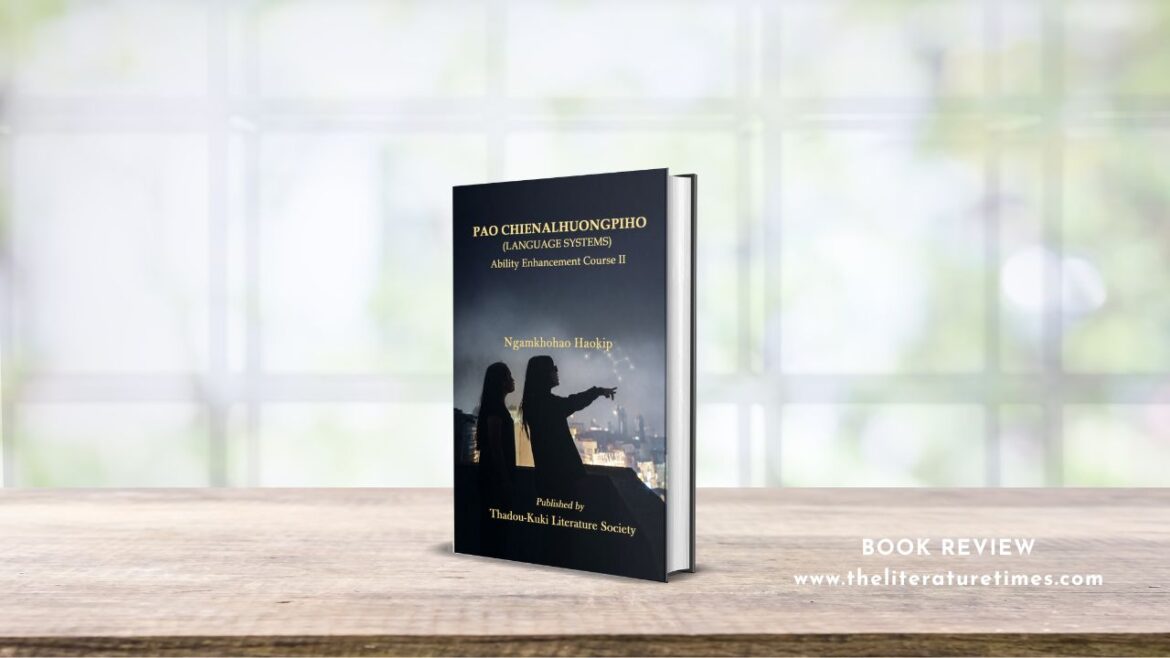
Language is more than a means of communication; it is a repository of culture, identity, history, and collective memory. In this context, Pao Chienalhuongpiho: Language Systems by Ngamkhohao Haokip emerges as a significant contribution to the preservation and advancement of the Thadou-Kuki language. Written primarily for undergraduate students studying Thadou-Kuki as a Major Indian Language (MIL) under Manipur University and DM University, the book extends far beyond the boundaries of a conventional academic text. It serves as both an educational resource and a celebration of linguistic heritage.
One of the most remarkable aspects of this book is its pioneering nature. As the first work of its kind in the Thadou-Kuki language, it breaks new ground by introducing fresh vocabulary, innovative sentence structures, and an engaging presentation style. The author’s effort to enrich the language while maintaining accessibility demonstrates both linguistic expertise and a deep commitment to cultural preservation. Readers quickly realize that this is not merely a textbook designed to fulfill curricular requirements; it is a thoughtful work intended to nurture appreciation for the language itself.
The book is structured in a way that supports learning without overwhelming the reader. Students often find language studies challenging when materials are overly technical or rigidly academic. However, Pao Chienalhuongpiho strikes a balance between scholarly rigor and readability. Concepts are presented clearly, making the learning process enjoyable and effective. This approach ensures that students can build a solid foundation in Thadou-Kuki while simultaneously developing confidence in using the language.
A particularly commendable feature is the inclusion of new words and sentence constructions. Languages remain vibrant only when they evolve to meet contemporary needs, and this book actively contributes to that evolution. By expanding the linguistic resources available to learners, the author encourages creativity and deeper engagement with the language. Readers gain not only knowledge of traditional forms but also exposure to modern expressions that keep the language relevant in changing times.
The author’s passion for Thadou-Kuki is evident throughout the book. Ngamkhohao Haokip brings more than three decades of teaching experience to this work, and his understanding of educational needs is reflected in every chapter. His long-standing involvement with the Thadou-Kuki Literature Society, including his role as its Chairman, further underscores his dedication to the language and its literary development. This commitment gives the book a sense of authenticity and purpose that readers can easily appreciate.
Another strength of the book is its broader appeal. While it is designed for university students, it is equally valuable for general readers interested in learning Thadou-Kuki. Language enthusiasts, cultural researchers, and members of the Thadou-Kuki community will find it an accessible gateway to deeper linguistic understanding. The book invites readers to explore the richness of the language regardless of their academic background.
Beyond its instructional value, the work contributes to the preservation of indigenous linguistic traditions. In an era when many regional and tribal languages face challenges of decline and marginalization, educational resources like this play a crucial role in sustaining linguistic identity. By documenting language systems and presenting them systematically, the book helps ensure that future generations have the tools necessary to learn, appreciate, and continue using their mother tongue.
The presentation of the material is engaging and purposeful. The author avoids unnecessary complexity, focusing instead on clarity and practical understanding. This makes the book suitable for both structured classroom learning and independent study. Readers are likely to appreciate the balance between theoretical knowledge and practical language use.
The book also highlights the cultural significance embedded within language. Every word and sentence reflects a worldview, and through the study of Thadou-Kuki, readers gain insight into the traditions, values, and experiences of the community. In this way, the book functions not only as a language guide but also as a cultural bridge.
Overall, Pao Chienalhuongpiho: Language Systems is a pioneering and valuable contribution to Thadou-Kuki language education. It combines academic usefulness with cultural significance, making it an important resource for students, educators, and language enthusiasts alike. Through clear explanations, innovative linguistic development, and a deep respect for cultural heritage, Ngamkhohao Haokip has created a work that will likely remain influential for years to come. It is a book that not only teaches a language but also strengthens the identity and continuity of a linguistic community.