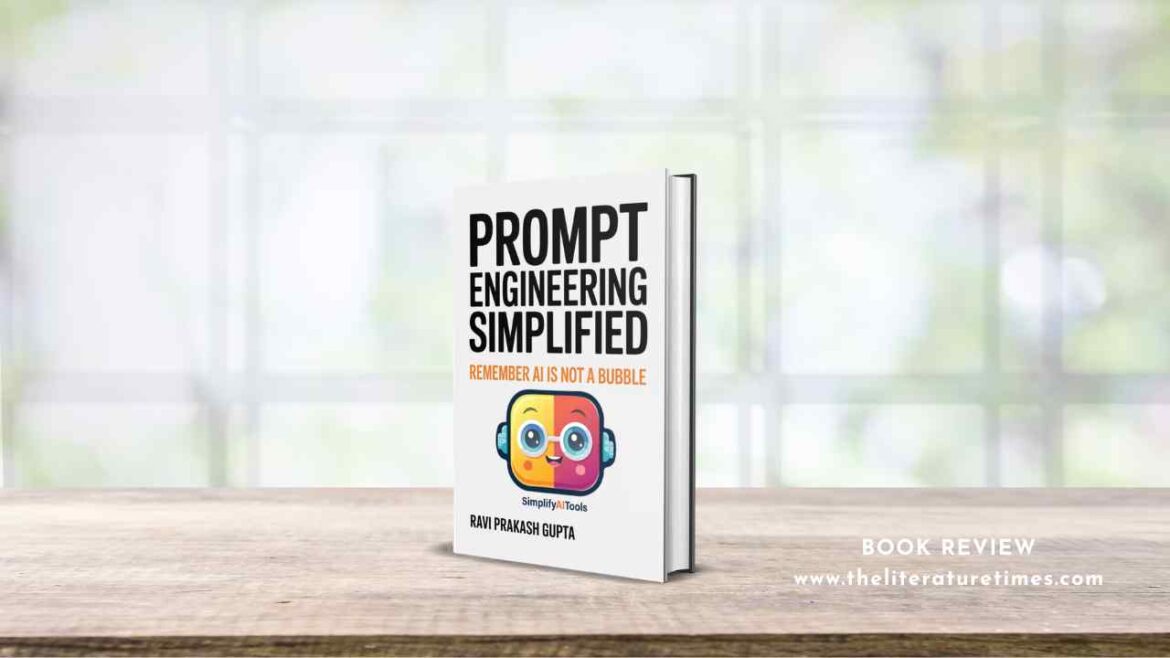
Prompt Engineering Simplified by Ravi Prakash Gupta is a timely and practical guide that demystifies one of the most essential skills of the AI era—communicating effectively with artificial intelligence. The book is built on a simple yet powerful idea: the quality of AI output depends on the quality of the input, or in simpler terms, “It’s in the prompt.”
From the very beginning, the author establishes clarity of purpose. Instead of overwhelming readers with technical jargon, the book adopts a conversational tone and positions itself as a hands-on toolkit rather than a theoretical manual. This approach makes it accessible to a wide audience—students, professionals, entrepreneurs, and even complete beginners who are just stepping into the world of AI.
One of the strongest aspects of the book is its structured progression. It starts with foundational concepts such as clarity, context, and specificity in prompts, then gradually moves toward advanced techniques like Chain-of-Thought prompting, role-based prompting, and multi-agent systems. Each chapter is concise and focused, making it easy to absorb concepts without cognitive overload.
What truly sets this book apart is its practical orientation. Every concept is supported by examples, comparisons, and “Try This Now” exercises that encourage readers to experiment in real-time. This interactive style transforms passive reading into active learning. The inclusion of real-world analogies—like comparing AI prompts to GPS instructions—makes complex ideas relatable and memorable.
Another notable strength is the emphasis on adaptability. The author repeatedly reminds readers that prompts are not rigid scripts but flexible frameworks that can be customized. This mindset shift is crucial, as it empowers users to think creatively rather than mechanically while interacting with AI tools.
The book also addresses common pitfalls such as vague instructions, lack of audience clarity, and overloading prompts with multiple tasks. By highlighting these mistakes, it helps readers avoid frustration and achieve better results more efficiently. Additionally, advanced techniques like conditional prompting and error correction provide deeper insights for users looking to refine their AI interactions.
However, the book could have explored more real-world case studies or industry-specific applications to further strengthen its practical value. While the concepts are well explained, examples from sectors like marketing, education, or finance could have added another layer of depth.
Overall, Prompt Engineering Simplified succeeds in its mission of making AI accessible and usable for everyone. It bridges the gap between curiosity and competence, transforming readers into confident AI communicators. In a world where AI is rapidly becoming a fundamental tool, this book serves as both a guide and a catalyst for growth.
Buy Now : https://www.amazon.in/dp/9370028277