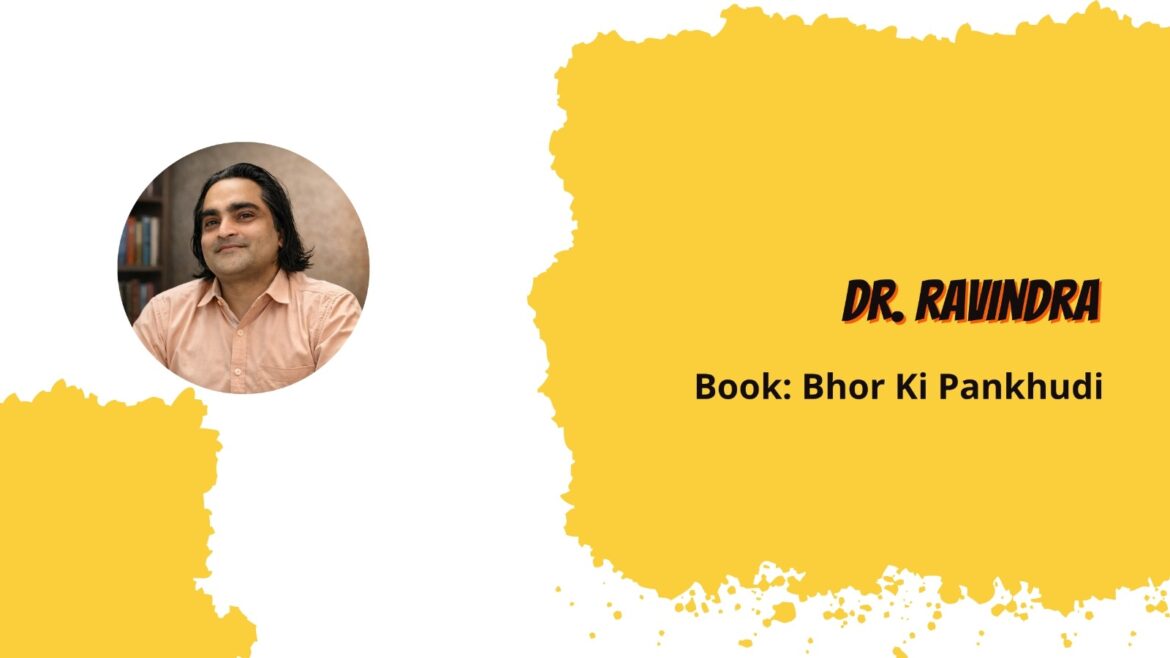
Bhor Ki Pankhudi by Dr. Ravindra is a delicate, emotionally resonant work that captures the quiet intensity of love that often remains unspoken yet deeply felt. Unlike conventional romantic narratives that rely heavily on dramatic confessions and overt expressions, this story finds its strength in silence—the pauses between words, the glances that speak volumes, and the memories that linger long after moments have passed. It is a narrative that unfolds gently, much like the soft blooming of a petal at dawn, revealing layers of tenderness, longing, and human vulnerability.
At the heart of the story are Rudra and Kavya, two individuals bound not just by affection but by shared dreams and a journey that mirrors the aspirations of countless young minds in India. Their love does not erupt suddenly; instead, it grows organically, beginning with subtle exchanges of glances and evolving through shared paths—quite literally, as they traverse familiar roads on their bicycles. These seemingly ordinary moments become extraordinary through the author’s nuanced storytelling, transforming everyday experiences into deeply emotional milestones.
Dr. Ravindra’s portrayal of first love is strikingly authentic. There is an innocence that permeates the relationship between Rudra and Kavya, a purity untouched by the complexities that often accompany mature relationships. This innocence is not portrayed as naïve but as something sacred—a phase of life where emotions are raw, unfiltered, and profoundly genuine. The author captures this stage with remarkable sensitivity, allowing readers to relive their own memories of young love, where even silence felt like a complete conversation.
However, the narrative does not remain confined to the sweetness of budding romance. It gradually introduces the harsh realities of life—ambition, struggle, and the unpredictability of fate. Both protagonists aspire to become doctors, a journey that demands immense dedication, sacrifice, and resilience. In weaving this professional pursuit into the storyline, Dr. Ravindra adds depth and realism, highlighting how personal dreams often intersect with emotional relationships. The pressures of academic life and the demands of their chosen path subtly begin to test their bond, reflecting a truth that many readers will find relatable.
One of the most poignant elements of the story is its exploration of separation. The pain of parting is not dramatized through grand gestures but is instead conveyed through restrained emotion—a letter, a promise, and a silence that stretches across time. This understated approach makes the sense of loss even more powerful. The absence of closure, the weight of unspoken words, and the lingering presence of memories create a haunting emotional landscape that stays with the reader.
The concept of time plays a crucial role in the narrative. As years pass, the distance between Rudra and Kavya becomes more than just physical; it becomes emotional and existential. Yet, the story suggests that certain connections are never truly severed. When life brings them face to face once again, it is not just a reunion of two individuals but a confrontation with their past selves—their dreams, their choices, and the emotions they once left behind. This re-encounter is handled with maturity and grace, avoiding clichés and instead focusing on introspection and emotional truth.
Dr. Ravindra’s writing style is simple yet evocative, allowing the emotions to take precedence over elaborate language. There is a poetic quality to the narrative, especially in the way silence and subtlety are used as storytelling tools. The imagery of “Pankhudi” (petal) itself serves as a powerful metaphor throughout the book—symbolizing fragility, beauty, and the transient nature of moments. Just like petals that bloom at dawn and eventually fall, the experiences of love, separation, and reunion are portrayed as fleeting yet deeply meaningful.
What sets this work apart is its ability to resonate across different age groups. For younger readers, it offers a reflection of their own aspirations and emotional journeys. For older readers, it serves as a nostalgic reminder of a time when love was simpler, yet perhaps more profound. The universality of its themes—love, ambition, loss, and rediscovery—ensures that it connects with a wide audience.
The author’s background as a doctor subtly influences the narrative, particularly in the depiction of the protagonists’ academic journey and emotional struggles. There is an underlying understanding of human psychology that adds authenticity to the characters. Emotions are not exaggerated; they are observed, understood, and presented with honesty.
Ultimately, Bhor Ki Pankhudi is more than just a love story. It is a meditation on the quiet moments that define our lives—the unspoken words, the paths not taken, and the memories that continue to shape us. Dr. Ravindra has crafted a narrative that is both gentle and powerful, reminding readers that some of the most profound emotions are those that are never fully expressed but are deeply felt.