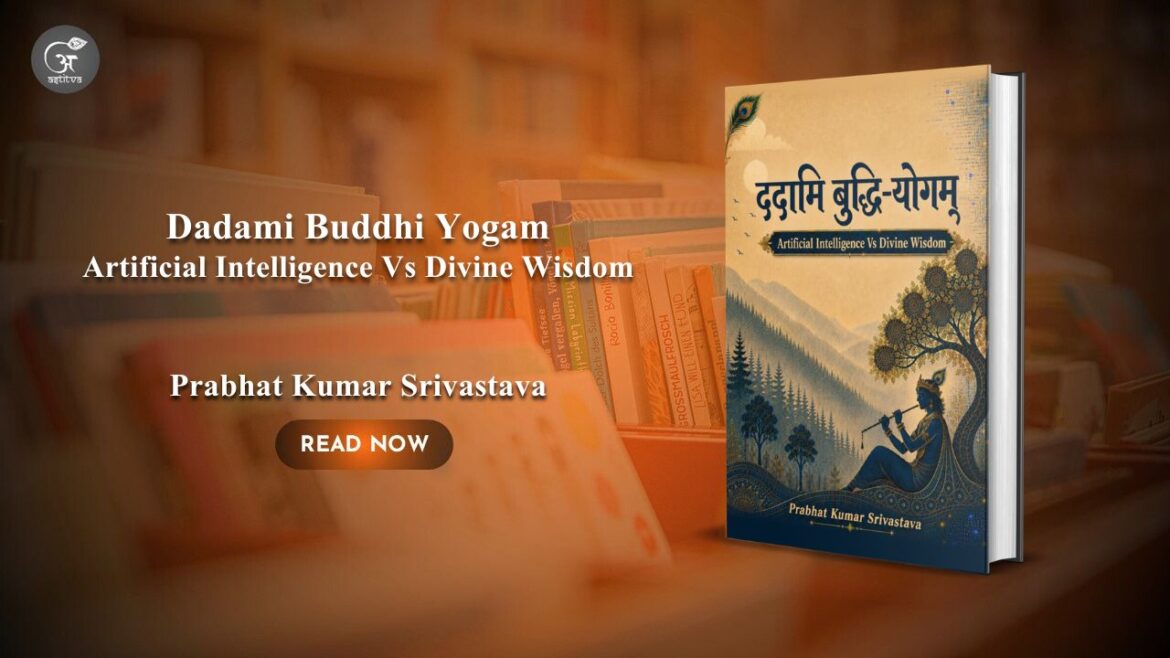
The release of Dadami Buddhi Yogam: Artificial Intelligence Vs Divine Wisdom by Prabhat Kumar Srivastava presents a timely and thought-provoking exploration of one of the most significant questions of the modern age: can intelligence alone provide direction and purpose to human life? At a time when Artificial Intelligence is transforming the way people work, communicate, learn, and make decisions, the book turns attention toward a deeper dimension of intelligence—one rooted not in computation, but in consciousness, wisdom, and self-realization.
Set against the spiritual atmosphere of Kashi, the story follows Madhav, a boy who is initially dismissed and ridiculed because of his perceived intellectual limitations. Yet his journey takes an unexpected turn as struggle, devotion, perseverance, and divine grace begin to transform his life. At the heart of this transformation is the profound message of “ददामि बुद्धि-योगम्”, drawn from Bhagavad Gita 10.10, where divine wisdom becomes a guiding force for those devoted to a higher purpose. Through Madhav’s experiences, the novel explores how true intelligence may extend far beyond conventional measures of knowledge, achievement, or intellectual ability.
What begins as an individual journey gradually develops into something much larger. Madhav’s transformation creates a ripple effect that touches institutions, relationships, and communities. The story examines how wisdom can inspire creation, healing, leadership, and meaningful social change. In doing so, it raises an important distinction between the ability to process information and the ability to understand what truly matters.
The book’s central theme becomes especially relevant in today’s rapidly changing technological landscape. Artificial Intelligence can process enormous amounts of information, generate sophisticated responses, and enhance human capabilities at unprecedented speed. Yet questions surrounding identity, purpose, ethical responsibility, relationships, inner peace, and the meaning of life cannot be answered by computational power alone. Dadami Buddhi Yogam uses fiction to explore this contrast, inviting readers to consider where technological intelligence ends and the search for divine wisdom begins.
Drawing inspiration from the Bhagavad Gita, Vedic philosophy, and spiritual psychology, the novel addresses universal concerns such as ambition, stress, relationships, success, and the search for fulfillment. Rather than presenting spirituality as an escape from modern life, it encourages readers to discover a deeper perspective from which modern challenges can be understood. The narrative ultimately asks a question that is both simple and profound: Who am I, and what is the true purpose of my life?
Author Prabhat Kumar Srivastava brings nearly 25 years of professional experience in the legal and corporate world to his debut work. Currently serving as Senior Director – Legal at an Indian multinational company, he has developed extensive experience in law, business strategy, leadership, and human psychology. Alongside his professional career, his longstanding interest in the Bhagavad Gita, Vedic philosophy, and spiritual psychology has shaped his understanding of contemporary challenges and the importance of perspective and wisdom.
With Dadami Buddhi Yogam: Artificial Intelligence Vs Divine Wisdom, Srivastava offers readers more than a conventional work of fiction. It is an invitation to pause amid the accelerating noise of technology and examine the deeper dimensions of human existence. By placing Artificial Intelligence and divine wisdom in thoughtful conversation, the book encourages self-reflection, ethical leadership, and purposeful living. Ultimately, it suggests that technology may expand what humanity can do, but wisdom determines where that power should lead.