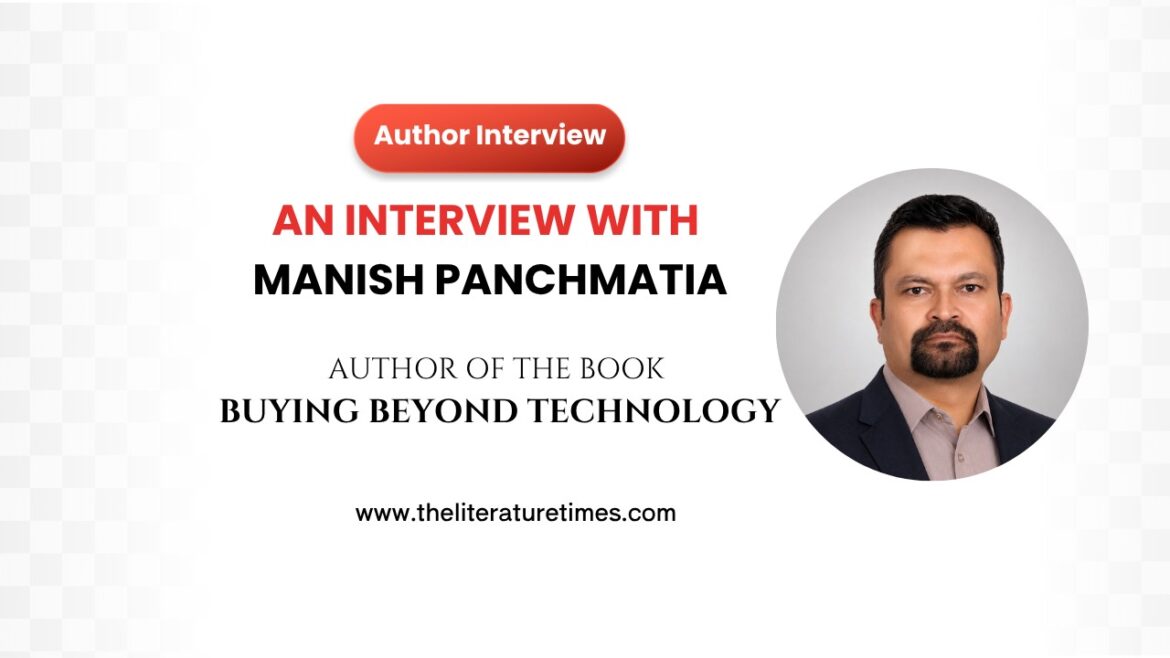
Manish Panchmatia is an experienced IT procurement and digital transformation professional with over three decades of global experience spanning technology delivery, program management, IT sales, and strategic sourcing.
Currently working for European bank in Sweden, Manish has been instrumental in building and scaling IT procurement capabilities from the ground up. He has led strategic sourcing initiatives across cloud, SaaS, infrastructure, and digital platforms, managing large-scale spend and developing vendor ecosystems that align with business transformation goals. His work includes designing category strategies, leading complex negotiations, and establishing governance frameworks that balance cost, risk, and innovation.
What distinguishes Manish is his unique career journey—from software engineering and program delivery to IT sales and procurement leadership. This end-to-end exposure gives him a deep understanding of how technology is built, sold, and consumed, enabling him to approach procurement not as a transactional function, but as a strategic capability that drives business outcomes.
Over his career, Manish has worked across multiple geographies including the United States, Europe, Japan, and India, and across industries such as banking, telecom, manufacturing, and pharmaceuticals. He has led global teams, managed complex vendor relationships, and contributed to digital transformation initiatives in large, distributed organizations.
He holds multiple professional certifications including PMP, SAFe Program Consultant, and advanced procurement certifications, and is passionate about mentoring professionals in project management and sourcing.
Through this book, Manish brings together his practical experience and structured thinking to help professionals navigate the complexities of IT procurement in the age of cloud, AI, and digital transformation.
1. What inspired you to write a book specifically focused on IT procurement and digital sourcing?
Over the years, I noticed that while technology decisions were becoming increasingly strategic, the approach to IT procurement had not evolved at the same pace. There is plenty of material on procurement and technology individually, but very little structured guidance on how modern IT sourcing actually works in practice. This book was written to help build stronger foundations for professionals navigating increasingly complex digital environments.
2. Why do you think there is limited structured education around modern IT procurement and digital sourcing?
IT procurement sits at the intersection of technology, commercial strategy, governance, finance, legal, and operations, which makes it difficult to fit into traditional learning models. Many procurement professionals often get lost in IT jargon and end up learning through fragmented experience rather than structured understanding. The book aims to build strong foundations for anyone who wants to understand IT procurement — not just sourcing professionals, but also IT leaders and support functions such as Legal and Finance.
3. Your book argues that technology procurement is no longer just a purchasing function, but a strategic business capability. Why?
Technology today underpins almost every organization across industries, and digitalization has become a basic business necessity rather than a competitive advantage. As organizations increasingly rely on technology to drive operations, customer experience, and growth, the impact of sourcing decisions has become far more significant. Wrong technology sourcing decisions can affect not only operational efficiency, but also long-term scalability, business agility, top-line growth, and overall competitiveness. IT procurement is therefore no longer just about controlling cost — it plays a critical role in shaping business outcomes and long-term organizational success.
4. Why do traditional procurement models often struggle in modern digital environments?
Traditional procurement models were designed for stable purchasing environments with predictable requirements and clearly defined ownership. Modern digital ecosystems are dynamic, interconnected, and consumption-driven. Cloud, SaaS, agile delivery, and platform-based models require faster decision-making, stronger governance, and closer collaboration than traditional procurement structures were built for. Technology sourcing today is no longer a “buy and forget” exercise — the way services and products are consumed, governed, optimized, and adapted throughout the contract lifecycle increasingly determines business success. Organizations also need the flexibility to course-correct during the contract duration as markets, technologies, and business priorities evolve rapidly.
5. Why is there often a gap between procurement and technology teams, and how can organizations bridge it?
Procurement and technology teams often operate with different priorities, language, and success metrics, which can easily create misunderstandings and conflicts in decision-making. In many organizations, procurement is still perceived as a delaying function rather than a strategic enabler. One of the biggest reasons for this gap is that many procurement professionals lack sufficient understanding of how IT functions, delivery models, and technology environments actually work. Procurement professionals do not need to become engineers, but they do need enough contextual understanding to empathize with IT leaders, communicate effectively, ask better questions, and align sourcing decisions with technology and business objectives. When procurement teams understand technology at a higher level, they can deliver better value, build stronger collaboration, and gain greater trust from technology stakeholders.
6. Why are organizations struggling to manage increasingly complex vendor ecosystems?
Technology environments today depend on interconnected vendors, cloud providers, platforms, and service partners. IT procurement professionals must approach sourcing and negotiations holistically, recognizing the interdependencies across the entire vendor ecosystem rather than evaluating suppliers in isolation. The biggest risks often emerge in the gaps between vendors — unclear accountability, overlapping responsibilities, integration complexity, and fragmented governance. Strong governance, clearly defined obligations, and collaborative operating models are essential to avoid ambiguity and ensure seamless execution. Vendors should not be viewed purely as transactional suppliers, but as strategic partners contributing to long-term business outcomes.
7. How can procurement teams stay relevant without becoming deep technical experts?
Procurement professionals do not need to become technical specialists, but they do need to understand technology at a strategic level. They should understand how IT functions operate, their ways of working, decision-making processes, and how the technology solutions or services being sourced and how those technology decisions ultimately influence business outcomes.
8. Why does the book emphasize structured thinking instead of rigid frameworks or templates?
Because technology environments are constantly evolving. What works for one organization may not work for another due to differences in industry, maturity, operating models, regulations, or business priorities. The book is intentionally industry agnostic because every organization is unique, and there is no true one-size-fits-all approach to IT procurement or digital sourcing. Structured thinking creates adaptability, while rigid frameworks can become outdated quickly in fast-changing environments. The intention is to provide foundational thinking and trust readers to apply those principles within the context of their own organizations.
9. What are some common mistakes organizations make when sourcing cloud or SaaS, solutions?
Organizations often focus too heavily on short-term pricing while underestimating long-term operational, governance, and dependency implications. In SaaS, issues such as integration, compliance, product roadmap alignment, and vendor lock-in are frequently overlooked. In cloud environments, architecture decisions, governance, hyperscaler dependency, and consumption management become critical.
10. How do you see artificial intelligence shaping the future of IT procurement?
AI will influence procurement from multiple angles. First, organizations will need to navigate growing regulatory, governance, and compliance expectations around AI usage. Second, vendors will increasingly embed AI into SaaS platforms and digital services, changing commercial and operational models. Third, procurement itself will use AI for spend analysis, contract intelligence, automation, and decision support. The challenge will not simply be adopting AI, but managing it responsibly and strategically.
11. Why is cross-functional alignment becoming so important in modern technology sourcing?
Technology sourcing decisions now affect far more than procurement or IT alone. They influence finance, legal, risk, compliance, operations, security, and overall business strategy. Successful organizations increasingly approach sourcing as a cross-functional business capability rather than a siloed procurement process.
12. If readers could take away one key idea from your book, what would you want it to be?
I would want readers to understand that technology procurement is no longer just a purchasing activity — it is a strategic business capability. This book aims to help organizations build stronger foundations for modern IT procurement while creating greater cross-functional awareness of how sourcing decisions influence long-term business outcomes.. It also seeks to create greater awareness of how sourcing decisions influence long-term business outcomes while laying the groundwork for more advanced topics that will shape the future of sourcing, including stronger cross-functional collaboration across procurement, technology, finance, legal, and business teams, as well as AI, governance, and evolving digital ecosystem models.
Title: Buying Beyond Technology
Author: Manish Panchmatia
Publisher: Evincepub Publishing
IT Procurement, Digital Sourcing, Strategic Sourcing, Cloud Procurement, SaaS Procurement, Digital Transformation, Vendor Management, Technology Procurement, Procurement Strategy, IT Category Management, Cloud Governance, AI in Procurement, Vendor Ecosystem, Cross-Functional Collaboration, Procurement Leadership, Technology Sourcing, Procurement Innovation, Contract Management, Strategic Vendor Partnerships, Digital Procurement Trends, Procurement Governance, IT Procurement Best Practices, Cloud Strategy, Procurement Transformation, Enterprise Technology Procurement, Manish Panchmatia, IT Procurement Book, Procurement and Technology Alignment, Sourcing Strategy, Future of Procurement