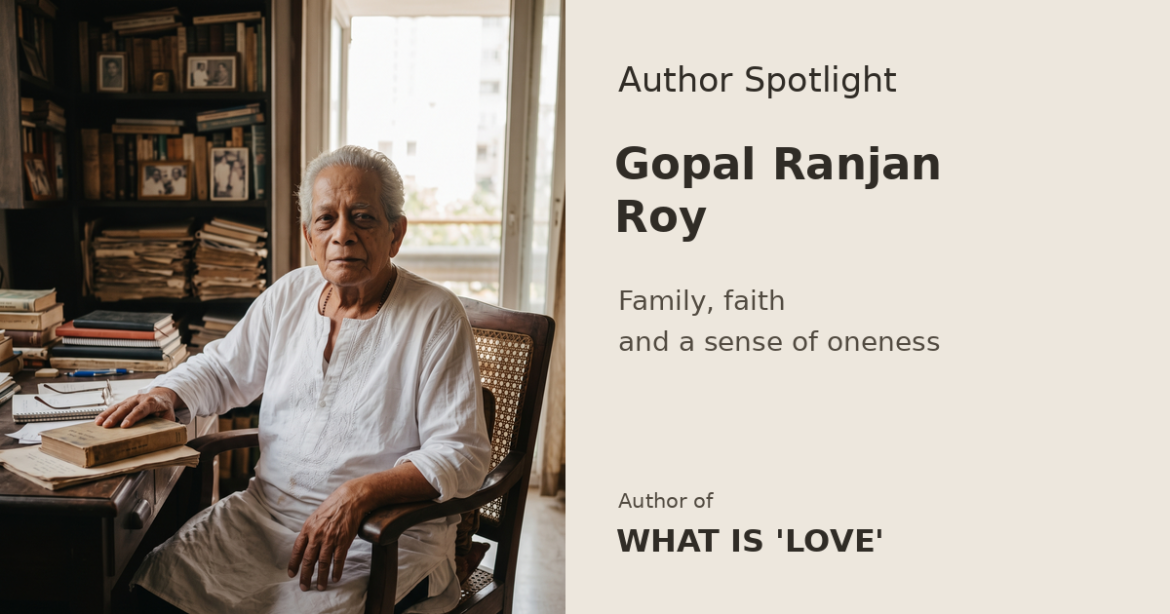
The author draws on family support and a belief in oneness to explore love in everyday life
Gopal Ranjan Roy introduces WHAT IS ‘LOVE’ with an appeal to place brotherhood and togetherness at the centre of everyday life. The book asks readers to look beyond a purely physical understanding of love and to consider how it informs their response to other people. Roy connects that question with his experience of family support, his faith and his concern about distance from the natural world. His stated purpose is to bring the concept of love into the journey of life, giving the introduction of the book a personal and reflective focus shaped by his own understanding of care and belonging.
In Roy’s description, love is fundamental to the way people live and relate to their surroundings. He presents it as something available throughout life, even when people fail to recognise or practise it. This distinction between the presence of love and the attention given to it underlies the book’s central question. The author is interested in what happens when people become separated from a value they regard as essential. His account brings that concern into relationships with family and neighbours, as well as into the human relationship with nature.
The scope of the book’s question therefore extends beyond romantic attachment. Roy identifies brotherhood and togetherness as sources of meaning, and he links love to a sense of oneness. These terms describe the outlook he hopes to share. They also explain why his description moves between intimate relationships and wider social concerns: for Roy, an understanding of love should influence conduct beyond the people who are already closest to us. The focus is on the place that care occupies in ordinary life and on the consequences of becoming indifferent to others.
One of the examples Roy raises is a lack of interest in what is happening to neighbours. He connects that inattention with a broader failure to respond when people suffer. It is an everyday concern through which the book’s larger subject becomes more immediate. The author asks readers to consider the difference between living near other people and being concerned about their wellbeing. Within his account, togetherness depends on that concern. Love becomes relevant to the way a person notices the lives around them and recognises that another person’s difficulties matter.
Nature is another central part of Roy’s outlook. He describes the natural world as an abundant source of love and regrets what he sees as people’s growing distance from it. The book’s presentation links this separation with a loss of connection in human life. Roy’s appeal for closeness to nature belongs to his spiritual understanding of love, in which the world around us has a place alongside family and community. His emphasis gives readers another point of entry into the subject, particularly those interested in how attention to their surroundings relates to their values.
Awareness of life’s limits also shapes the message. Roy observes that people arrive in the world empty-handed and will eventually leave it behind. In the context of his description, that reminder places importance on how life is lived in the meantime. His author biography adds a belief in contentment with one’s circumstances. Together, these ideas help explain his emphasis on gratitude and human connection. The reminder of mortality brings Roy’s interest in contentment into the same discussion as his concern for affection, gratitude and the quality of the relationships people share.
The background to those convictions begins with Roy’s account of his family. An arts graduate of the University of Delhi and the son of an Army serviceman, he grew up in a family of three brothers and four sisters. He describes strict discipline as an important part of the household, alongside the affection of his parents and the support of his siblings. His account gives both discipline and warmth a place in his upbringing. That family environment provides personal context for the importance he assigns to togetherness in WHAT IS ‘LOVE’.
Support continued while Roy was writing. He credits his life partner and other family members with encouragement and inspiration throughout the process. He speaks appreciatively of his son and daughter, both married, and of his daughter-in-law and son-in-law. Their place in his account keeps the book’s theme connected to relationships he values in his own life. Roy identifies brotherhood and togetherness as the inspiration behind the work, and his description of the writing process acknowledges the people whose care helped him pursue it.
Faith is closely connected to the gratitude expressed in that account. Roy describes himself as blessed by the Almighty and sees love as divine. His concerns about suffering, weakened relationships and distance from moral and ethical values follow from that outlook. They remain the author’s perspective on the subject. At the centre of the book’s introduction is his wish to communicate a sense of oneness: a way of thinking about life that gives significance to the affection received from others and to the responsibility of showing concern in return.
Roy describes the book in the language of a personal attempt to share an idea with readers. That stated approach suggests an invitation to reflection grounded in the values he considers important. The title leaves the central question open for readers to consider alongside their own experiences. Those interested in spiritual perspectives on everyday conduct, the meaning of family support or the responsibilities within human relationships may find the subject relevant to their concerns. Readers can approach the book’s declared themes with an interest in examining their own understanding of love, whether or not it matches the author’s.
With WHAT IS ‘LOVE’, Roy brings his belief in togetherness into a book centred on how people live with one another. The introduction links the affection he remembers from his upbringing with the support he received while writing and the message he hopes to convey. Family and nature remain central to that message, alongside a concern that suffering should not pass unnoticed. The question Roy places before readers is how love can have a fuller presence in the life they share with others.