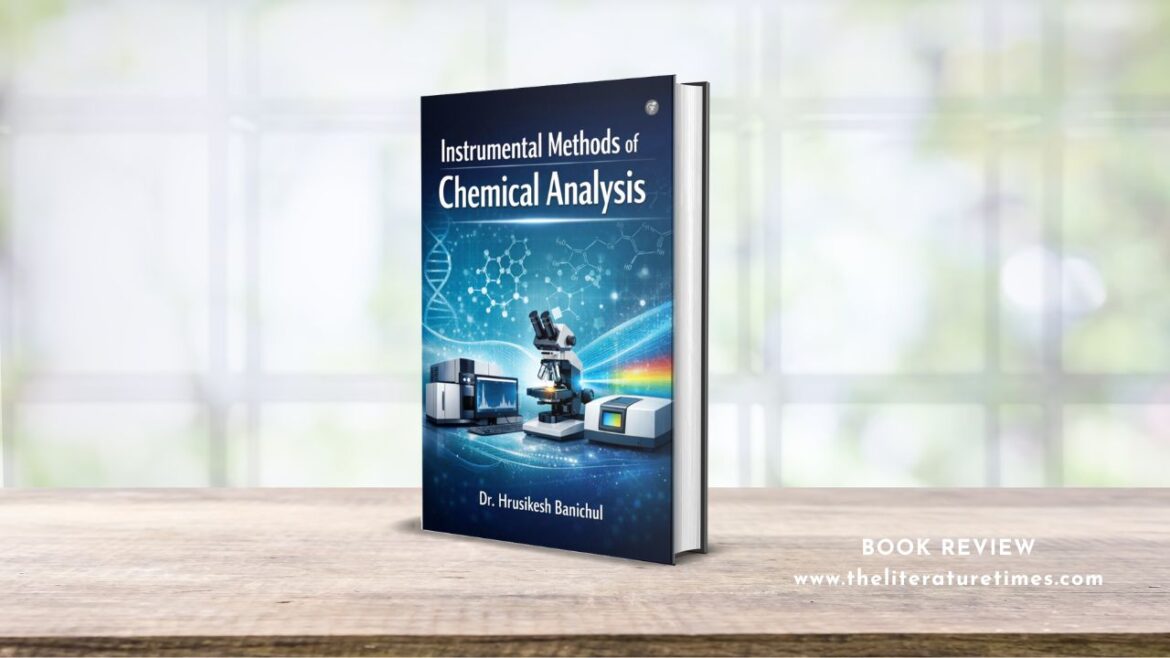
“Instrumental Methods of Chemical Analysis” by Dr. Hrusikesh Banichul stands as a monumental contribution to the ever-evolving landscape of analytical chemistry. It is not just a textbook but a carefully structured guide that connects the classical foundations of analysis with the modern advancements that drive research and industrial applications today. The book succeeds in balancing theoretical precision with practical insight, making it an invaluable resource for both students and professionals in the fields of chemical, pharmaceutical, environmental, and materials sciences.
From the very first chapter, Dr. Banichul sets a clear academic tone by revisiting the fundamentals of analytical chemistry and progressively guiding the reader through the sophisticated world of instrumental techniques. What sets this book apart is its clarity and organization. Each chapter begins with a conceptual overview, followed by the detailed working principles, instrumentation, and real-world applications of the techniques discussed. This logical flow ensures that readers not only understand how instruments work but also why they are essential in specific analytical contexts.
The coverage of spectroscopic methods such as UV-Visible, Infrared (IR), Nuclear Magnetic Resonance (NMR), and Mass Spectroscopy is particularly commendable. The author presents complex phenomena like electronic transitions, vibrational frequencies, and nuclear spin resonance in a lucid and accessible manner. Additionally, advanced topics such as Raman, Electron Paramagnetic Resonance, Mössbauer, and Photoelectron spectroscopies are explained with practical clarity, making the text both comprehensive and approachable.
Beyond spectroscopy, the book delves deeply into separation and electroanalytical methods including chromatography and polarography. The sections on atomic and elemental analysis—especially atomic absorption spectroscopy, flame photometry, and inductively coupled plasma (ICP) spectrometry—reflect the author’s deep command of analytical methodologies used in industrial and environmental laboratories. The inclusion of thermal and materials characterization techniques such as TGA-DTA, DSC, XRD, and XRF further enriches the text, offering readers a holistic understanding of modern analytical approaches.
One of the book’s major strengths lies in its integration of applied analytical methods with industrial and research relevance. The discussion of surface and material analysis techniques, including porosity, particle size determination, and total organic content, underscores the growing importance of multidisciplinary analysis in today’s research ecosystem. These topics make the book not only educational but also practically aligned with real-world challenges faced by chemists and engineers alike.
Dr. Banichul’s writing style reflects his extensive experience as a teacher, researcher, and industrial scientist. Having earned his Ph.D. from IIT (ISM), Dhanbad, and possessing over 15 years of experience across academia and industry, he brings both authority and approachability to the subject. His expertise in sustainable catalysis and environmental chemistry shines through, particularly in sections dealing with eco-friendly analytical methods and waste utilization.
Overall, Instrumental Methods of Chemical Analysis is a meticulously crafted, insightful, and forward-looking work that bridges the gap between academic learning and practical application. It deserves a place on every chemistry student’s and researcher’s bookshelf—an enduring guide to the art and science of analytical precision.