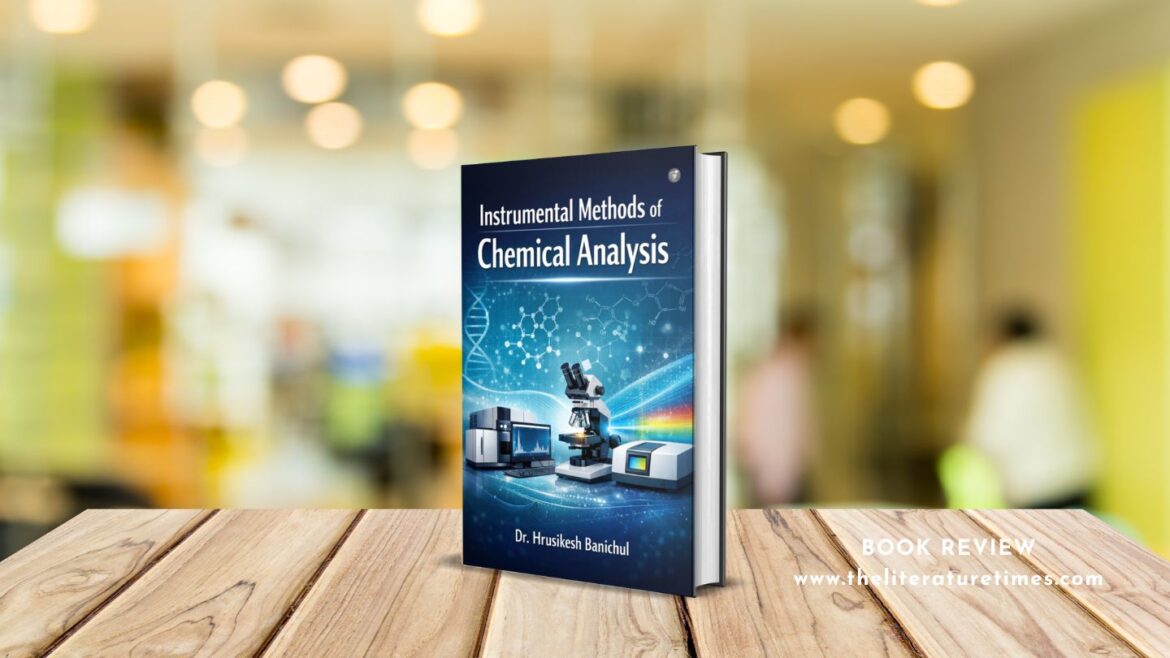
The book Instrumental Methods of Chemical Analysis by Dr. Hrusikesh Banichul is a comprehensive and well-structured reference that explores the principles, instrumentation, and applications of modern analytical techniques used across various scientific disciplines. Designed for undergraduate and postgraduate students as well as researchers and professionals, the book provides a strong conceptual foundation in instrumental analytical chemistry while also addressing practical applications relevant to research and industry.
Analytical chemistry plays a crucial role in understanding the composition and properties of materials, pharmaceuticals, environmental samples, and industrial products. Recognizing this importance, the author has structured the book in a systematic manner that gradually introduces readers to both classical analytical concepts and advanced instrumental methods. The text begins with a clear overview of analytical chemistry and the evolution of instrumental techniques, helping readers understand the role of instrumentation in modern chemical analysis. This introductory section effectively sets the stage for the detailed discussions that follow.
One of the major strengths of Instrumental Methods of Chemical Analysis is its extensive coverage of spectroscopic techniques. The book carefully explains widely used methods such as UV–Visible spectroscopy, Infrared (IR) spectroscopy, Nuclear Magnetic Resonance (NMR), Mass spectrometry, Raman spectroscopy, fluorescence spectroscopy, Electron Paramagnetic Resonance (EPR), Mössbauer spectroscopy, and photoelectron spectroscopy. Each technique is presented with clear explanations of its fundamental principles, instrumentation, and practical applications, enabling readers to understand how these methods are used for qualitative and quantitative analysis in scientific research.
In addition to spectroscopy, the book provides a detailed treatment of separation and electroanalytical methods. Important analytical tools such as chromatography and polarography are discussed with clarity, highlighting their significance in separating complex mixtures and identifying chemical components. The author also addresses atomic and elemental analysis techniques, including atomic absorption spectroscopy, flame photometry, and inductively coupled plasma spectrometry. These sections are particularly valuable for students and researchers involved in chemical, pharmaceutical, and environmental analysis.
Another notable feature of the book is its coverage of thermal and materials characterization techniques. Methods such as thermogravimetric analysis (TGA), differential thermal analysis (DTA), differential scanning calorimetry (DSC), X-ray diffraction (XRD), and X-ray fluorescence (XRF) are explained in a manner that demonstrates their importance in materials science and industrial applications. The inclusion of advanced characterization tools like scanning electron microscopy (SEM) and transmission electron microscopy (TEM) further enriches the book, giving readers insights into the microscopic analysis of materials.
The text also introduces modern topics related to surface and materials analysis, including surface area determination, porosity measurements, particle size analysis, and total organic analysis. By integrating both traditional and contemporary techniques, the book offers a holistic perspective on analytical methods used in modern laboratories and industrial settings. The author’s approach emphasizes clarity, theoretical understanding, and practical relevance, making complex concepts easier for students to grasp.
Author Dr. Hrusikesh Banichul brings extensive academic and industrial experience to this work. With more than fifteen years of professional involvement in teaching, research, and applied chemical science, he presents the subject with both scholarly depth and practical insight. His expertise in catalysis, chemical process development, and environmental monitoring adds significant value to the book’s practical orientation.
Overall, Instrumental Methods of Chemical Analysis stands out as a valuable academic resource for students, researchers, and professionals working in chemistry and related disciplines. By combining theoretical foundations with real-world applications, the book successfully bridges the gap between classroom learning and laboratory practice. It serves as an essential guide for anyone seeking a deeper understanding of modern analytical instrumentation and its role in scientific advancement.