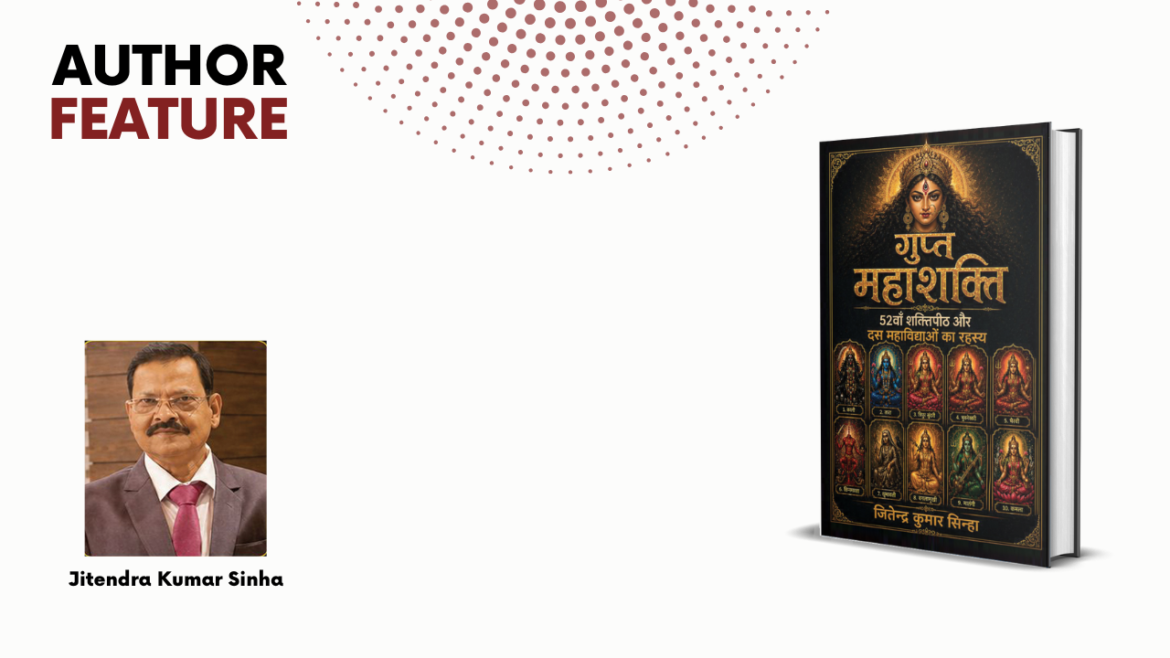
India is a land where spirituality, devotion, and mystery have existed together for thousands of years. Ancient temples, sacred texts, saints, and spiritual traditions continue to inspire people even today. Among these traditions, the worship of Shakti — the divine feminine energy — holds a special place. The book Gupt Mahaashakti: 52 Vaan Shaktipeeth Aur Das Mahaavidyaon Ka Rahasy by Jitendra Kumar Sinha takes readers into this deep and mysterious world of spiritual energy and hidden truth. This book is not just about religion or mythology. It is a thoughtful spiritual journey that encourages readers to look beyond traditional beliefs and explore the deeper meaning of divine power. The author presents spiritual ideas in a way that is both meaningful and easy to understand for common readers.
Jitendra Kumar Sinha is an experienced journalist, social worker, and writer who has spent many years observing society, culture, and spirituality. Born on 2 January 1960, he worked as a Press Assistant in the Information and Public Relations Department of the Government of Bihar before retirement. Even today, he remains active in journalism and literary activities. His writings cover different subjects like politics, society, religion, and travel. His earlier books, including Shiv Tatva and Kayastha Virasat, reflect his interest in Indian spirituality and cultural heritage. In this book, the author moves beyond the commonly known concept of the 51 Shakti Peethas and introduces readers to the idea of a hidden 52nd Shakti Peeth. This idea creates curiosity and spiritual excitement. According to the author, this hidden Peeth is not simply a physical place but a spiritual state connected with inner awakening and divine consciousness.
This concept makes the book different from ordinary religious books. Instead of focusing only on rituals and stories, the author tries to explain the spiritual meaning hidden behind them. He suggests that true spiritual power exists not only in temples and sacred places but also inside human consciousness. The book also explains the ten Mahavidyas, who are considered the ten powerful forms of Adyashakti or the Supreme Divine Mother. Each Mahavidya represents a different aspect of life, energy, creation, destruction, wisdom, illusion, and liberation. Through these forms, the book explores how one supreme energy controls and balances the universe.
One of the most interesting parts of the book is the explanation of how creation and destruction are connected. The author explains that life is not only about happiness and beauty. Pain, fear, change, and struggle are also part of existence. The Mahavidyas represent both gentle and fierce forms of divine energy, teaching readers that every experience in life carries spiritual meaning. The writing style of Jitendra Kumar Sinha is simple yet thoughtful. Spiritual books often become difficult because of heavy language and complicated explanations. However, this book keeps the language clear and approachable. Readers do not need deep knowledge of spirituality to understand the ideas presented in the book.
The book creates a feeling of mystery while also giving emotional and spiritual comfort. While reading, one feels connected to ancient Indian wisdom and traditions. The descriptions of Shakti, spiritual energy, and inner awakening make readers think deeply about life and existence. Another strong aspect of the book is its focus on self-discovery. The author repeatedly suggests that spiritual journeys are not only external pilgrimages but also internal experiences. The hidden 52nd Shakti Peeth symbolizes this inner spiritual truth. It reminds readers that real transformation begins within the mind and soul.
The discussion about the Mahavidyas also adds philosophical depth to the book. Each Mahavidya carries symbolic meaning connected with human emotions and spiritual growth. Some forms teach courage, some wisdom, some discipline, and some freedom from illusion. Together, they show the complete nature of divine energy. The author also explains that spirituality should not create fear. Many people associate tantric traditions and hidden spiritual knowledge with mystery and danger. However, the book presents these subjects with balance and understanding. It shows spirituality as a path of awareness, strength, and liberation.
The emotional tone of the book is calm and reflective. Readers may feel inspired to think about their own spiritual journey and inner peace. The book gently encourages self-reflection without forcing any rigid beliefs or opinions. Another important quality of the book is its connection with Indian cultural heritage. Modern life often keeps people busy with material success, stress, and competition. In this situation, books like this remind readers about the importance of spiritual balance and inner understanding. The author tries to reconnect modern readers with ancient Indian wisdom in a meaningful way.
Overall, Gupt Mahaashakti: 52 Vaan Shaktipeeth Aur Das Mahaavidyaon Ka Rahasy is a spiritually rich and thought-provoking work. Jitendra Kumar Sinha has successfully combined mythology, philosophy, and spiritual reflection into a book that is both informative and inspiring. This book is not only for religious readers but also for anyone interested in Indian spirituality, self-discovery, and the mysteries of human consciousness. It invites readers to move beyond surface-level understanding and explore the deeper spiritual energy that exists both in the universe and within themselves.