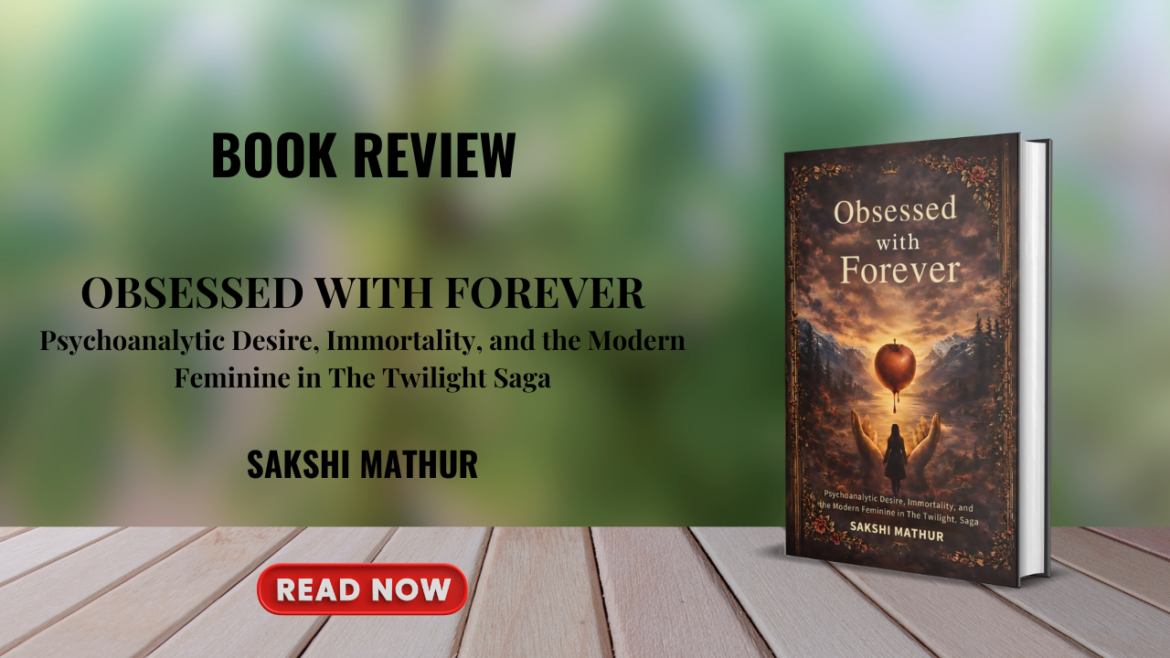
The Twilight saga has remained one of the most talked-about love stories of modern times. For many readers, it is a story about romance, passion, sacrifice, and eternal love. But Obsessed with Forever-Psychoanalytic Desire, Immortality, and the Modern Feminine in The Twilight Saga by SAKSHI MATHUR takes readers beyond the surface of the famous story and explores the deeper emotional and psychological meanings hidden inside it.
This book is thoughtful, engaging, and intellectually rich, yet written in a way that remains easy to understand. Instead of simply discussing romance, the author asks an important question: why are people so attracted to the idea of “forever”? Why does eternal love feel so comforting in today’s uncertain world? Through psychoanalysis, feminist theory, and cultural reflection, Sakshi Mathur offers readers a fresh perspective on Twilight and its emotional impact on modern audiences.
Looking Beyond Romance
One of the biggest strengths of this book is that it does not treat Twilight as just a fantasy romance. Instead, the author examines the emotional desires hidden within the story. According to SAKSHI MATHUR, the promise of “forever” is attractive because modern life often feels unstable. Relationships change quickly, people fear loneliness, and uncertainty has become a part of everyday life. In such a world, the idea of eternal love and immortality feels safe and comforting. The book explains that Bella Swan’s journey reflects this emotional longing. Her desire to become immortal is not only about love. It also represents a wish to escape change, ageing, fear, and insecurity. This deeper interpretation makes the book interesting even for readers who are already familiar with the Twilight series.
Psychoanalysis Made Easy to Understand
The book uses ideas from famous thinkers like Sigmund Freud and Jacques Lacan, but the explanations remain simple and clear. Usually, psychoanalytic theories can feel difficult or academic. However, Sakshi Mathur explains these ideas in a relatable way. She shows how human desire often comes from feelings of absence, longing, and fear of loss. Through Bella’s emotional journey, the author explains how people are often searching for permanence in a world where everything changes. This psychological reading helps readers understand why Twilight became such a global cultural phenomenon. The book succeeds in making complex theories easier for general readers without losing depth.
Feminist Perspective and Modern Femininity
Another important aspect of the book is its feminist perspective. SAKSHI MATHUR thoughtfully explores how ideas about love, femininity, and identity are shaped by society. Using the works of thinkers like Julia Kristeva, Luce Irigaray, and Judith Butler, the author examines how women are often expected to define themselves through relationships and emotional sacrifice. Bella’s choices are analysed not simply as romantic decisions but also as reflections of social expectations placed on women. The book raises interesting questions:
- Does eternal love offer freedom?
- Or does it quietly create emotional control?
- Does immortality protect identity, or does it stop personal growth?
These questions make the book thoughtful and reflective.
A Reflection on Modern Society
One of the most impressive things about this book is how it connects a popular fictional story to real emotional experiences in modern life. The author explains that many people today feel emotionally uncertain. Relationships often feel temporary, and life moves very fast. In such conditions, stories about forever love become emotionally powerful because they offer a sense of stability. However, the book also warns that the desire for permanence may come with hidden compromises. Immortality may seem beautiful, but it can also remove change, growth, and emotional freedom. This balanced approach makes the book intellectually mature and emotionally engaging at the same time.
Clear and Engaging Writing Style
Despite dealing with academic ideas, the language of the book remains smooth and understandable. SAKSHI MATHUR writes with clarity and confidence. The explanations are not overly technical, which makes the book accessible even to readers who are not familiar with psychoanalysis or feminist theory. The tone is reflective rather than preachy. The author invites readers to think deeply instead of forcing conclusions on them. This makes the reading experience enjoyable and thought-provoking.
A Strong Beginning for the Author
As a first published book, Obsessed with Forever-Psychoanalytic Desire, Immortality, and the Modern Feminine in The Twilight Saga is an impressive achievement for SAKSHI MATHUR. Her academic interest in psychoanalysis, feminist theory, and cultural studies is clearly visible throughout the book. At the same time, she successfully avoids making the writing feel overly academic or difficult. She bridges the gap between theory and popular culture very effectively. This ability is important because it allows readers to engage with serious ideas through familiar stories.
Final Thoughts
Obsessed with Forever-Psychoanalytic Desire, Immortality, and the Modern Feminine in The Twilight Saga by SAKSHI MATHUR is a thoughtful and engaging exploration of love, desire, identity, and immortality in modern culture. The book goes beyond the surface of the Twilight saga and examines why stories about eternal love continue to attract readers across the world. Through psychoanalysis and feminist reflection, the author encourages readers to question the meaning of “forever” and understand the emotional desires hidden behind it. Its simple language, balanced arguments, and reflective style make it both accessible and intellectually rich. Readers who enjoy literary criticism, cultural studies, psychology, or feminist thought will find the book meaningful and insightful. More importantly, the book encourages readers to think about their own emotional expectations and the role that fantasy plays in modern life. Overall, this is a well-written and intelligent debut by SAKSHI MATHUR, showing great promise as a thoughtful voice in contemporary literary and cultural criticism.