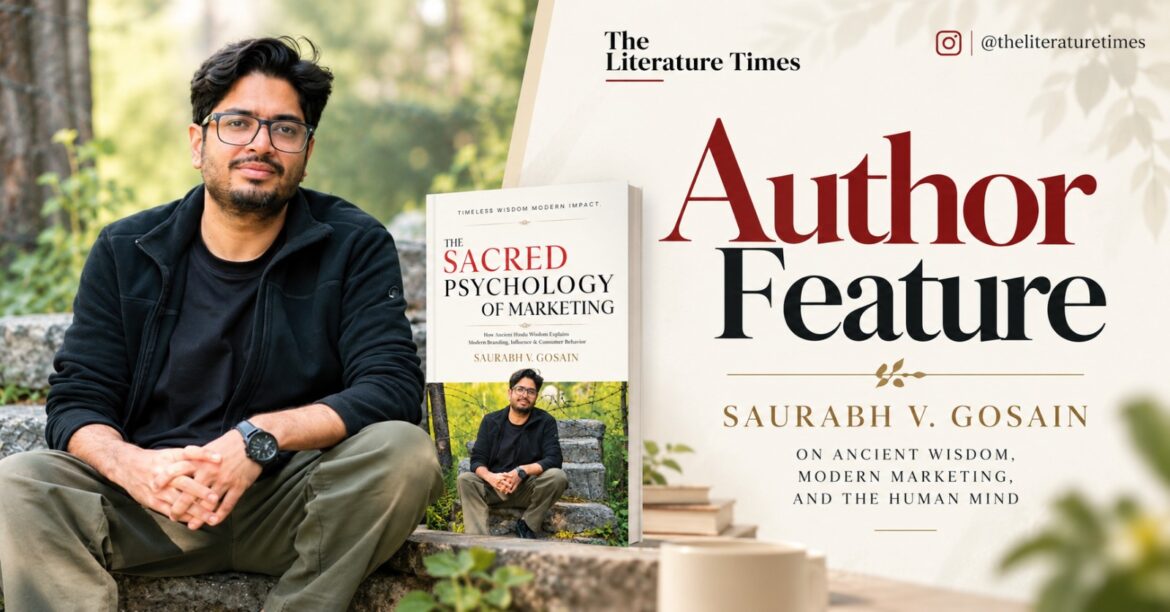
In a world where attention has become one of the most valuable currencies, brands are constantly searching for better ways to communicate, influence and build meaningful relationships with their audiences. Marketing has evolved far beyond selling a product. Today, it is deeply connected with psychology, emotion, identity, trust and human behaviour. It is within this intersection of business and human nature that Saurabh V. Gosain has found his professional and intellectual calling. A marketing consultant with nearly 15 years of experience across sales, branding and business strategy, Saurabh brings together two areas that are often viewed separately: the practical world of marketing and the deeper questions explored through spirituality and philosophy.
His journey has been shaped by an enduring interest in understanding people. From his early experience in retail sales to becoming a trusted marketing advisor, Saurabh has worked closely with businesses and observed how brands are built, how customers make decisions and how communication can influence perception. Over the years, this professional experience has led him towards a broader question. What really makes people connect with an idea, a product, a brand or a message? While contemporary marketing offers countless frameworks to answer this question, Saurabh believes that some of the most enduring insights into human behaviour can be found in ancient wisdom.
This perspective forms the foundation of his book, The Sacred Psychology of Marketing: How Ancient Hindu Wisdom Explains Modern Branding, Influence and Consumer Behavior. The book is an exploration of the relationship between ancient Hindu philosophy and the realities of contemporary marketing. Rather than treating spirituality as something disconnected from the business world, Saurabh examines how timeless principles can offer a deeper understanding of perception, desire, communication, decision making and influence.
At the centre of his approach are six foundational principles: Dharma, Manas, Vāk, Buddhi, Samskāra and Prabhāva. These concepts provide a framework through which readers can look at branding and consumer behaviour from a different perspective. For Saurabh, successful marketing is not simply about attracting attention. It is about understanding people deeply enough to communicate with clarity, create trust and build relationships that have lasting meaning.
The idea of Dharma is particularly significant within this philosophy. In a modern marketplace where businesses often focus heavily on growth, competition and visibility, the question of purpose can easily be overlooked. Saurabh’s approach encourages marketers and founders to consider not only what they are selling, but also why they are doing it and what kind of impact they wish to create. In this sense, marketing becomes connected to responsibility. A brand can pursue commercial success while also remaining conscious of its values and the people it serves.
His understanding of marketing is also strongly influenced by psychology. Consumers do not always make decisions through rational analysis alone. Perception, memory, emotion, desire and personal experience all influence the way people respond to brands. By bringing concepts such as Manas, Buddhi and Samskāra into the discussion, Saurabh explores different dimensions of the human mind and the ways in which past experiences, thoughts and impressions can shape behaviour.
Communication is another central element of his work. The principle of Vāk draws attention to the power of words and expression. In an age of constant advertising, social media notifications and competing messages, clear communication has become more important than ever. A brand may have an excellent product, but without the ability to communicate its value meaningfully, it can easily disappear in the noise. Saurabh’s perspective suggests that communication is not merely a marketing function. It is a way of creating understanding between a brand and its audience.
The book also explores Prabhāva, or influence, and examines how influence operates within modern branding. Influence can be created through reputation, experience, community, symbolism and emotional connection. Some of the world’s most recognised brands have succeeded not simply because consumers know their products, but because those brands have become associated with particular feelings, aspirations and identities. Understanding this influence requires marketers to look beyond advertisements and consider the larger experience surrounding a brand.
One of the distinctive aspects of Saurabh’s work is the way he connects these philosophical principles with familiar examples from the modern marketplace. The book examines brands and businesses such as Amul, Apple, FabIndia and Zudio, using real-world examples to explore how ideas surrounding identity, community, ritual, aspiration and consumer psychology can appear in contemporary branding. These examples make the conversation accessible to readers who may not have a background in philosophy or spirituality.
The book is structured in three parts, creating a journey from understanding human nature to applying ancient wisdom to strategic thinking and finally examining modern branding lessons. The first part focuses on psychology and the forces that shape human perception and desire. The second explores Hindu wisdom through strategic archetypes associated with figures such as Krishna, Rama and Hanuman. The third brings these ideas into the contemporary marketplace, looking at subjects including luxury, ritual, community and ethical growth.
For Saurabh, these figures are not simply historical or religious references. They become archetypal lenses through which readers can consider leadership, strategy, communication, courage, service and influence. By interpreting these ideas through a marketing perspective, he creates a dialogue between ancient narratives and modern professional challenges.
This interdisciplinary approach reflects something deeper about Saurabh himself. His professional identity as a marketing consultant exists alongside a lifelong curiosity about human psychology, spirituality and the nature of reality. Rather than seeing business and spirituality as opposing worlds, he looks for the principles that connect them. His belief that Dharma is lived through actions reflects this approach. For him, spirituality is not limited to ideas or identities. It can be expressed through the choices people make and the way they conduct themselves in everyday life.
Saurabh also holds the view that humanity transcends religious identities. This belief allows his work to approach Hindu wisdom as a source of philosophical and psychological insight while keeping the broader human experience at its centre. His objective is not simply to tell marketers what to do, but to encourage them to think more deeply about why certain strategies work and what their work ultimately represents.
His nearly 15 years of experience have given him a practical understanding of the challenges businesses face. Brands need growth, customers need value and marketers need measurable outcomes. Yet, in an increasingly crowded marketplace, tactical knowledge alone may not be enough. Businesses are also competing for trust, loyalty and emotional relevance. This is where Saurabh sees the value of combining strategic thinking with a deeper understanding of human nature.
The Sacred Psychology of Marketing therefore reflects both sides of his journey. It carries the experience of a marketing professional who has spent years observing businesses and consumers, while also reflecting the curiosity of a lifelong seeker interested in the deeper questions of human existence. The result is an attempt to bridge two worlds that are rarely discussed together in such a direct way.
At a time when marketing is increasingly driven by algorithms, data and rapidly changing consumer trends, Saurabh V. Gosain invites readers to pause and look at something more fundamental: the human being behind the data point. Every click, purchase, preference and interaction is ultimately connected to a person with memories, desires, beliefs, emotions and aspirations.
Through his work, Saurabh encourages marketers, founders and communicators to recognise this human dimension. His message is that marketing can be effective without losing its sense of meaning, and that business growth does not have to exist separately from purpose and ethical responsibility.
As an author, Saurabh V. Gosain brings together his professional experience, intellectual curiosity and spiritual perspective to offer a distinctive contribution to the conversation around modern marketing. The Sacred Psychology of Marketing represents his belief that ancient wisdom can still speak to contemporary challenges, not by replacing modern strategy, but by helping us understand the human psychology beneath it.
Ultimately, his journey reflects a simple but powerful idea: the future of meaningful marketing may depend not only on how well we understand markets, but on how deeply we understand people.