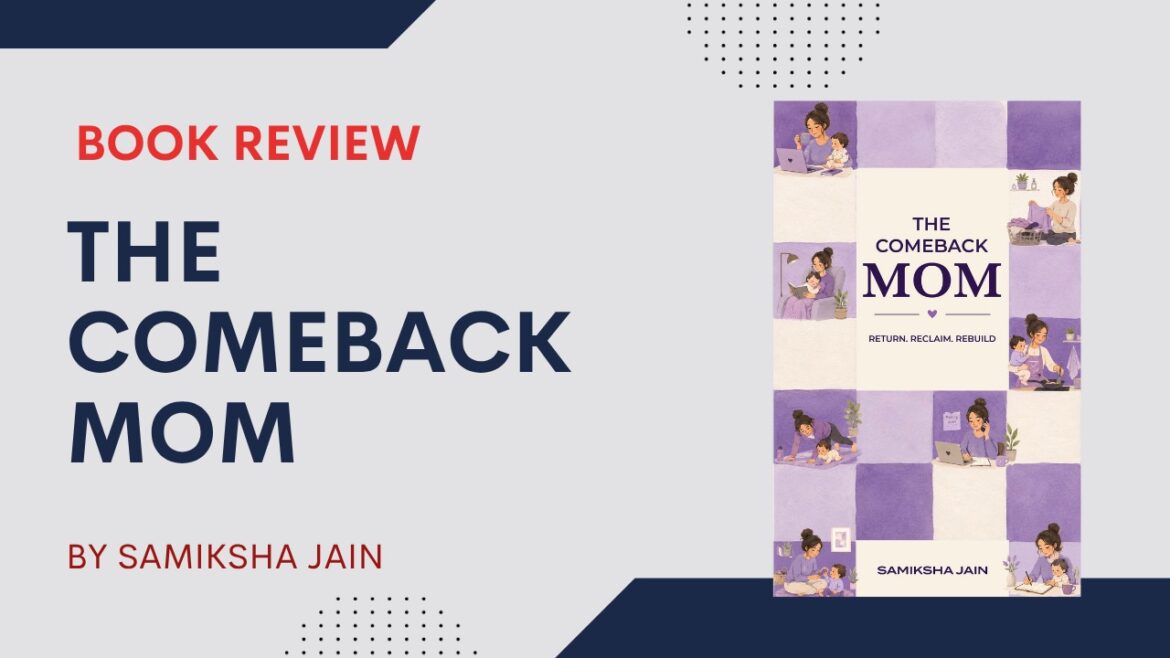
Motherhood is often celebrated as one of life’s most transformative experiences. Yet behind the joy, love, and fulfillment lies a quieter reality that many women struggle to articulate—the feeling of losing a part of themselves amid the demands of caring for others. In The Comeback Mom: Return. Reclaim. Rebuild., author Samiksha Jain addresses this often-overlooked aspect of motherhood with remarkable honesty, empathy, and practical wisdom.
This is not simply a career guide, nor is it a conventional parenting book. Instead, it is a thoughtful companion for women navigating the complex journey of rediscovering their identity after becoming mothers. Through relatable examples, actionable strategies, and heartfelt reflections, Jain creates a resource that speaks directly to women who love their families deeply but also yearn to reconnect with their professional aspirations and personal ambitions.
One of the book’s greatest strengths is its ability to acknowledge difficult emotions without judgment. Many mothers experience feelings of confusion, guilt, frustration, and self-doubt when considering a return to work. Society often frames motherhood as an all-consuming role, leaving little room for conversations about personal fulfillment outside family responsibilities. Jain challenges this narrative with compassion, reassuring readers that wanting a career does not diminish their love for their children. Instead, she presents the idea that motherhood and ambition can coexist harmoniously.
The author demonstrates a deep understanding of the psychological challenges faced by women during career transitions. She explores the “identity crash” that often accompanies motherhood—the unsettling feeling of no longer recognizing the person one once was. Through relatable anecdotes and realistic scenarios, she captures the emotional complexity of balancing multiple roles. Readers are likely to find themselves reflected in these pages, particularly in the moments that examine comparison, self-doubt, and the pressure to meet impossible standards.
What distinguishes The Comeback Mom from many self-help books is its practical approach. Rather than offering generic motivational advice, Jain provides structured frameworks and actionable tools that readers can immediately apply. The concept of conducting a personal “career audit” is especially effective. By encouraging women to evaluate their skills, capacities, values, and current realities, the book shifts the focus from simply returning to work toward building a career that aligns with their present lives and priorities.
The discussion surrounding guilt is another standout section. Jain identifies guilt as one of the most significant barriers preventing women from pursuing their goals. Whether it stems from societal expectations, family pressures, or internalized beliefs, guilt often influences decisions more than women realize. The author dismantles these patterns thoughtfully, helping readers recognize that making choices for personal growth is not selfish but necessary. Her treatment of this subject feels authentic and empowering because it avoids simplistic solutions while still offering hope.
The book also deserves praise for its strong grounding in the realities of Indian society. Many career-transition resources are written from Western perspectives that do not fully account for the cultural expectations, family structures, and workplace dynamics that Indian women encounter. Jain addresses issues such as joint-family living, childcare arrangements, social judgment, and gendered household responsibilities with clarity and relevance. As a result, the guidance feels realistic rather than theoretical.
Perhaps the most valuable aspect of the book is its emphasis on preparation rather than urgency. The author’s ninety-day comeback framework encourages readers to approach career re-entry as a gradual process rather than a rushed leap. By focusing first on childcare systems, family support structures, personal boundaries, and self-awareness, Jain recognizes that sustainable success requires a strong foundation. This practical perspective distinguishes the book from many career guides that focus exclusively on resumes and interviews while ignoring the realities of daily life.
The sections dedicated to networking, resume building, LinkedIn optimization, interview preparation, and salary negotiation are equally insightful. These chapters offer concrete strategies while maintaining the book’s supportive tone. Rather than encouraging readers to prove themselves, Jain emphasizes the importance of recognizing and communicating their value. This subtle shift in mindset transforms the comeback journey from one of seeking validation to one of reclaiming confidence.
Another refreshing element is the book’s exploration of alternative career paths. Entrepreneurship, freelancing, consulting, and flexible work arrangements are presented not as secondary options but as legitimate and empowering choices. This broader definition of professional success acknowledges that fulfillment looks different for every woman. By validating multiple pathways, Jain ensures that readers feel empowered to create careers that reflect their individual circumstances and aspirations.
The writing style throughout the book is warm, conversational, and highly accessible. Complex emotional experiences are explained with clarity, making the content easy to understand without sacrificing depth. The author writes with the reassuring voice of someone who understands the challenges firsthand rather than merely observing them from a distance. This authenticity creates a strong sense of trust between author and reader.
Ultimately, The Comeback Mom succeeds because it addresses far more than employment. At its core, it is a book about identity, self-worth, and personal agency. It reminds women that motherhood may transform them, but it does not erase them. The person they were before still exists—perhaps changed, perhaps wiser, but still worthy of growth, fulfillment, and ambition.
In a world where mothers are often expected to give endlessly without acknowledging their own needs, Samiksha Jain offers a powerful message: returning to yourself is not a luxury—it is a necessity. The Comeback Mom is an encouraging, practical, and deeply human guide that will resonate with mothers seeking clarity, confidence, and a renewed sense of purpose. It is a valuable addition to the growing body of literature supporting women as they navigate the evolving relationship between family, career, and self.
Title: The Comeback Mom
Author: Samiksha Jain
Publisher: Evincepub publishing