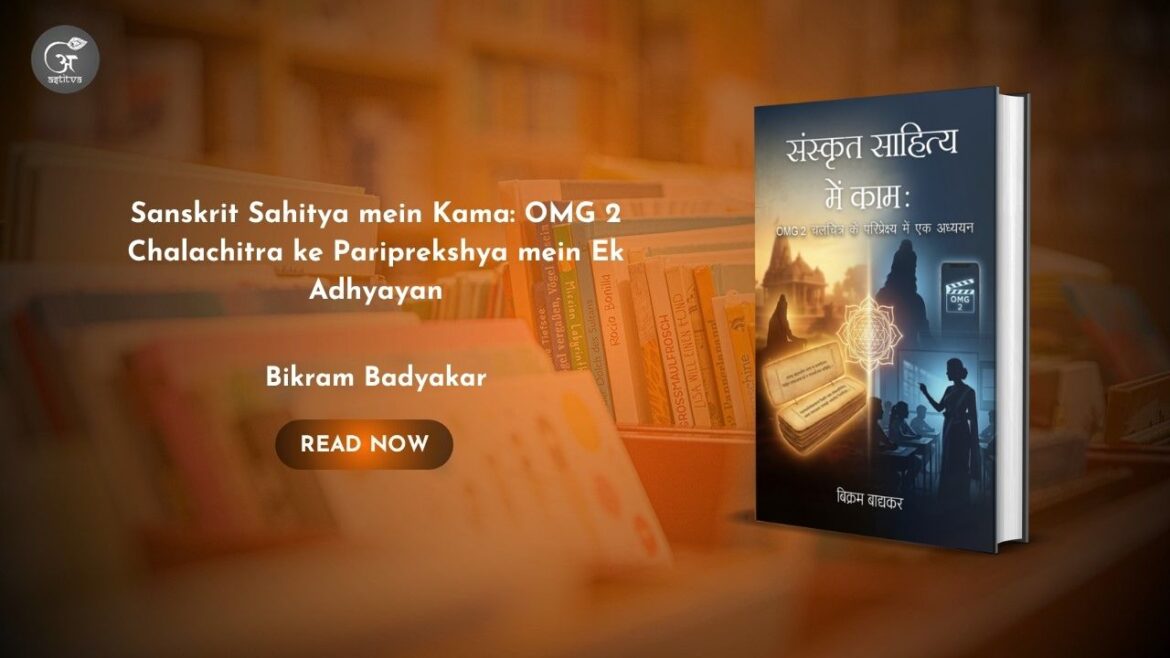
The release of Sanskrit Sahitya mein Kāma: OMG 2 Chalachitra ke Pariprekshya mein Ek Adhyayan by Bikram Badyakar comes at a moment when conversations around sex education, cultural literacy, and the reinterpretation of ancient wisdom are gaining renewed urgency in Indian society. Inspired by the thought-provoking themes of the film OMG 2, this book offers a rare bridge between classical Sanskrit literature and contemporary social discourse. It steps beyond popular perceptions and brings scholarly depth to a subject often shrouded in taboo, hesitation, or misinformation.
In today’s world, the need for scientific, age-appropriate, and balanced sex education is universally recognized. Yet, the debate often becomes entangled in cultural anxieties, with many assuming that conversations about sexuality originate from Western frameworks. What makes this book especially significant is its central assertion—echoing one of the strongest arguments presented in the film—that Indian civilization has always possessed a rich, logical, and open tradition regarding the understanding of kāma, sexuality, and human relationships. Through scriptures, kāmaśāstra texts, and Sanskrit literary works, the ancient Indian worldview approached these themes with a scientific spirit and a remarkably progressive outlook.
The film introduces several references from Sanskrit texts to support this argument. However, due to the constraints of cinematic storytelling, these references are presented only briefly. Bikram Badyakar’s work steps in precisely here. The book expands these references into a detailed, integrated study, examining them from both classical textual traditions and modern scientific perspectives. It delves deeply into the foundations of Kāmaśāstra, discussing how ancient scholars understood desire, education, consent, social ethics, and psychological well-being. By doing so, it reveals how the roots of sex education in India are far older and wiser than many assume.
What sets this book apart is its clarity, academic rigour, and cultural sensitivity. Rather than sensationalizing the subject, it treats kāma as an essential dimension of human experience—one that classical Sanskrit literature addressed without embarrassment or concealment. The author meticulously analyses the references mentioned in the film, situating them within their original textual contexts, and providing interpretations that resonate with contemporary readers. This makes the book valuable not only for Sanskrit scholars, but also for educators, psychologists, social thinkers, and anyone interested in understanding the intersection of tradition and modernity.
The release of this work also highlights the scholarly journey of its author. Bikram Badyakar, currently pursuing doctoral research on the revered Kamasutra at the University of Delhi, brings both academic discipline and literary sensitivity to this subject. With a strong educational foundation from Visva Bharati and multiple publications in national and international journals, his voice carries credibility as well as freshness. His poetic inclination and philosophical curiosity further enrich the narrative, making the study not only informative but engaging.
As discussions around youth, morality, culture, and education continue to evolve, Sanskrit Sahitya mein Kāma emerges as a timely and necessary contribution. It encourages society to revisit its own heritage with honesty and openness, reminding us that true knowledge—especially on sensitive subjects—must arise from clarity, not censorship. In doing so, this book invites readers to reclaim an ancient yet profoundly relevant tradition of wisdom that speaks to the modern world with surprising resonance.