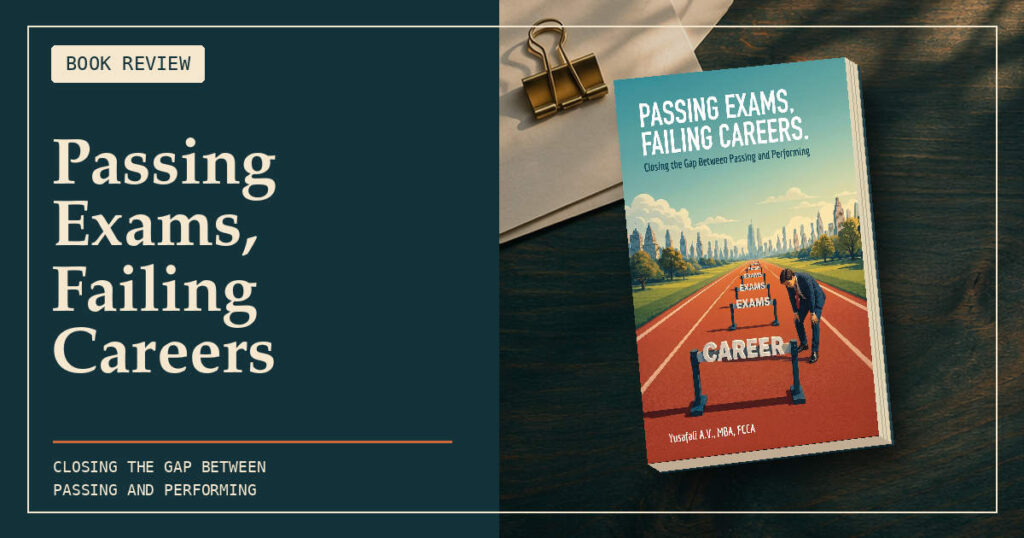
Academic success is often considered the foundation of a successful career. Students spend years preparing for examinations, earning qualifications, and developing theoretical knowledge with the expectation that these achievements will lead to professional growth. However, entering the workplace often reveals a different reality. Good grades and impressive certificates do not always translate into the ability to handle responsibilities, make sound decisions, or deliver meaningful results. Yusaf Ali explores this important distinction in his book, Passing Exams, Failing Careers: Closing the Gap Between Passing and Performing. Drawing on his professional experience in finance and business leadership, the author examines why academic achievements alone may not be enough to build a successful professional life.
The central idea of the book revolves around the difference between knowing something and being able to apply that knowledge effectively. Academic examinations generally measure a person’s understanding of subjects, ability to recall information, and performance within a structured assessment system. Professional environments, however, demand much more. Employees are expected to understand business situations, communicate clearly, adapt to changing circumstances, take responsibility, and make decisions that contribute to organisational objectives. The book encourages readers to recognise that qualifications may open professional doors, but practical abilities and sound judgement help individuals progress once they enter the workplace.
One of the most relevant aspects of Passing Exams, Failing Careers is its focus on commercial judgement. In a professional environment, knowing financial concepts or understanding business theories is only one part of the responsibility. Individuals must also learn how to interpret situations, evaluate available information, understand consequences, and make decisions that serve wider business goals. Through this perspective, Yusaf Ali highlights the importance of moving beyond textbook knowledge and developing an understanding of how organisations actually operate. This makes the book particularly relevant to students and professionals preparing to transition from academic learning into practical business environments.
Communication is another important theme explored in the book. Professional success is rarely determined by technical knowledge alone. Individuals must be able to explain their ideas, present information clearly, understand different viewpoints, and work effectively with colleagues and stakeholders. Even highly qualified professionals may struggle when they cannot communicate their knowledge in a useful and understandable manner. The author’s emphasis on communication draws attention to an ability that is essential across industries and professional roles. It also reminds readers that knowledge becomes more valuable when it can be shared, understood, and translated into meaningful action.
The book also examines adaptability and accountability as important elements of workplace performance. Modern professional environments are constantly changing, and individuals must be willing to learn, adjust their approaches, and respond to unfamiliar challenges. Holding qualifications does not automatically prepare someone for every situation they may encounter during a career. Adaptability requires an open attitude towards learning and the ability to respond constructively when circumstances change. Similarly, accountability involves taking ownership of decisions, responsibilities, and outcomes rather than relying entirely on formal qualifications or external circumstances. By bringing these qualities into the discussion, the author presents professional development as an ongoing process rather than an achievement that ends with graduation.
Another particularly timely dimension of the book is its discussion of artificial intelligence. As AI continues to transform routine tasks and workplace processes, the relationship between knowledge and professional value is also changing. Tasks that once required considerable time and manual effort may increasingly be supported or automated by technology. In this changing environment, professionals need to develop abilities that extend beyond performing routine activities. Commercial understanding, critical judgement, effective communication, adaptability, and accountability become especially important. The book encourages readers to think about how they can make their knowledge more valuable in a workplace where technology is reshaping traditional responsibilities.
Yusaf Ali’s professional background adds relevance to the subject. As the Chief Financial Officer of Emircom in Abu Dhabi and a Fellow of the Association of Chartered Certified Accountants (FCCA), he brings experience from the world of finance and business leadership. His perspective is particularly meaningful because financial and business roles often require professionals to combine technical understanding with practical decision-making. The responsibilities associated with business leadership extend beyond knowing financial principles. They involve evaluating situations, understanding organisational priorities, communicating with different stakeholders, and accepting responsibility for outcomes. His experience provides a professional foundation for exploring the challenges discussed throughout the book.
The intended audience of Passing Exams, Failing Careers is also one of its strengths. Students approaching the end of their academic journey may find its central message useful as they prepare to enter the professional world. Newly qualified professionals can reflect on the additional abilities they need to develop beyond their educational achievements. Experienced practitioners may also find value in reconsidering their working habits and identifying areas where practical skills can support further growth. By addressing readers at different stages of their careers, the book highlights the importance of continuous learning and professional improvement.
The title itself raises an important question about how society measures success. Passing examinations is a visible and easily recognised achievement, while professional performance develops over time and is demonstrated through everyday responsibilities and results. The contrast between passing and performing encourages readers to reconsider the assumptions they may have formed about education, qualifications, and career progression. Rather than dismissing academic learning, the book highlights the need to complement formal education with practical abilities that help individuals apply what they know.
Overall, Passing Exams, Failing Careers: Closing the Gap Between Passing and Performing by Yusaf Ali presents a relevant discussion about the changing expectations of the modern workplace. Its focus on commercial judgement, communication, adaptability, accountability, and the growing influence of artificial intelligence makes it particularly significant for today’s students and professionals. The book delivers an important reminder that academic qualifications are a valuable starting point, but they are not the final measure of professional capability. Real career growth requires individuals to transform knowledge into action, take responsibility, and continue learning beyond the classroom. For readers seeking to understand what truly contributes to workplace success, this book offers a thoughtful perspective on the difference between earning qualifications and making those qualifications count.







Your perspective matters
Share your thoughts respectfully. Comments are moderated.