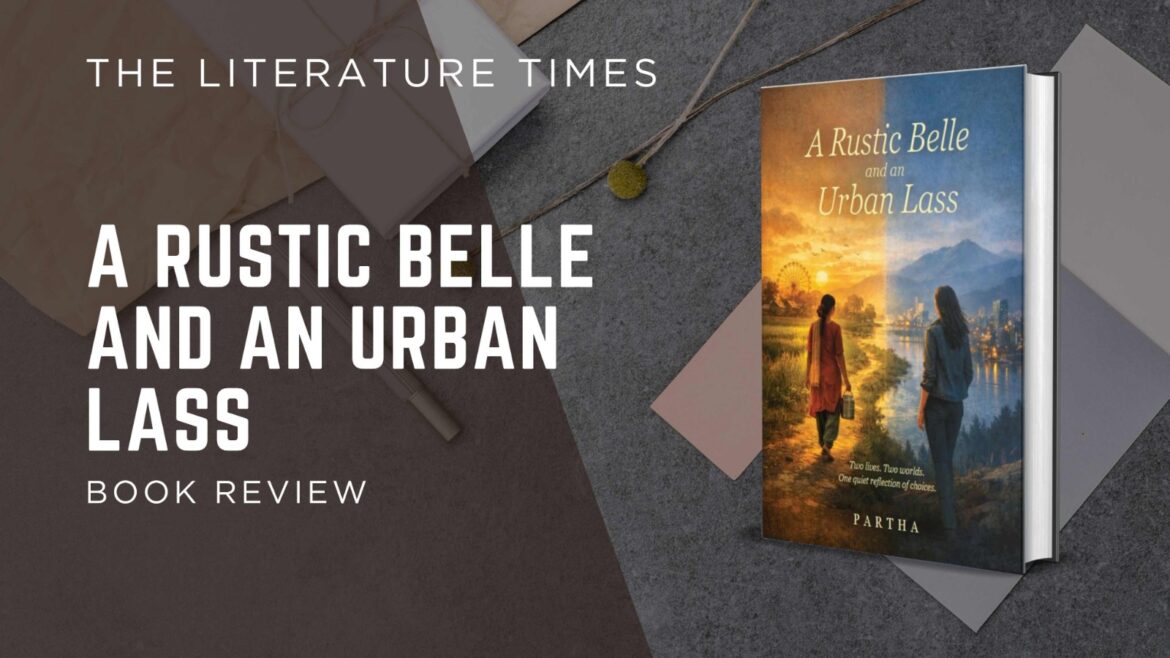
Partha Nag’s A Rustic Belle and an Urban Lass is a thoughtful and socially relevant novel that explores the contrasting worlds of two young women shaped by entirely different environments. Through the lives of a girl raised in a rural setting and another nurtured in an urban landscape, the author presents a compelling study of aspirations, identity, social expectations, and the universal desire for self-determination. While the narrative is simple in its structure, its thematic concerns resonate deeply with contemporary society, making it a meaningful read for readers interested in stories of personal growth and social change.
One of the novel’s most notable strengths lies in its portrayal of two distinct worlds without reducing either to stereotypes. The rural protagonist embodies values often associated with traditional communities—simplicity, resilience, and a close connection to family and culture. In contrast, the urban lass represents exposure to modern opportunities, changing social norms, and a broader outlook toward life. Yet, rather than presenting one lifestyle as superior to the other, Nag carefully highlights the strengths and limitations of both environments. This balanced perspective adds credibility to the narrative and encourages readers to reflect on the influence of upbringing on individual choices.
The author demonstrates a keen understanding of human aspirations. Despite their differing circumstances, the two young women share common dreams: the desire to shape their own futures and pursue careers aligned with their passions. This shared ambition forms the emotional core of the novel. By emphasizing their similarities rather than merely their differences, Nag underscores a universal truth—that personal aspirations transcend geographical and social boundaries. Whether in a village or a city, young people seek opportunities to define themselves and contribute meaningfully to society.
The novel’s social message is both timely and significant. At its heart lies an advocacy for freedom of choice, particularly for the younger generation. The story challenges conventional expectations that often dictate educational and professional paths based on family pressure, social status, or cultural norms. Through the experiences of its protagonists, the narrative argues that true fulfillment comes when individuals are allowed to pursue careers that align with their interests and talents. This message is delivered with sincerity rather than preachiness, making it accessible and relatable to a wide audience.
Nag’s writing style is straightforward and unpretentious, reflecting his inclination toward portraying the realities of life. The language prioritizes clarity over literary ornamentation, enabling readers to focus on the characters and their journeys. This simplicity serves the story well, particularly because the novel’s strength lies in its ideas and observations rather than dramatic plot twists. Readers looking for a fast-paced or highly complex narrative may find the storytelling measured, but those who appreciate character-driven fiction will likely value the authenticity of the author’s approach.
Another commendable aspect of the book is its emphasis on perspective. The rural and urban settings are not merely backdrops; they shape how the protagonists view success, relationships, and personal freedom. As the narrative unfolds, readers gain insight into how environment influences decision-making while also recognizing the importance of individual agency. This nuanced exploration of perspective prevents the story from becoming a simplistic comparison between village and city life. Instead, it evolves into a broader reflection on how people navigate the intersection of circumstance and ambition.
The characterization, while effective, occasionally leaves room for deeper exploration. The protagonists are engaging and serve their thematic purpose well, but some readers may wish for a more detailed examination of their inner conflicts and emotional struggles. A deeper psychological portrayal could have further enriched the narrative and heightened the emotional impact of their journeys. Nevertheless, the characters remain relatable, particularly because their challenges mirror those faced by many young people striving to balance personal dreams with societal expectations.
The novel also succeeds in fostering empathy. Readers from urban backgrounds may gain a greater appreciation for the challenges and strengths of rural life, while those familiar with rural settings may recognize the opportunities and complexities associated with urban living. By encouraging this mutual understanding, the book contributes to a larger conversation about social harmony and respect for diverse experiences.
What ultimately distinguishes A Rustic Belle and an Urban Lass is its optimism. Despite addressing societal constraints and generational tensions, the novel maintains faith in the power of determination and choice. It suggests that progress is possible when individuals are empowered to follow their aspirations and when society supports rather than restricts personal growth. This hopeful outlook leaves readers with a sense of encouragement and reflection long after the final page.
In conclusion, A Rustic Belle and an Urban Lass is a sincere and engaging novel that examines the dreams and dilemmas of young women from contrasting backgrounds. Through its exploration of rural and urban life, personal ambition, and the importance of career freedom, Partha Nag delivers a meaningful narrative with a strong social message. While the characterization could have benefited from greater depth, the book’s balanced perspective, relatable themes, and authentic storytelling make it a worthwhile read. It is a novel that not only entertains but also invites readers to reconsider the value of allowing the next generation to chart its own course in life.