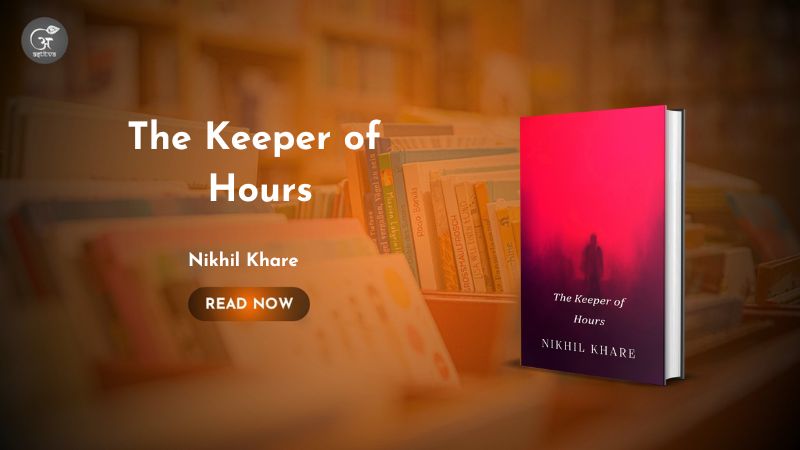
A powerful exploration of memory, history, and human transformation emerges with the release of The Keeper of Hours: Berlin After The War by Nikhil Khare. This literary psychological-historical novel transports readers into the shattered landscape of post-World War II Berlin, where the ruins of a nation mirror the fractured consciousness of its people.
At the heart of the novel is Friedrich Adler, a survivor navigating a city stripped of certainty, identity, and moral clarity. His journey begins with a mysterious encounter with the enigmatic “Keeper of Hours,” an old man who collects broken clocks from Berlin’s ruins, convinced that even destroyed things continue to carry time within them. This haunting figure becomes the catalyst for Friedrich’s transformation as he moves through a world being reshaped by political reconstruction, ideological conflict, and invisible systems of control.
As Germany divides and the Cold War intensifies, Friedrich evolves from a witness to history into an instrument of the very forces that seek to redefine society and human consciousness. Through atmospheric prose and philosophical depth, the novel examines themes of memory, power, moral detachment, historical narrative, and the subtle mechanisms through which destruction becomes normalized.
More than a historical novel, The Keeper of Hours is a profound meditation on what remains after systems collapse. It challenges readers to consider whether experiences, identities, and histories ever truly disappear, or whether they continue to exist beneath the surface of official narratives and collective memory.
With its evocative portrayal of postwar Berlin and its thoughtful exploration of the human condition, The Keeper of Hours: Berlin After The War stands as a compelling and timely literary work that will resonate with readers who appreciate intellectually rich and emotionally powerful fiction.