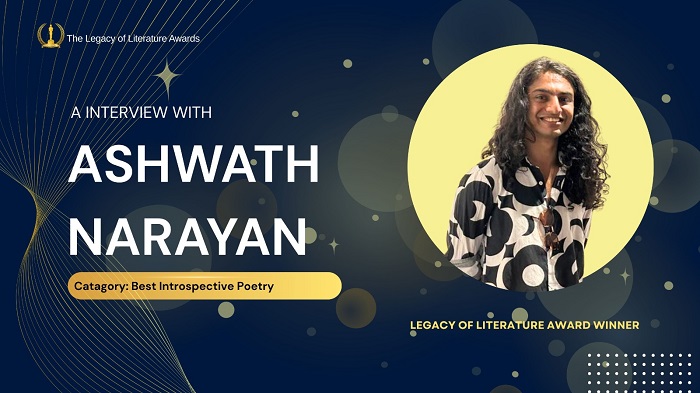
Ashwath Narayan is a deeply introspective writer whose work fearlessly explores the hidden chambers of the human mind—its wounds, its resilience, and its unspoken truths. With a distinctive voice that blends raw emotion, poetic intensity, and psychological depth, Ashwath brings to life the experiences of trauma, healing, love, loss, and survival. His writing is not just storytelling; it is confession, catharsis, and confrontation with inner realities many are afraid to acknowledge. Maladaptive Coping Mechanisms stands as a testament to his courage, vulnerability, and unwavering commitment to transforming pain into powerful literature.
The Literature Times: Your book dives deeply into trauma, memory, and emotional survival. What inspired you to put such personal and painful experiences into poetry?
Ashwath Narayan: Art is an incredible instrument to process trauma and complicated emotions. Writing, for me, was a therapeutic and cathartic process. Putting my feelings into words helped validate my experience. Things that felt so heavy to carry mentally were made lighter by transforming them into art.
The Literature Times: Many poems explore childhood wounds and their lifelong effects. How difficult was it to revisit these moments during the writing process?
Ashwath Narayan: While I was writing this book those feelings were actively on my mind and the wounds I was processing still felt very raw. Revisiting them was not really a voluntary undertaking but was happening independently by way of dissociative episodes and emotional flashbacks. Having constructively handled those emotions feels like I’ve laid my ghosts to rest.
The Literature Times: The book often blends metaphor with vivid reality—Tin Man, demons, childhood monsters. How do these symbols help you communicate emotional truth?
Ashwath Narayan: As a child I personified feelings, events and memories as a way to rationalise them the best I could. I employed those same metaphors to convey the raw, real elements in the most authentic way I could.
The Literature Times: Hypervigilance, dissociation, shame, and fear appear repeatedly in your work. Do you see writing as a coping mechanism or a form of healing?
Ashwath Narayan: Perhaps a bit of both, and definitely the latter. The ‘coping mechanisms’ described in my work refers to the elements and context of my literary construction, not to the act of writing about them,
The Literature Times: Love, abandonment, and vulnerability are major themes. How did personal relationships shape the emotional core of this book?
Ashwath Narayan: Adult relationships influenced how I felt about my childhood trauma. By reopening old wounds, pattern repetition became apparent.
The Literature Times: Several poems reveal raw insights into self-criticism and internal battles. What have you learned about yourself through this writing journey?
Ashwath Narayan: The lessons are endless. That I have been a creature of habit and that those habits were easily predictable, even expected.
The Literature Times: You address mental health openly, including anxiety, PTSD-like symptoms, and patterns of self-sabotage. What message do you hope readers take away about mental health struggles?
Ashwath Narayan: That mental health struggles should never be ignored and healing can happen through a myriad of different ways. When art can be born out of pain it can be powerful.
The Literature Times: The book uses a very poetic, rhythmic, almost confessional style. How did you develop your voice as a poet?
Ashwath Narayan: My poetry is heavily influenced by artists such as Taylor Swift, Lana del Rey and Nicki Minaj. I love how they handle their emotions and feelings through their craft and make it engaging.
The Literature Times: Which poem in Maladaptive Coping Mechanisms was the hardest to write—and why?
Ashwath Narayan: Damaged Goods. It chronicles the most painful time in my life and the negative self-view I harboured for decades because of it.
The Literature Times: What would you say to readers who see their own pain reflected in your work?
Ashwath Narayan: Connecting through art helps ease the pain that comes with the isolating effects of trauma. I’d like them to know that healing is possible.