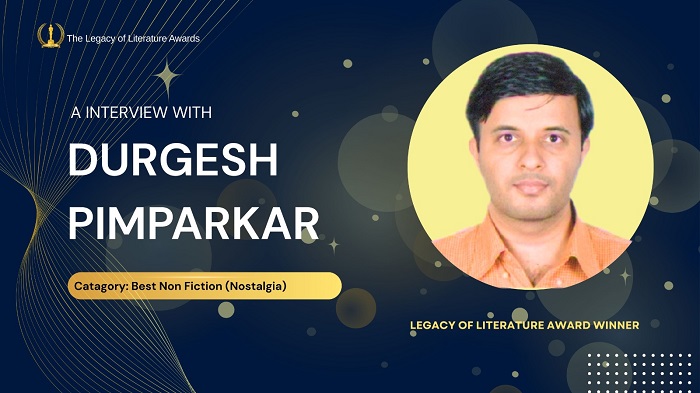
Durgesh Pimparkar is an award-winning writer and versatile professional from Pune, Maharashtra. A passionate storyteller, he enjoys both literary writing and computer programming. When he isn’t weaving words, Durgesh indulges in PC games, comics, stargazing, listening to the rain, or enjoying a casual coffee meetup. His debut memoir, 1980s, The Days of Innocence, reflects his childhood adventures, life lessons, and the nostalgic charm of growing up in the 1980s.
The Literature Times:What inspired you to write a memoir focused on your childhood in the 1980s?
Durgesh Pimparkar: There are many wonderful school memories and only my school friends know about them. My college friends or company friends don’t know anything about my childhood stories. During Friendship Day this year, my school friends insisted and motivated me to write a book about childhood memories regarding my school events, pranks and village visits, so that my college/company friends also can enjoy those stories.
The Literature Times:The 1980s were a unique era. How did the social and cultural environment of that time shape your experiences?
Durgesh Pimparkar: The 1980s era was very different from the current era. There was no internet, no social media. Just playing different games with friends and relatives. The culture was nice, but there were many restrictions as well – specially friendship between boys and girls within school, it was actively discouraged. Thankfully boys and girls could mingle within home lanes games.
The Literature Times:Your book covers a wide spectrum of childhood emotions—joy, mischief, wonder, and disappointment. Which emotion do you think had the most impact on your growth?
Durgesh Pimparkar: All were very memorable emotions, but the most impactful emotion was disappointment. It was the most defining and contributed a lot to my future growth.
The Literature Times:Many chapters include family bonds and village visits. How important was family in shaping the person you are today?
Durgesh Pimparkar: Family bonds were the foundation of everything. The village visits, school events, the pranks and everything further was built on that foundation. Each experience shaped me in its own way and its lessons continued to guide me in future.
The Literature Times: Do any particular childhood adventures or mischiefs stand out as defining moments for you?
Durgesh Pimparkar: The book contains only the defining/stand out childhood adventures or mischiefs.
The Literature Times:The book blends nostalgia with candid storytelling. How did you balance personal reflection with engaging storytelling for readers?
Durgesh Pimparkar: I like reading stories very much from childhood. The hobby of reading extracurricular books improved my writing skills. Everyone enjoys nostalgia, but the prose should be relevant and entertaining. That’s why instead of writing a single full length memoir, I divided my childhood events into smaller chapters to keep readers engaged. Such smaller chunks help readers to read at their speed and pause after a particular chapter and avoid reading fatigue.
The Literature Times: Were there any challenges in revisiting your childhood memories while writing this memoir?
Durgesh Pimparkar: My childhood memories shaped my personality. I clearly remember those moments. There were no challenges in revisiting my childhood memories.
The Literature Times: What do you hope readers, especially younger generations, will take away from 1980s, The Days of Innocence?
Durgesh Pimparkar: The younger generations can relate some universal things such as school crush, study challenges etc. Time changes, but there are some things whose nature never changes. I just want to tell the readers and younger generations that struggle in life is inevitable and both pleasure and pain are important aspects of life.
The Literature Times:You have a creative side that spans both literature and programming. Do these two passions influence each other in your work?
Durgesh Pimparkar: Yes, I have passion for writing as well as passion for good programming. It reflects in my professional life as well. Many stressful situations were diffused by my light hearted comments and boosted team morale.
The Literature Times:Looking back, if you could give one piece of advice to your younger self in the 1980s, what would it be?
Durgesh Pimparkar: No advice. If I could, I would just give a deep hug to my younger self in the 1980s.