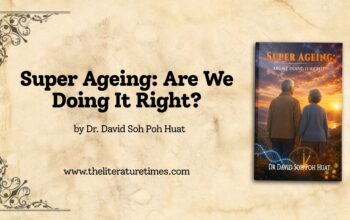
1. If you had to describe Super Ageing: Are We Doing It Right? in three words, what would they be and why?
Calling. Passion. Unconditional.
I describe these three words as CPU, similar to the CPU of a computer.
Calling – A calling to serve the super-ageing population.
Passion – One must have the passion to serve and care for the elderly.
Unconditional – Giving everything wholeheartedly and without conditions. There is little point in having passion if we serve only with conditions attached.
2. Was there a particular experience or moment that made you realize the subject of ageing needed greater public attention?
Yes. I have seen how the needs of older people are often not adequately addressed because of too much red tape within the system.
3. What is one common misconception about ageing that you hope this book will challenge?
Society tends to categorise older people according to their age, social status, occupation, and health status. This book calls for a more inclusive approach that applies to everyone aged 60 and above.
4. While researching and writing this book, was there anything you discovered that surprised or deeply affected you?
Yes. I was deeply affected by the growing number of elderly people dying alone. I was also struck by how some countries are able to manage their ageing populations more effectively than others.
5. How can families better prepare themselves emotionally and practically for the ageing of their loved ones?
Filial piety needs to be taught from a young age, with greater emphasis placed on family well-being rather than wealth.
6. In your view, what role should communities play in ensuring that senior citizens continue to feel valued, connected, and respected?
Communities should reach out to all senior citizens. However, in reality, much of what society does comes with conditions or benefits attached. Those serving older people need genuine passion, commitment, and a sincere desire to care for them.
7. Technology is becoming increasingly important in healthcare and everyday life. How do you see technology influencing the future of eldercare?
Technology can help greatly with data and information, but ultimately, human connection is still essential.
8. If policymakers and leaders could take away one important message from your book, what would you want it to be?
They need to review existing eldercare systems and ask why a country with, for example, a population of 20 million can successfully coordinate eldercare through a single agency, supported by private entities that are not primarily profit-driven.
In comparison, a country with a population of 10 million may establish multiple agencies and involve numerous profit-driven private entities, potentially resulting in duplicated and diluted services.
The focus should be on creating a coordinated and effective system that genuinely serves the needs of the ageing population.
9. Your work frequently connects caregiving with dignity and compassion. What does compassionate caregiving personally mean to you?
To me, compassionate caregiving means serving with passion and unconditionally, to the extent that we treat every elderly person as we would treat our own loved ones.
10. Looking ahead, what kind of society would you like future generations to create for older people and caregivers?
Leaders should not expect eldercare to be primarily driven by profit. Caregivers should also be internationally recognised as professionals under a recognised profession such as “Carer”, with appropriate professional recognition and protection, including professional indemnity insurance.