Introduction
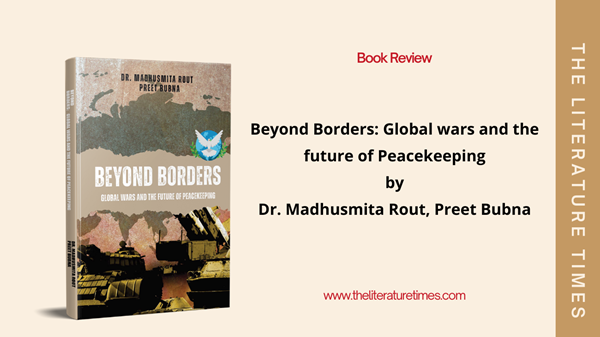
In a rapidly changing world, conflicts are no longer confined by geography. From Ukraine to Gaza, Sudan to Yemen, wars today are complex, interconnected, and prolonged. In this context, Beyond Borders: Global Wars and the Future of Peacekeeping by Dr. Madhusmita Rout and Preet Bubna emerges as an essential guide to understanding both the failures of traditional peacekeeping and the possibilities for a reimagined future. The book is available on Amazon, Flipkart, Kindle, and Google Play Books, making it easily accessible for global readers.
Why This Book Matters Today
Traditional peacekeeping mechanisms largely designed during the Cold War era are increasingly struggling to address 21st-century conflicts. The rise of non-state actors, cyber warfare, drones, and shifting geopolitical power dynamics demand a fresh look at global security. This book does exactly that.
By combining theoretical depth with practical case studies, the authors shed light on how global wars are evolving and why peacekeeping requires urgent reforms.
A Critical Assessment of Peacekeeping
The book traces the historical evolution of peacekeeping and highlights where it currently falls short. From UN Security Council deadlocks to underfunded and overstretched missions, the system faces critical challenges.
Readers are introduced to the economic and human costs of modern wars and the institutional limitations preventing meaningful interventions. The analysis is not limited to abstract theory it is grounded in real-world case studies such as Ukraine, Gaza, Sudan, and Yemen.
Innovative Pathways to Peace
Despite its critical tone, Beyond Borders is not just about exposing failures. It offers hopeful solutions. Among the innovative approaches discussed are:
- Preventive Diplomacy: Encouraging early interventions before conflicts escalate.
- Regional Coalitions: Strengthening peacekeeping through alliances like the African Union.
- AI-Driven Monitoring: Using technology to improve surveillance and prevent escalation.
- Grassroots Activism: Drawing inspiration from Liberia’s women-led peace movement and Myanmar’s digital protests.
At the heart of the book is the idea of a “Global Peace Compact” a framework built on inclusivity, regional cooperation, and climate conflict mitigation. This vision transforms peacekeeping into a proactive and borderless enterprise.
Theoretical Depth and Multidimensional Analysis
One of the book’s strengths lies in its integration of diverse theoretical perspectives. Readers encounter frameworks like:
- Realism – focusing on power struggles and national interests.
- Liberalism – emphasizing institutions and cooperation.
- Constructivism – analyzing the role of identity, norms, and narratives.
- Feminist Theory – highlighting gendered dimensions of war and peace.
- Johan Galtung’s Positive and Negative Peace – exploring the deeper roots of sustainable harmony.
This multidimensional approach makes the book valuable for students, scholars, policymakers, and general readers alike.
About the Authors
Dr. Madhusmita Rout
Currently serving as Assistant Professor of Political Science at Ravenshaw University, Cuttack, Odisha, Dr. Rout brings academic rigor and vast teaching experience. A graduate of Jawaharlal Nehru University (JNU), New Delhi, with both M.Phil. and Ph.D. in International Relations, she has published extensively in peer-reviewed journals and presented her research at prestigious national and international conferences. Beyond teaching, she actively mentors Ph.D. scholars, nurturing the next generation of researchers.
Her dedication lies in bridging academic insight with real-world issues, making her contributions both scholarly and socially relevant.
Preet Bubna
An emerging voice in political science, Preet Bubna holds both Bachelor’s and Master’s degrees in Political Science from Ravenshaw University. He has successfully cleared the National Eligibility Test (NET) four times, demonstrating his commitment to research and teaching. With a passion for global politics and world order, Bubna aims to bring fresh perspectives to international relations and governance.
Who Should Read This Book?
- Academics and Students of international relations, political science, and peace studies.
- Policy Makers and Diplomats seeking fresh strategies for peacebuilding.
- Civil Society Leaders and Activists engaged in conflict resolution.
- General Readers interested in understanding today’s wars and the future of peacekeeping.
Final Thoughts
Beyond Borders: Global Wars and the Future of Peacekeeping is more than a critique of current failures. It is a roadmap for transformation redefining peacekeeping as a forward-looking, inclusive, and technologically adaptive system. In an era where conflicts are global and intertwined, this book offers a powerful call to action.
For anyone concerned about the future of peace, justice, and global cooperation, this book is not just recommended it is essential.