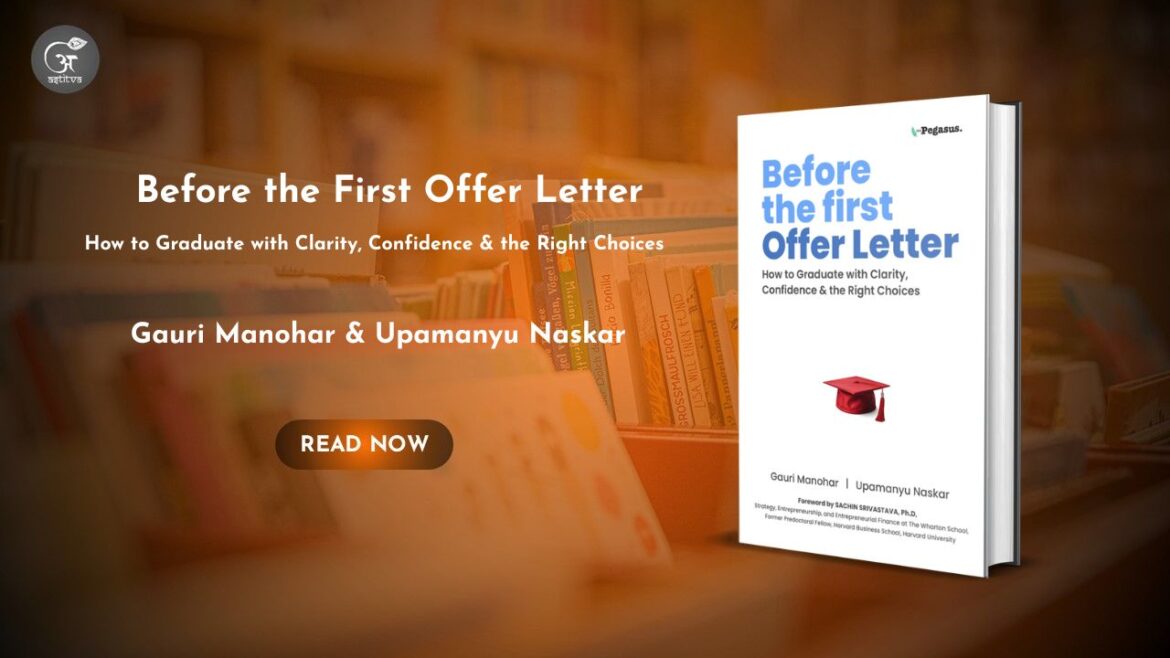
A thoughtful new book titled Before the First Offer Letter: How to Graduate with Clarity, Confidence & the Right Choices by Gauri Manohar and Upamanyu Naskar offers a fresh perspective on how students and parents should think about education, careers, and long-term success. In an age where college placements and first job offers are often treated as the ultimate measure of achievement, this book challenges that widely accepted belief and encourages readers to reflect on the deeper decisions that shape a meaningful career.
Every year, millions of students step into college with a clear image in mind—the day they receive their first offer letter. For many families and students, that moment represents validation after years of hard work. Grades, internships, résumés, and extracurricular achievements are often built around this single goal. However, Before the First Offer Letter gently but firmly presents a different reality: by the time that first offer letter arrives, the most important career decisions have already been made.
The book explains that choices made much earlier—such as selecting the right academic stream, developing meaningful skills, building the right network, and exploring opportunities—play a far greater role in shaping a student’s future than the final placement process itself. Instead of focusing on short-term success or quick motivational formulas, the authors provide a thoughtful framework for understanding how real career paths evolve over time.
Through clear insights and practical observations, the book guides readers on how to choose an undergraduate path that aligns with their natural strengths, curiosity, and long-term potential. It also highlights the silent pressures that many students face, including degree prestige, peer influence, and herd mentality—factors that often push students into decisions that may not truly reflect their abilities or aspirations.
Another key focus of the book is skill development. The authors emphasize that valuable and rare skills are not built during the final year of college when placement season begins, but through consistent exploration and experimentation throughout the academic journey. By encouraging students to treat college as a period for learning, networking, and strategic growth, the book shows how the undergraduate years can become a powerful foundation for future success.
Written with clarity, honesty, and practical wisdom, Before the First Offer Letter speaks directly to students who want to design their careers with intention rather than simply following conventional paths. It also serves as an insightful guide for parents who wish to support their children’s ambitions while respecting their individuality and interests.
The authors, Gauri Manohar and Upamanyu Naskar, bring years of experience working closely with students, young professionals, and families navigating academic and career decisions in India. Through their mentoring work and collaborations with educational institutions, they repeatedly noticed a common pattern. While students were preparing rigorously for campus placements, many lacked a deeper sense of direction or clarity about their long-term goals. At the same time, families were investing significant resources in education without always questioning whether those choices truly matched the student’s strengths and personality.
Their work draws from a unique combination of education, psychology, and strategic thinking. Instead of offering motivational slogans or instant success strategies, they advocate for structured decision-making, self-awareness, and thoughtful planning. According to the authors, meaningful career success is rarely the result of last-minute preparation during the final semester; it is the outcome of deliberate decisions made years earlier.
Before the First Offer Letter represents the culmination of their insights from working with students across different academic streams, institutions, and ambitions. The philosophy that runs through the book is simple yet powerful: clarity should come before credentials, direction before designation, and identity before income.
With its honest approach and practical guidance, the book invites readers to rethink how success is defined and how careers are shaped. For students standing at the threshold of college life and for parents seeking to guide them thoughtfully, this book offers a valuable perspective on building a future that is not only successful but also meaningful and intentional.