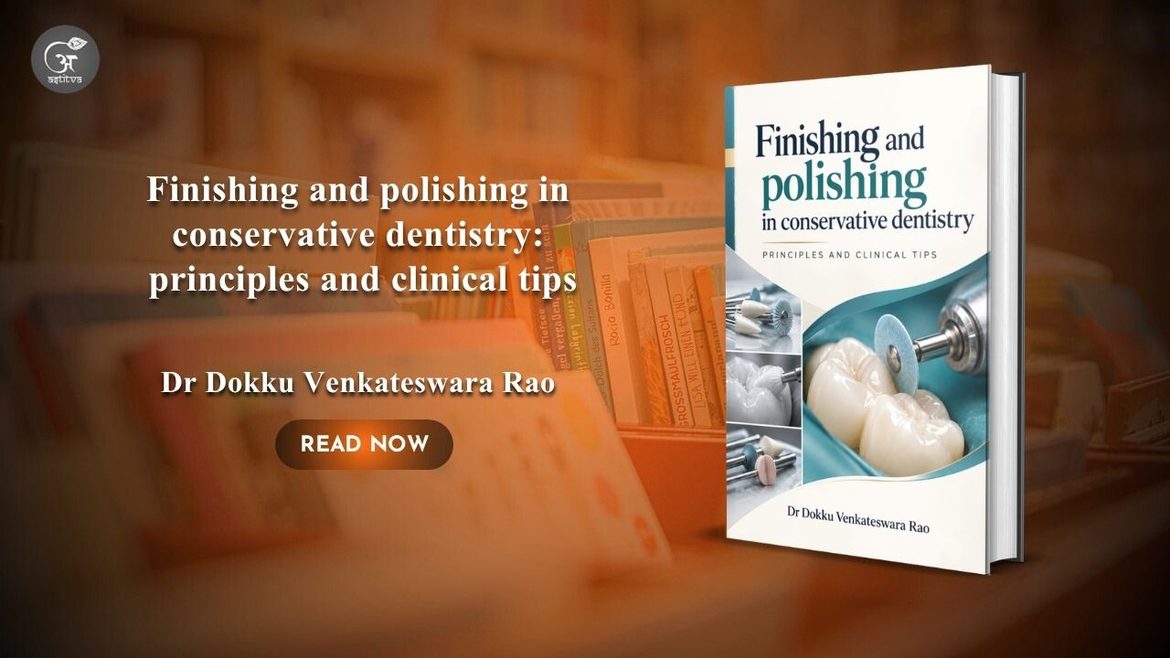
In restorative dentistry, excellence is determined not only by the materials used or the techniques employed during a procedure but also by the precision with which the final restoration is finished and polished. These essential steps influence the appearance, surface quality, durability, and overall clinical success of dental restorations. Recognizing their importance, Dr. Dokku Venkateswara Rao presents his book, Finishing and Polishing in Conservative Dentistry: Principles and Clinical Tips, a comprehensive resource designed to strengthen clinical understanding and promote excellence in restorative dental practice.
The book focuses on the principles, materials, instruments, and clinical techniques involved in finishing and polishing dental restorations. By combining evidence-based knowledge with practical clinical guidance, it aims to help dental students, educators, and practicing clinicians develop a systematic approach to achieving functional, smooth, and aesthetically pleasing restorative outcomes.
Understanding the Importance of Finishing and Polishing
Finishing and polishing are often regarded as the final stages of restorative procedures, but their importance extends far beyond appearance. A carefully finished restoration contributes to a smoother surface, improved aesthetics, and better integration with the surrounding natural dentition. Appropriate polishing techniques can also help reduce surface irregularities that may encourage plaque accumulation and compromise oral hygiene.
The quality of these final steps can influence patient comfort, periodontal health, and satisfaction with dental treatment. Conversely, inadequate finishing may leave rough surfaces, irregular margins, or imperfections that affect the restoration’s appearance and clinical performance.
Through Finishing and Polishing in Conservative Dentistry: Principles and Clinical Tips, Dr. Venkateswara Rao emphasizes the need to approach these procedures with attention to detail, sound scientific knowledge, and an understanding of the characteristics of restorative materials. The book encourages readers to recognize finishing and polishing not as optional refinements but as integral components of high-quality restorative dentistry.
Bridging Scientific Principles and Clinical Practice
One of the central strengths of the book is its emphasis on connecting theoretical knowledge with practical application. Conservative dentistry requires clinicians to make informed decisions about restorative materials, instruments, and procedural techniques according to the clinical situation. Understanding how different materials respond to finishing and polishing is therefore essential for achieving consistent results.
The book offers a structured exploration of the principles underlying these procedures, helping readers understand the rationale behind different clinical approaches. Its coverage of materials and instruments provides a foundation for selecting appropriate tools, while its focus on clinical techniques supports the development of a more systematic and precise working method.
Practical protocols and clinical tips are intended to make the subject easier to understand and apply. By presenting the subject in an accessible manner, the book seeks to help readers move beyond memorizing procedures toward understanding why particular techniques matter and how they contribute to the quality of the final restoration.
Its evidence-based orientation also highlights the importance of grounding clinical decisions in scientific understanding rather than relying solely on routine or personal preference. This approach is particularly valuable in a field where restorative materials, clinical methods, and professional expectations continue to evolve.
A Valuable Resource for Dental Students and Practitioners
Finishing and Polishing in Conservative Dentistry: Principles and Clinical Tips is designed to serve a broad audience within the dental profession.
For undergraduate dental students, it offers an opportunity to strengthen their understanding of an essential aspect of restorative treatment and build a sound foundation for clinical practice. Postgraduate students can use the subject matter to deepen their knowledge of restorative procedures and refine their clinical reasoning.
Dental educators may find the book useful as a supporting resource for explaining fundamental principles and demonstrating the significance of finishing and polishing protocols. For practicing clinicians, it provides an opportunity to revisit established concepts, review practical techniques, and reinforce a consistent approach to restorative quality.
By addressing both foundational principles and clinical considerations, the book aims to make specialized knowledge more accessible to readers at different stages of their professional development.
About the Author: Dr. Dokku Venkateswara Rao
Dr. Dokku Venkateswara Rao holds a Bachelor of Dental Surgery (BDS) from Sibar Institute of Dental Sciences, Guntur, and a Master of Dental Surgery (MDS) in Conservative Dentistry and Endodontics from Lenora Institute of Dental Sciences, Rajamahendravaram (Rajahmundry).
With a keen interest in restorative dentistry, endodontics, and evidence-based clinical practice, Dr. Venkateswara Rao is committed to continuous learning and excellence in patient care. He is passionate about sharing practical knowledge with dental students and fellow clinicians, recognizing the importance of clear explanations and clinically relevant guidance in professional education.
Through this book, he seeks to simplify the concepts and techniques associated with finishing and polishing, helping readers develop the knowledge and confidence required to pursue predictable, functional, and aesthetically successful restorative outcomes.
Advancing Excellence in Restorative Dentistry
With Finishing and Polishing in Conservative Dentistry: Principles and Clinical Tips, Dr. Dokku Venkateswara Rao brings attention to a critical stage of restorative dental care that can significantly influence treatment quality. By combining scientific principles, practical protocols, and clinical insights, the book seeks to support learning, refine clinical skills, and encourage greater precision in everyday dental practice.
Ultimately, the book reinforces an important message: successful restorative dentistry depends not only on placing a restoration but also on the care and expertise invested in its final refinement. For students, educators, and clinicians committed to improving restorative outcomes, this book offers a focused resource for understanding and applying the principles of finishing and polishing with greater confidence and consistency.