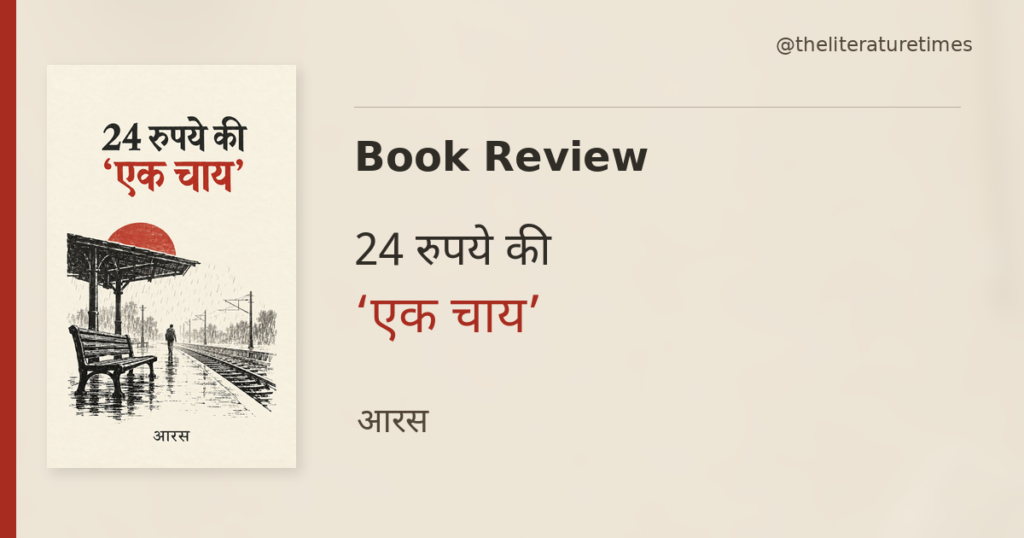
An Emotional Journey Through Memories, Relationships, and the Unfinished Moments of Life
Some stories capture our attention through extraordinary events, while others find their strength in the simplest experiences of everyday life. 24 Rupaye Ki ‘Ek Chai’ by Aaras belongs to the second category. With an unusual yet relatable title, the book invites readers to discover the emotions, memories, and personal experiences hidden within seemingly ordinary moments. A simple cup of tea becomes a meaningful starting point for exploring the relationship between the human mind and heart, the passage of time, and the experiences that continue to shape our lives.
The central idea of 24 Rupaye Ki ‘Ek Chai’ begins with an interesting comparison between time travel and human memory. In films, characters often use extraordinary machines to revisit the past, witness forgotten events, or explore possibilities beyond the present. However, the author introduces a more personal understanding of time travel. The human mind itself possesses the remarkable ability to move between yesterday, today, and tomorrow. A familiar sound, an unexpected conversation, or a simple memory can transport us to moments we believed were long forgotten. Yet these journeys are not controlled by the mind alone. Our emotions determine which memories remain important and why certain experiences continue to influence us.
This connection between thoughts and feelings provides the philosophical foundation of the book. The narrative’s premise explores the space between completeness and incompleteness, between what has happened and what remains unresolved. Human life is filled with experiences that rarely reach perfect conclusions. Some relationships change without explanation, certain conversations remain unfinished, and many dreams take unexpected directions. Through these familiar emotional realities, the book seeks to create a connection with readers who have experienced similar uncertainties in their own lives.
One of the most interesting aspects of the book is its ability to find meaning in something as ordinary as a cup of tea. In Indian society, tea is much more than a beverage. It accompanies friendships, family discussions, professional meetings, moments of solitude, and countless everyday conversations. Sometimes, an entire relationship begins over tea. At other times, a cup of tea becomes associated with a memory that remains unforgettable. By choosing such a familiar element for the title, Aaras creates an immediate sense of curiosity. The modest price of twenty-four rupees also adds a realistic touch, suggesting that the emotional value of an experience has little connection with its financial worth.
The book’s description suggests that its emotional appeal lies in the familiarity of its central journey. Rather than presenting an experience completely removed from ordinary life, the author invites readers to recognise their own memories and feelings within the story. This approach is particularly meaningful in reflective fiction, where the relationship between the reader and the narrative often depends on emotional identification. Readers may find themselves remembering people they once knew, conversations they wish they could revisit, or moments whose importance became clear only after they had passed.
Another important theme suggested by the book is the relationship between the past and the present. People often believe that moving forward requires leaving everything behind. However, memories rarely disappear simply because circumstances change. They continue to influence our choices, relationships, and understanding of ourselves. The book’s premise recognises this emotional complexity and presents life as a continuous journey in which the past remains connected to the present. This perspective encourages readers to reflect on their own experiences and consider how seemingly insignificant events may have contributed to their personal growth.
The author’s background adds another interesting dimension to the book. Aaras comes from Bhilai, Chhattisgarh, and has developed a strong interest in poetry, storytelling, songwriting, and music. He has also received introductory training in classical music under Kirti Kanenkar. Although he works professionally as a software engineer and currently lives in Pune with his wife and daughter, creative writing remains an important means of self-expression for him. His interest in exploring human emotions through poetry and stories provides valuable context for understanding the reflective nature of 24 Rupaye Ki ‘Ek Chai’.
Aaras’s connection with poetry is particularly relevant to the book’s emotional direction. Poetry often finds significance in feelings that are difficult to explain through ordinary conversation. It allows writers to express longing, affection, regret, hope, and the quiet complexities of human relationships. The author’s stated interest in understanding different forms of love suggests a similar sensitivity in his approach to storytelling. The book’s description presents its narrative as an attempt at self-discovery, with the author’s poetic imagination playing an important role in shaping its emotional perspective.
The concept of self-discovery is another compelling element of the book. People frequently search for meaning through external achievements, relationships, and responsibilities, yet understanding oneself can be an equally challenging journey. Sometimes, personal clarity emerges through unexpected experiences rather than major life-changing events. A familiar place, an ordinary meeting, or a forgotten memory can reveal something important about our feelings and priorities. By connecting everyday life with introspection, 24 Rupaye Ki ‘Ek Chai’ offers a premise that encourages readers to look more closely at their own emotional journeys.
The simplicity of the book’s central idea is one of its most appealing qualities. Its title does not promise an extraordinary adventure or a dramatic mystery. Instead, it creates curiosity through familiarity. This understated approach makes the concept accessible to readers who appreciate stories about human relationships, memories, and the emotional realities of ordinary life. The closing invitation in the book’s description, “Lijiye Sahab, Aapki Ek Pyali Chai,” beautifully captures this welcoming spirit. It suggests that the reader is being invited not merely to read a story but to share an experience.
While the available description establishes the book’s themes and emotional intentions, it does not provide enough information to evaluate individual characters, dialogue, pacing, or the complete narrative structure. Nevertheless, the premise indicates a thoughtful approach to contemporary Hindi fiction, particularly in its interest in connecting familiar experiences with deeper questions about memory, identity, and human relationships.
Ultimately, 24 Rupaye Ki ‘Ek Chai’ by Aaras presents an emotionally engaging concept built around the extraordinary significance of ordinary moments. Its exploration of memories, unfinished experiences, and the connection between the mind and heart offers readers an opportunity for personal reflection. The book appears especially suitable for those who enjoy introspective Hindi fiction and stories that explore the quieter dimensions of human life.
At its heart, 24 Rupaye Ki ‘Ek Chai’ reminds us that meaningful stories do not always begin with extraordinary circumstances. Sometimes, they begin with a simple conversation, an unexpected memory, or a cup of tea. And sometimes, the smallest moments become the ones we remember for a lifetime.



Your perspective matters
Share your thoughts respectfully. Comments are moderated.