
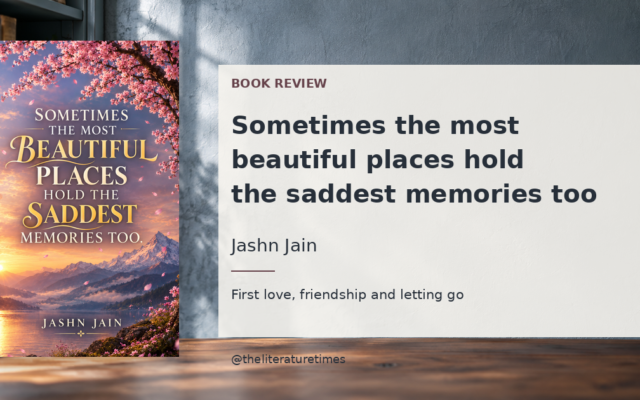
Jashn Jain introduces his debut novella, Sometimes the Most Beautiful Places Hold the Saddest Memories Too, with a story centred on the emotional changes of growing up. The forthcoming book follows a teenage boy through first love, friendship and a memorable mountain trip, bringing together the pleasure of new experiences and the difficulty of accepting that some connections do not last. Its publication introduces Jain’s interest in the ordinary moments that acquire extraordinary importance when we look back on them. Rather than presenting adolescence only as a period of beginnings, the novella also considers what it means to encounter disappointment and learn to live with it.
The book’s description places a mountain journey at the heart of this experience. Laughter, conversations and shared time give the protagonist memories that remain significant beyond the trip itself. Against that setting, the story examines feelings that are not always returned and relationships that do not necessarily end as hoped. The premise is rooted in a familiar emotional contradiction: a place can retain its beauty while becoming painful to remember. A landscape does not have to change for a person’s relationship with it to change completely. That contrast gives the novella its title and establishes the subject around which its coming-of-age story takes shape.
For readers encountering Jain’s work for the first time, the title offers a clear introduction to its concerns. It brings happiness and sadness into the same sentence, rather than suggesting that one cancels out the other. The memories associated with a meaningful experience may be difficult precisely because the experience mattered. In the supplied account of the novella, the protagonist begins to recognise that people can become important parts of our lives without remaining in them forever. The book therefore approaches letting go as something more complicated than deciding that a relationship was a mistake or that a journey should never have happened.
First love is one of the story’s central themes, but friendship also has a place in its emotional world. The mountain trip brings together moments of companionship and discovery, making the journey about more than a single feeling or encounter. This broader setting matters to the book’s premise. Growing up involves learning how to belong to other people, how to understand one’s own hopes and how to respond when those hopes are not shared. By locating these concerns within an experience of travel and friendship, the novella connects private emotions with the social moments through which young people often begin to understand themselves.
The presence of unreturned feelings gives the story another point of connection for its intended readers. The excitement of a new attachment can coexist with uncertainty, and what one person remembers as deeply meaningful may not carry the same meaning for someone else. Jain’s book description does not promise a perfect resolution to that difficulty. Instead, it identifies the experience of holding on, and the gradual process of learning to live with memories, as important parts of the protagonist’s journey. That emphasis makes room for an account of growing up in which understanding arrives without every wish being fulfilled.
The novella’s focus on memory also extends beyond the immediate experience of loss. Moments that seem ordinary while they are happening can become the moments a person returns to most often. A conversation, a shared view or time spent with friends may gain significance only after the opportunity to repeat it has passed. The book’s premise draws attention to this change in perspective. It is concerned not simply with what happens during an important period of life, but with the way that period continues to be carried forward. In that sense, remembering becomes part of the coming-of-age process rather than a separate activity that begins after it.
Jain’s supplied biography presents him as a young aspiring author drawn to everyday experiences and emotions that are not always easy to express. Friendship, nostalgia, first love and letting go are recurring interests in the way he describes his writing. His debut novella brings those interests into a single fictional project. The biography does not frame the work through professional credentials or literary awards; its emphasis is on the impulse to give words to feelings and to connect with people who recognise them. That focus provides a useful introduction to the author without requiring readers to treat the story as an account of his own life.
For Jain, writing is described as a way to explore feelings as well as to tell a story. His stated hope is that readers will appreciate the people, places and moments that make life meaningful, even when those experiences can no longer be revisited in the same way. This intention aligns with the novella’s central contrast between a beautiful setting and the sadness attached to it. The book is positioned around emotional recognition rather than advice, and its fictional premise allows the questions of attachment and memory to emerge through a teenage protagonist’s experience. Readers need not share the precise circumstances of that experience to understand the concerns it raises.
The forthcoming title may particularly interest readers who seek coming-of-age fiction concerned with relationships and inward change. Its description points towards a reflective story rather than a promise of uncomplicated romance. Readers drawn to narratives about first love may find the focus on unspoken feelings relevant, while those interested in friendship and nostalgia have another way into the premise. The mountain journey supplies a shared experience around which these interests meet. The appeal proposed by the book is not that every relationship can be restored, but that experiences can retain meaning even when the people associated with them are no longer present in the same way.
As a debut, Sometimes the Most Beautiful Places Hold the Saddest Memories Too introduces a defined area of interest for Jashn Jain: the emotional life that continues beneath ordinary events. Its significance as a new publishing project lies in that concentration on how growing up is remembered, not only how it is experienced. A trip can end while the feelings connected to it remain unresolved. A friendship can matter without lasting forever. The novella’s premise places such possibilities alongside the pleasures of youth, allowing anticipation, affection and sadness to belong to the same stage of life.
Jain’s forthcoming book invites attention to a question that gives its long title a clear purpose: how do we continue to value the beautiful parts of an experience when remembering them also hurts? Through its teenage protagonist, the novella approaches that question through first love, companionship and a mountain trip that becomes difficult to leave behind. For readers interested in the bittersweet side of growing up, it offers a new fictional exploration of the memories that remain after a moment has passed.



Your perspective matters
Share your thoughts respectfully. Comments are moderated.