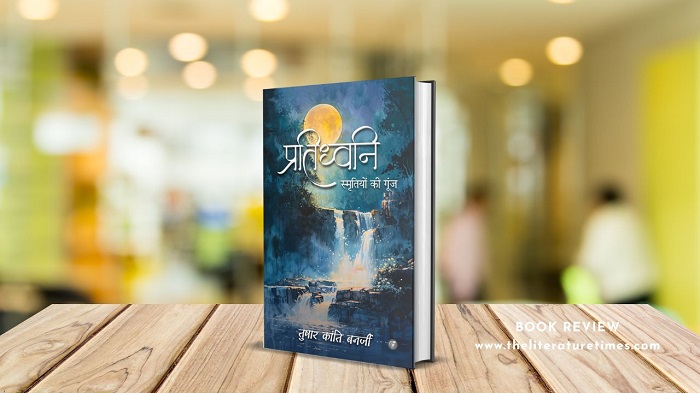
Some books are written with ink; others are written with memory, emotion, and the fragrance of time. Pratidhvani: Smritiyon kee Gunj by Tushar Kanti Banerjee belongs to the latter category. It is more than just an autobiography — it is a heartfelt reflection on life’s journey through the decades, capturing the simplicity, warmth, and human values that once defined Indian society.
Set against the backdrop of the 1960s and 1970s, the book beautifully mirrors the cultural and emotional evolution of both the author and the nation. The 1960s emerge as an age of innocence — of radio melodies filling the air, paper kites fluttering in the blue sky, and letters carrying feelings across distances. Banerjee paints these scenes with vivid detail, allowing readers to relive their own forgotten childhoods. The 1970s, in contrast, introduce the vigor of youth — dreams taking shape, friendships deepening, and perspectives on society beginning to shift.
What makes Pratidhvani so engaging is its ability to balance nostalgia with reflection. The author doesn’t simply recount memories; he examines them through the lens of wisdom and gratitude. His writing resonates with an honesty that feels both personal and universal. Each page invites readers to pause, smile, and think about the people and experiences that shaped their own lives.
Banerjee’s storytelling is deeply rooted in the soil of rural India. He captures the beauty of village life — its simplicity, struggles, and sense of community — while also tracing his transition to city living. The book thus becomes a bridge between tradition and modernity, offering readers a panoramic view of a changing India. The stories evoke sensory memories — the earthy smell after rain, the rustle of fields, and the sound of old songs echoing through quiet evenings.
The memoir’s emotional core lies in the author’s relationships — with his family, mentors, and especially his daughters. The book is inspired by his elder daughter, Dr. Indushree Banerjee, who is pursuing research in Holland, and lovingly supported by his younger daughter, Sritama. Their presence adds tenderness to the narrative, turning Pratidhvani into a dialogue between generations — a father passing on not just stories, but values.
From a literary standpoint, Banerjee’s prose is simple yet evocative. It carries the sincerity of lived experience rather than ornamental style. His tone reflects humility and gratitude — especially toward his father, whose sacrifices made his education possible, and toward the family members who guided him through life’s challenges.
The author’s personal journey — from a boy walking barefoot through muddy roads in Bhagwanpur, Bihar, to earning a Master’s in Agricultural Economics and serving the nation through his work in IFFCO — adds depth to the narrative. His life’s work in rural development, women’s empowerment, and sustainable agriculture lends authenticity to his reflections on growth and service.
Pratidhvani: Smritiyon kee Gunj is not merely a recollection of the past; it is an invitation to introspection. It encourages readers to slow down, reconnect with their roots, and appreciate the values of patience, simplicity, and sincerity — virtues that modern life often overlooks.
In essence, this book is a tribute to time itself — to the people who shape us, the memories that sustain us, and the echoes (pratidhvani) that continue to resonate long after the moments have passed.
✨ A nostalgic, soulful, and inspiring read — “Pratidhvani: Smritiyon kee Gunj” reminds us that the past is not gone; it lives within us, whispering softly through the echoes of memory. ✨