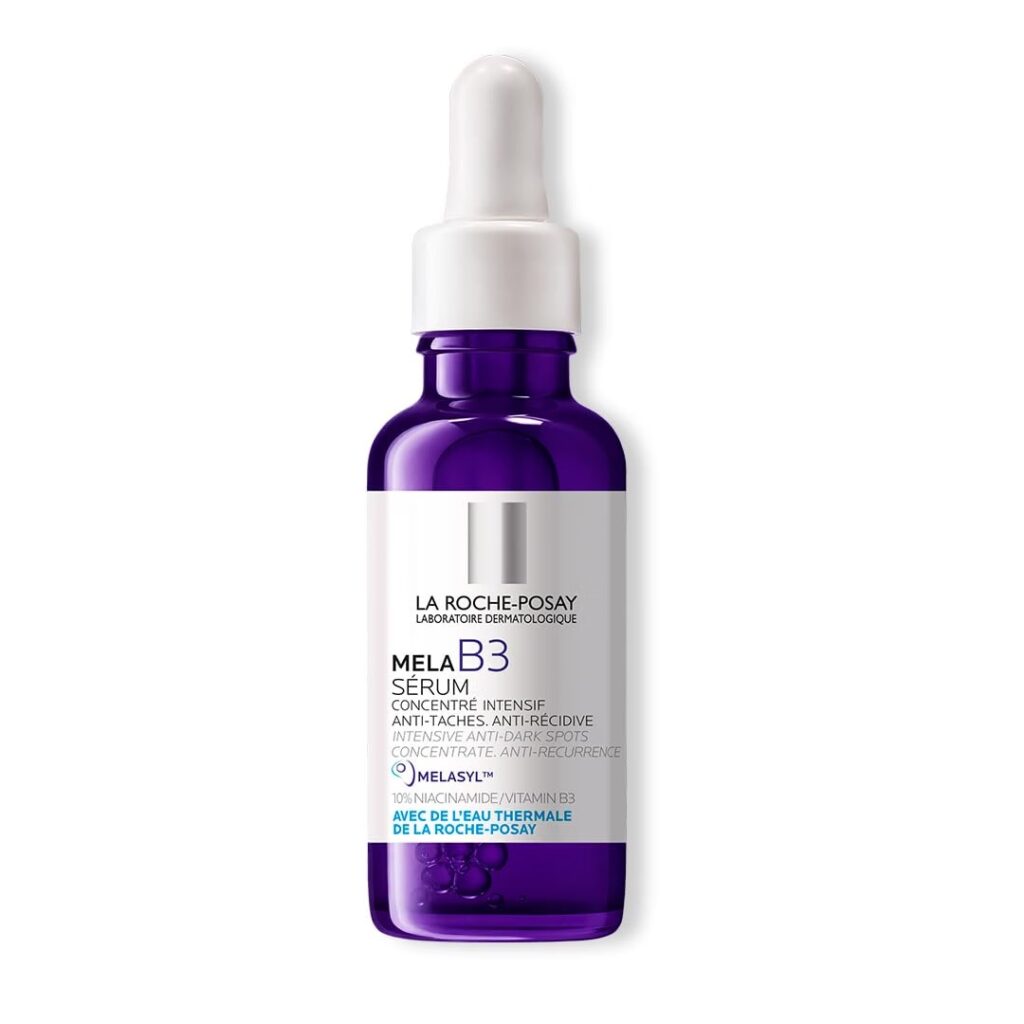
Dark spots can linger long after a breakout has healed, and uneven pigmentation may make it difficult to know which skincare treatment is worth trying. La Roche-Posay Mela B3 Anti-Dark Spot Serum promises to address these concerns with Melasyl™ and 10% niacinamide in a lightweight 30 ml formula. But is the product a sensible choice for everyday hyperpigmentation care, especially if your skin is sensitive? Our detailed review examines its ingredients, the evidence behind the advertising, how to use it, who may benefit and the limitations buyers should understand.
Interested in La Roche-Posay Mela B3 Serum?
Affiliate link. We may earn a commission on qualifying purchases at no extra cost to you.
La Roche-Posay Mela B3 Serum: Product Overview
| Product | La Roche-Posay Mela B3 Intensive Anti-Dark Spots Serum |
|---|---|
| Size | 30 ml (featured bottle) |
| Key ingredients | Multi-patented Melasyl™ complex and 10% niacinamide (vitamin B3) |
| Other formula components | Glycerin, sodium hyaluronate and a capryloyl salicylic acid (LHA) derivative, among others |
| Target concerns | Visible uneven tone, sun spots, age spots and post-acne dark marks |
| Application | After cleansing and before moisturiser; morning and/or evening according to label |
| Skin types | Marketed for all skin types, including sensitive skin; individual reactions remain possible |
The official La Roche-Posay India product page describes Mela B3 as an anti-dark-spot concentrate developed for a variety of skin tones and pigmentation concerns. Its standout feature is Melasyl, a proprietary ingredient used alongside niacinamide rather than as a replacement for the basic skincare essentials of moisturising and sun protection.
What Is Melasyl, and What Does It Do?
Melasyl is La Roche-Posay’s patented ingredient designed to address excess pigmentation while preserving the skin’s natural tone. In simple terms, the brand presents it as a way to intervene in the process associated with visible dark marks rather than indiscriminately lighten the complexion. That distinction matters: treating patches of unwanted hyperpigmentation is not the same as trying to change someone’s natural skin colour.
La Roche-Posay has published research on the compound, also known as 2-mercaptonicotinoyl glycine (2-MNG), including work investigating pigmentation outcomes. However, an ingredient study and the finished-product results are not interchangeable. The actual response to a serum can vary with the cause of pigmentation, concentration, skincare routine and consistency of use.
Why Is 10% Niacinamide Included?
Niacinamide is a form of vitamin B3 widely used in skincare because it can support the skin barrier and help improve the appearance of uneven skin tone. The 10% concentration is a notable part of this formulation’s positioning. It may appeal to people who want a pigment-focused serum with a familiar multifunctional skincare ingredient.
Yet more is not automatically better. A 10% niacinamide product may be unnecessarily strong for someone with a very simple routine or easily irritated skin, particularly when multiple exfoliating or active products are used together. If your skin is sensitive, introduce the product gradually and pay attention to redness, itching or burning. Some users may be happier with a lower-strength alternative.
Other listed ingredients, such as glycerin and sodium hyaluronate, are commonly used to support a hydrated skin feel. The published ingredient list also includes fragrance and capryloyl salicylic acid; people who know they react to fragranced or exfoliating products should check the current pack label carefully.
Does La Roche-Posay Mela B3 Really Reduce Dark Spots?
One of the most prominent brand claims is that 90% of participants showed dark-spot improvement after eight weeks. This deserves explanation rather than a dramatic headline. According to La Roche-Posay’s own published study description, 90% showed improvement in at least one of several evaluated measures, including the size, contrast or density of a persistent dark spot, as assessed through expert grading. This is not evidence that dark spots vanished completely in 90% of people.
The manufacturer cites a relatively small group of subjects with persistent dark spots and an eight-week application period. The result supports its marketing of visible improvement, but it does not guarantee the same outcome for every user, every type of pigment mark or every skin tone. The brand additionally reports early visible results in a separate study, which should likewise be understood as a study-specific finding.
See the official US product research and claim explanations. We have not independently tested the serum or reproduced the clinical results.
Which Types of Pigmentation Might It Help?
Post-acne dark marks
Marks left behind after spots heal, often described as post-inflammatory hyperpigmentation, are among the concerns for which the serum is marketed. They should not be confused with indented or raised acne scars, which are structural skin changes and may need other treatments.
Sun spots and age spots
The formula is also positioned for visible sun-related discoloration. Daily sun protection is essential here: ongoing ultraviolet exposure may continue to deepen or regenerate pigmentation, making serum-only routines less effective.
Melasma and persistent pigmentation
Melasma can be stubborn and recurring, with triggers that may include sun exposure and hormonal influences. A cosmetic serum may be one component of care, but significant or worsening melasma is better assessed by a dermatologist. Do not expect a single bottle to resolve a complex medical or pigment condition.
Texture, Finish and Daily Wear
La Roche-Posay describes Mela B3 as a light serum designed to layer into a regular skincare routine. It is not marketed as a heavy facial cream. A lightweight format can be appealing for people who dislike sticky, occlusive products, particularly in warm or humid weather. Still, texture satisfaction is subjective, and the product may sit differently alongside different moisturisers, sunscreens or makeup.
Its purple dropper packaging is easily recognisable, but packaging appearance alone cannot verify authenticity. Purchase from a reliable seller and compare the seal, ingredient label, batch details and stated quantity.
How to Use Mela B3 Serum in Your Skincare Routine
- Cleanse gently. Use a mild face wash and pat the skin dry rather than scrubbing.
- Apply a few drops. Follow the instructions on your product packaging; the manufacturer commonly suggests around two to four drops over the face and neck.
- Avoid the eye area. Do not apply directly to the eyelids or broken or irritated skin.
- Follow with moisturiser. This helps maintain a comfortable routine and supports the skin barrier.
- Use broad-spectrum sunscreen every morning. Pigmentation management requires consistent protection; reapply sunscreen as directed, especially outdoors.
The serum is described for morning and/or nighttime use. If you are new to active skincare, start less frequently and increase only if your skin tolerates it. Combining several exfoliating or potentially irritating products at once can make it harder to identify the cause of a reaction. People with a skin condition or under a prescription regimen should consult their clinician about compatibility.
Can You Use Mela B3 with Other Skincare Products?
A simple routine usually makes more sense than stacking numerous treatments. In the morning, consider a gentle cleanser, Mela B3 if tolerated, moisturiser and a broad-spectrum sunscreen. At night, cleanse, use the serum if appropriate and moisturise. Our Cetaphil Gentle Skin Cleanser review discusses a gentle cleansing option, while our Beauty of Joseon Relief Sun review covers a separate sunscreen option.
Do not assume that every combination of niacinamide, retinoids, exfoliating acids and strong vitamin C products is automatically comfortable for every skin type. Patch testing and gradual introduction can make a new routine easier to evaluate.
Interested in La Roche-Posay Mela B3 Serum?
Affiliate link. We may earn a commission on qualifying purchases at no extra cost to you.
Pros and Cons of La Roche-Posay Mela B3
What makes it appealing
- Combines Melasyl with 10% niacinamide for a defined anti-pigmentation purpose.
- Targets several common concerns, including post-acne marks and visible sun spots.
- Brand provides an explicit eight-week study basis for its primary dark-spot claim.
- Lightweight serum format is designed for layering under moisturiser.
- Suitable for a straightforward daily routine that includes sun protection.
What buyers should consider
- Clinical improvement is not the same as complete elimination of pigmentation.
- The available study claims do not guarantee results for individual buyers.
- Contains fragrance in the published ingredient list, which may not suit everyone.
- The 10% niacinamide concentration and additional actives may be too much for particularly reactive skin.
- Persistent or unusual pigmentation may require a medical diagnosis rather than a cosmetic purchase.
- Results, if any, generally require consistency; an overnight transformation should not be expected.
Is It Worth Buying for Sensitive Skin?
The brand describes the serum as tested on sensitive skin and non-comedogenic. That is encouraging, but “sensitive-skin friendly” does not mean reaction-free. Fragrance, individual allergies, other ingredients or an already compromised skin barrier may still cause discomfort. A patch test and careful introduction are sensible precautions. Stop use if stinging or redness persists, and seek medical help for significant reactions.
Who Should Consider Mela B3 Serum?
This product may interest adults dealing with visible post-acne marks, patchy unevenness or sun-related spots who want a concentrated formula from a well-established skincare brand. It is less suited to those expecting guaranteed results, anyone who cannot maintain sun protection or people whose pigmentation requires professional evaluation. Compare its current price and the quantity offered with alternatives, because a premium serum is only worthwhile when it fits both your skin needs and your budget.
Frequently Asked Questions
Is La Roche-Posay Mela B3 good for acne marks?
It is marketed to improve the appearance of post-acne dark marks. It is not a treatment for active acne or indented scars.
Does the Mela B3 serum really contain 10% niacinamide?
Yes, the formula displayed in the manufacturer’s product information highlights 10% niacinamide with Melasyl. Verify your specific packaging when purchasing.
How long does Mela B3 take to work?
The manufacturer cites visible findings after one week in some assessments and an eight-week study for persistent spots. Your personal response may differ, and significant pigment changes often take time.
Can it be used twice a day?
The brand describes morning and evening use. If you have reactive skin or are using other strong actives, introduce it gradually and follow the current package instructions.
Can Mela B3 replace sunscreen?
No. It is not a sunscreen. Daily broad-spectrum sun protection remains essential when managing dark spots.
Is the Mela B3 serum suitable for all Indian skin tones?
The brand reports evaluation across skin phototypes and markets it for all skin tones. That does not guarantee every individual will achieve the same improvement.
Final Verdict: Is La Roche-Posay Mela B3 Worth It?
La Roche-Posay Mela B3 is a credible option to consider for a targeted dark-spot skincare routine, especially if you value a clearly identified active combination and published manufacturer testing. Its Melasyl and niacinamide pairing is distinctive. The evidence needs to be interpreted carefully, however: improvement in a dark spot is not necessarily its disappearance, and even a clinically tested formula may not suit all skin types.
For readers who can use a serum consistently, tolerate the formula and commit to daily sun protection, it may be a useful product to compare against alternatives. Those with stubborn, rapidly changing or unexplained pigmentation should prioritise a dermatologist’s assessment over repeated cosmetic experimentation.
Interested in La Roche-Posay Mela B3 Serum?
Affiliate link. We may earn a commission on qualifying purchases at no extra cost to you.
Official formulation details: La Roche-Posay India Mela B3 Serum and La Roche-Posay ingredient and application guidance.
Editorial and affiliate disclosure: This article includes an affiliate buying link. The Literature Times may earn a commission on qualifying purchases at no additional cost to you. The review assesses publicly available manufacturer information, ingredients and clinical claims; it does not claim personal hands-on testing or guaranteed medical results. Product image supplied for editorial use. Cosmetic products do not replace professional diagnosis or treatment.






Your perspective matters
Share your thoughts respectfully. Comments are moderated.