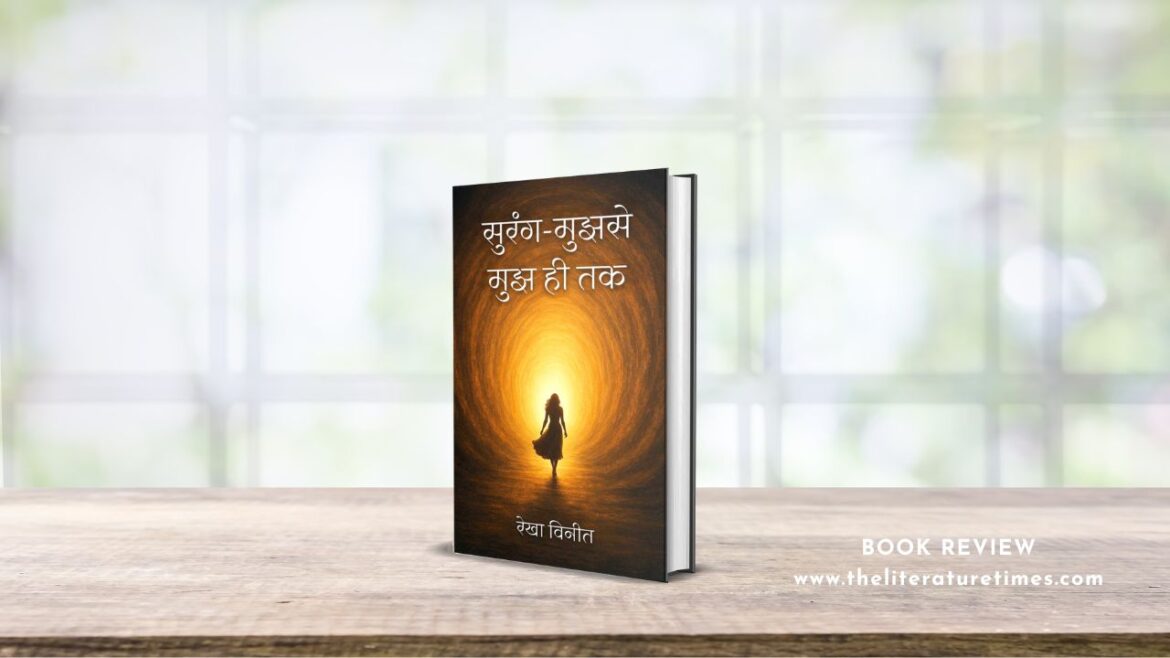
Surang – Mujhse Mujh Hi Tak by Rekha Vinit is a deeply intimate poetic offering that feels less like a book and more like a mirror—one that draws you into its quiet depths and compels you to confront the truths you often sidestep. At its heart, the book is a journey from darkness into clarity, from emotional noise toward inner silence. It is a book about seeing oneself not as the world demands but as the soul truly is. Thematically structured into three evocative sections—Bawra Man, Vedna, and Milan—this collection takes the reader through the emotional corridors we all inhabit but rarely articulate.
Right from the opening note of Udghosh, the poet claims her right to her own sky—a metaphorical declaration of freedom, identity, and inner ownership. The tone is confident yet vulnerable, bold yet tender. It sets the stage for an immersive reading experience where poetry becomes not only art but therapy. Rekha Vinit writes with a disarming honesty, peeling back layers of emotional residue accumulated from societal expectations, personal dilemmas, and silent battles that often remain unspoken.
The first section, Bawra Man, meanders through the restless chambers of the mind. The poems here capture the scattered nature of human thoughts—the confusion, the longing, the unnameable ache of wanting something more from life. For any reader who has felt “busy yet empty,” this section resonates deeply. Rekha’s language is simple but evocative, allowing readers to recognize their own internal fragmentation within her imagery.
The second section, Vedna, dives into the rawness of feeling. It is here that Rekha’s emotional courage shines the brightest. Without dramatizing pain or romanticizing suffering, she articulates emotional fatigue, inner wounds, and the burden of societal duality with remarkable clarity. Her lines strike with a subtle force, reminding readers that pain, when acknowledged, becomes a stepping stone rather than a prison. Many poems in this section echo a universal truth: that acceptance is the first doorway to healing.
The final section, Milan, is where the journey softens into self-compassion. The tone shifts from turbulence to tranquility. The poems begin offering gentle reminders—breathe, pause, surrender, listen. Readers who have traversed emotional storms will find this section particularly comforting. It is less about resolution and more about reconciliation with oneself. Rekha beautifully demonstrates that the light at the end of the tunnel is not an external lantern—it is the glow we rediscover inside.
Beyond the poems themselves, the book’s greatest strength lies in its authenticity. It does not attempt to sound overly philosophical or abstract. Rekha writes as a seeker, not as a preacher. She writes from a place of lived experience, which makes her poetry accessible even to readers who are not habitual poetry lovers. Her transitions from emotional vulnerability to spiritual elevation feel organic and grounded.
Another compelling aspect of this book is its relevance in a world where everyone is constantly rushing—toward deadlines, expectations, roles, and identities. Surang – Mujhse Mujh Hi Tak serves as a pause button. It reminds readers that introspection is not a luxury but a necessity. The poems gently ask: When was the last time you looked inward? When did you last acknowledge your own silence, your own truth?
Rekha Vinit’s background as an engineer turned spiritual poet adds depth to her writing. Her analytical mind meets her contemplative heart on the page. The result is poetry that is both structured and soulful, thoughtful yet flowing. The fact that the author identifies herself as a Sadhak and Pathik resonates strongly throughout the book. Her journey from logic to lyricism mirrors the journey she invites her readers to take—from the surface to the self.
The emotional and spiritual maturity of the book makes it ideal for readers navigating stress, confusion, heartbreak, or the simple exhaustion of modern living. Its meditative quality makes it a companion rather than a one-time read. Many poems invite multiple readings, revealing new layers each time.
Ultimately, Surang – Mujhse Mujh Hi Tak is a reminder that poetry is not merely meant to be read—it is meant to be felt, absorbed, and lived. Rekha Vinit’s words are gentle torches that illuminate the inner corridors we fear entering alone. Through her compassionate verses, she accompanies readers into that tunnel of self-discovery and helps them emerge with clarity, warmth, and self-recognition. This is a book that stays with you long after you close its pages—a book that knows your heart even before you have fully understood it yourself.