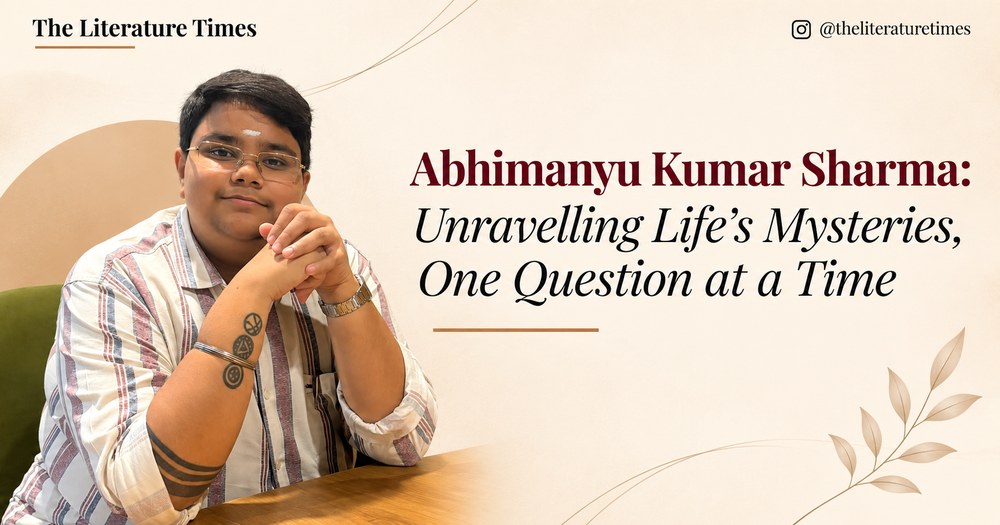
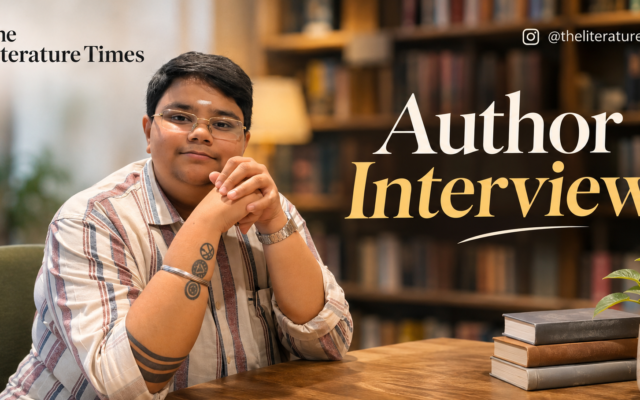
Curiosity is one of the most powerful forces behind human learning and discovery. Every new idea, scientific breakthrough and meaningful understanding begins with a question. Yet, in a world filled with information and ready-made answers, people often overlook the importance of questioning what they see, hear and believe. For Abhimanyu Kumar Sharma, asking questions is not simply an intellectual exercise but an essential part of understanding life. As a writer, researcher and curious observer of the world, he is interested in exploring the connections between science, psychology, human behaviour and society. Through his writing, he encourages readers to move beyond familiar assumptions, examine everyday experiences from different perspectives and rediscover the value of curiosity.
Abhimanyu’s intellectual interests extend across several areas of knowledge, reflecting his fascination with the complexity of the world and the people who inhabit it. From scientific developments and psychological patterns to social interactions and ordinary human experiences, he finds inspiration in subjects that invite deeper examination. His approach reflects the belief that meaningful knowledge does not always begin with complicated theories or extraordinary discoveries. Sometimes, it emerges from observing something familiar and asking why it happens. An ordinary experience, when examined carefully, can reveal questions that lead to a much broader understanding of human life.
One of the defining aspects of Abhimanyu’s perspective is his interest in human behaviour. The way people think, respond, communicate and make decisions offers countless opportunities for exploration. Human actions are often influenced by assumptions, emotions, social environments and personal experiences. Understanding these influences requires more than accepting what appears on the surface. It requires observation, patience and a willingness to question established explanations. His interest in psychology and society reflects this desire to understand the factors that shape individual behaviour and collective experiences.
Science is another important area within his intellectual interests. Scientific knowledge encourages individuals to examine the world through observation, reasoning and evidence. It challenges assumptions and continuously expands the boundaries of what humanity understands. For Abhimanyu, science represents an important part of the larger pursuit of knowledge, particularly when approached with an open and questioning mind. His interest in connecting scientific ideas with everyday curiosity creates an accessible foundation for readers who enjoy exploring how the world works and why certain things happen.
These interests find a collective expression in his book, Why We Ask?, a collection of 111 questions exploring the mind, the world and everything in between. The book brings together subjects ranging from science and psychology to society, human behaviour and everyday curiosities. Rather than limiting itself to a single area of knowledge, it takes a wider approach to exploration, encouraging readers to consider questions that may often go unnoticed in daily life. Its central idea is simple yet meaningful: asking the right question can sometimes be more important than immediately knowing the answer.
The concept behind Why We Ask? reflects an important aspect of how people develop their understanding of the world. Many individuals become accustomed to accepting information without examining its origins, implications or accuracy. Familiar explanations can gradually become unquestioned beliefs, limiting opportunities for independent thinking. By bringing together 111 questions, Abhimanyu encourages readers to pause and reconsider what they may have previously accepted without reflection. The book presents curiosity as an active process, one that involves examining ideas, challenging assumptions and remaining open to different possibilities.
Another interesting aspect of the book is its broad subject range. Science, psychology and society are interconnected areas that influence how individuals interpret their surroundings. Scientific developments can change social understanding, psychological insights can explain patterns of human behaviour, and everyday observations can raise questions about both individual and collective experiences. Bringing these subjects together allows the book to appeal to readers with different interests and levels of familiarity with the topics. It also reflects the author’s intention to make curiosity a shared experience rather than something reserved for academic or specialised environments.
The collection’s format offers readers an opportunity to engage with knowledge through individual questions while maintaining an overall sense of exploration. Instead of approaching learning as the passive accumulation of information, the book encourages readers to become active participants in the process. Each question can serve as a starting point for further thought, discussion or independent investigation. This approach is particularly relevant in contemporary society, where access to information has become easier but the ability to evaluate and question that information remains essential. The distinction between simply receiving knowledge and developing an understanding of it lies in the willingness to think critically.
Abhimanyu’s philosophy also reflects the belief that curiosity should never have an age limit. Learning is often associated with formal education, academic qualifications or particular stages of life. However, the desire to understand new ideas can continue throughout a person’s life. Children ask questions naturally, but as people grow older, social expectations and established beliefs can sometimes discourage them from expressing uncertainty or questioning familiar ideas. Through his work, Abhimanyu highlights the importance of preserving that natural curiosity. He encourages readers to remain open to learning, regardless of their age, background or existing knowledge.
His interest in writing and research brings together observation and intellectual exploration. Rather than treating curiosity as a passing interest, he views it as a foundation for developing a deeper relationship with knowledge. His writing reflects an appreciation for critical thinking and the importance of examining ideas from multiple perspectives. This approach also encourages readers to recognise that understanding is not always immediate. Some questions lead to clear explanations, while others open the door to further questions. Both outcomes contribute to the continuous process of learning and discovery.
In an age where information is constantly available through digital platforms, books, media and conversations, the ability to ask meaningful questions has become particularly valuable. Not every piece of information deserves unquestioned acceptance, and not every familiar belief necessarily represents the complete picture. Critical thinking allows individuals to distinguish between information and understanding, while curiosity motivates them to explore beyond what is already known. Through Why We Ask?, Abhimanyu Kumar Sharma brings attention to these qualities and their importance in personal and intellectual development.
Ultimately, Abhimanyu Kumar Sharma’s journey as a writer, researcher and observer reflects a commitment to the continuous pursuit of knowledge. His book, Why We Ask?, captures his belief that curiosity is not merely the beginning of learning but an essential part of how people understand themselves and the world around them. By encouraging readers to question assumptions, explore unfamiliar subjects and find significance in everyday observations, he offers a reminder that knowledge grows through active engagement. His message is simple: answers may satisfy curiosity for a moment, but meaningful questions have the power to change the way we think. Through his work, he hopes to inspire readers to pause, ponder and look at the world with renewed curiosity.



Your perspective matters
Share your thoughts respectfully. Comments are moderated.