
In an era when artificial intelligence is reshaping industries, transforming business operations and redefining professional expectations, the ability to understand and apply emerging technologies has become increasingly important. Yet, despite the growing accessibility of AI tools, many professionals remain uncertain about how to integrate them into their everyday responsibilities. For Raj Sarangam, this gap between technological advancement and practical understanding represents an important challenge that deserves attention. With more than two decades of experience in enterprise technology, business transformation and technology delivery, he has developed a professional journey that combines corporate leadership, technical knowledge and hands-on innovation. Through his work and writing, he aims to make artificial intelligence more accessible, practical and meaningful for professionals navigating an increasingly technology-driven world.
Raj’s professional journey is built on extensive experience working within large organisations where technology decisions have significant operational and commercial consequences. Over the years, he has contributed to enterprise transformation and technology delivery initiatives across renowned organisations, including HP, Tyson Foods, Mars and Cengage. His work has involved programmes where success is measured not simply through strategic presentations or proposed solutions but through implementation, operational outcomes and measurable business value. His professional contributions have generated more than $10 million in documented business value, reflecting his experience in connecting technology initiatives with organisational objectives.
Throughout his career, Raj has understood that successful technology transformation requires more than identifying innovative solutions. Organisations must also consider how new systems interact with existing processes, how employees adapt to technological changes and how businesses maintain reliability while introducing new capabilities. These considerations have shaped his approach to enterprise leadership and strengthened his understanding of the practical challenges associated with implementing technology at scale. His experience across different corporate environments has given him exposure to the importance of aligning technical innovation with business requirements, operational efficiency and long-term organisational goals.
When artificial intelligence began moving from an emerging concept towards a practical workplace reality, Raj recognised the importance of understanding the technology beyond its managerial and strategic applications. Rather than limiting his involvement to overseeing AI-related programmes, he made a deliberate decision to develop a deeper technical understanding of how these systems work. This led him towards specialised learning in computer vision and deep learning, including the completion of a Master Program in Computer Vision and Deep Learning and certification as an AI Project Manager. He also developed a hands-on portfolio involving image classification, object detection, document scanning, automation workflows and agentic AI.
This combination of technical exploration and enterprise experience became an important part of his professional identity. Understanding AI from the perspective of both development and implementation allows him to approach technological challenges with a broader understanding of what organisations actually require. Building an AI solution is one aspect of the process, while making it reliable, secure, useful and compatible with existing business operations presents an entirely different set of responsibilities. Raj’s experience reflects the importance of considering both dimensions when introducing emerging technologies into complex organisational environments.
Currently, Raj is leading an AI-agent-driven transformation at Cengage, where eight AI agents coordinate across collections, disputes, cash applications, reporting and forecasting. This work represents an important application of AI within enterprise operations, demonstrating how intelligent systems can support multiple interconnected business functions. However, successful implementation involves much more than deploying automated agents. Areas such as governance, data quality, testing, risk management, employee adoption and operational change remain essential to ensuring that AI systems function effectively within real business environments. His work brings attention to these often-overlooked aspects of technological transformation and highlights the importance of combining innovation with responsible execution.
One of Raj’s most significant contributions to the broader professional conversation surrounding AI is his focus on practical capability. Artificial intelligence is frequently discussed through predictions about automation, future employment and technological disruption. While these discussions are important, professionals often need more immediate guidance on how to use AI in their current roles. Questions about improving research, writing, communication, analysis and decision-making are becoming increasingly common across industries. Raj recognises that understanding AI should not be limited to technology specialists. Business leaders, managers, employees and professionals from non-technical backgrounds also need opportunities to develop confidence in using these tools.
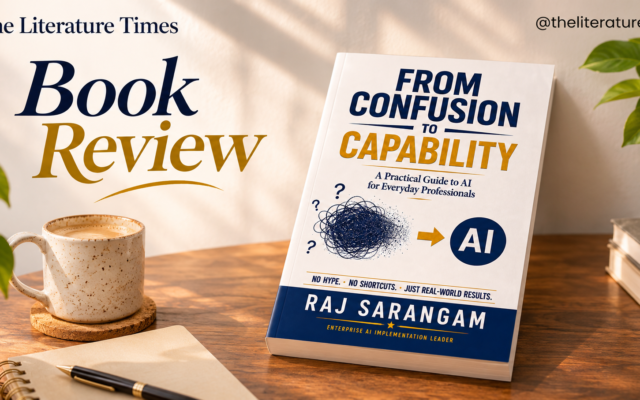
This philosophy forms the foundation of his book, From Confusion to Capability. The book addresses the uncertainty experienced by working professionals who hear about AI regularly but are unsure how to translate that awareness into practical workplace applications. Instead of concentrating on distant predictions or unnecessary technical terminology, it focuses on how readers can use AI tools in their everyday professional responsibilities. It also highlights the importance of understanding where AI performs effectively, recognising its limitations and verifying generated information before relying on it.
An especially important aspect of the book is its emphasis on maintaining human judgement. Raj believes that using AI effectively does not mean surrendering the responsibility to think, evaluate and make informed decisions. Technology can support routine activities and improve efficiency, but professionals must remain capable of assessing information, identifying errors and understanding the consequences of their actions. This approach encourages readers to view AI as a collaborative tool rather than a replacement for professional knowledge. The book also includes a 30-day action plan intended to help readers move from theoretical understanding towards consistent practical application.
Raj’s academic background further reflects the interdisciplinary nature of his professional development. He holds an MBA from the University of Houston, an MS in Computer Science from McNeese State University and a BS in Chemical Engineering from BITS Pilani. This combination of engineering, computer science and business education has provided him with different perspectives on technology, organisational management and problem-solving. His professional interests extend beyond implementation alone, encompassing leadership, learning and the development of capabilities that help individuals and organisations adapt to change.
Based in Houston, Texas, Raj also shares educational content, coaching, training and leadership insights through his personal website, sbmindtree.com. His work reflects an interest in making complex technological developments easier to understand and helping professionals approach continuous learning with greater confidence. By connecting enterprise experience with practical education, he contributes to a wider conversation about how individuals can remain relevant and effective as technology continues to evolve.
Raj Sarangam’s journey represents the importance of combining experience with curiosity and continuous learning. His transition from enterprise technology leadership towards deeper engagement with artificial intelligence demonstrates that professional development does not stop with established expertise. Instead, it requires the willingness to explore unfamiliar areas, question existing approaches and develop new capabilities. Through his leadership, technical exploration and writing, he encourages professionals to approach AI with both confidence and responsibility. His central message is that technological progress becomes truly valuable when people understand how to apply it thoughtfully, solve meaningful problems and create lasting results.


Your perspective matters
Share your thoughts respectfully. Comments are moderated.