Platform: The Literature Times
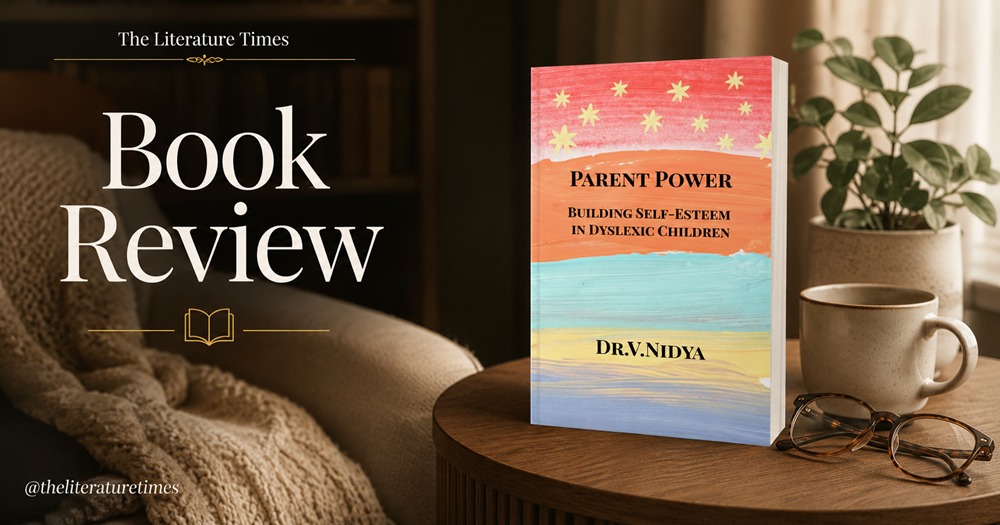
Parent Power: Building Self-Esteem in Dyslexic Children by Dr. V. Nidya addresses a subject that is often discussed in educational and psychological terms but is deeply personal in its everyday consequences: how a child with dyslexia comes to understand his or her own abilities, limitations and worth. The book brings together real-life case studies, scientific reasoning and research-based evidence to illuminate different aspects of dyslexia from the perspective of a professional who has worked closely with children and families. Its central concern, as the title makes clear, is not merely academic performance. It is self-esteem—the internal sense of confidence and value that can be shaped, protected or damaged by the responses a child receives from parents, teachers and the wider learning environment. In that respect, the book occupies an important space between professional knowledge and practical guidance, offering readers a way to look beyond labels and scores toward the emotional experience of the child.
One of the most relevant features of the book is its emphasis on understanding before intervention. Dyslexia can easily become reduced to a classroom difficulty, particularly when attention is focused only on reading, writing, marks or pace of learning. Parent Power broadens that frame by presenting dyslexia as an experience that also affects how a child may see himself or herself in relation to peers, expectations and repeated academic demands. By drawing on case studies encountered by the author during her work as a special educator and psychologist, the book appears to connect scientific ideas with situations that parents and teachers can recognise. This approach gives the subject a human dimension without abandoning the need for evidence. It also supports the book’s larger argument: that effective support is not built from sympathy alone, but from informed, consistent and respectful responses to a child’s needs
The focus on self-esteem gives the book particular value. Children who learn differently may be judged through standards that do not adequately reflect their abilities, and repeated comparison can influence confidence long before adults recognise the emotional effect. A book that explicitly places self-esteem beside dyslexia therefore shifts the conversation in a constructive direction. It encourages readers to consider not only what a child finds difficult, but also what messages the child receives while facing those difficulties. For parents, this can mean becoming more attentive to language, expectations and reactions at home. For teachers, it can mean examining how classroom practices, feedback and comparison shape a learner’s sense of competence. The book’s relevance lies in this movement from diagnosis or difficulty toward support, dignity and growth.
Dr. Nidya’s professional background strengthens the book’s perspective. Her academic training spans engineering, management, special education and psychology, and she runs a centre focused on educational assessment and remedial intervention for children with different abilities. She is also a researcher in child development and learning disabilities, with published research in international journals. This combination of practice and research is especially suited to a book of this nature because the subject requires both sensitivity to individual children and a disciplined understanding of evidence. The book is presented not as an abstract discussion of dyslexia, but as a work informed by sustained professional engagement over the past decade. That grounding helps support an editorial impression of credibility: the author is writing from a field she studies, practices and observes directly.
The writing approach described for Parent Power is another of its strengths. Combining case studies with scientific reasoning can make a specialised topic more accessible without oversimplifying it. Case studies allow readers to see patterns through concrete human situations, while research-based explanation can help prevent common misunderstandings or assumptions. For a parent newly learning about dyslexia, purely technical writing may feel distant or overwhelming. For an educator, purely anecdotal writing may not provide enough intellectual structure. The blend offered here has the potential to serve both groups, making the book useful as an introduction as well as a reflective resource for those already working with children who learn differently. Its usefulness comes from this balance between emotional immediacy and professional context.
Another important aspect of the book is the role it assigns to adults. The word ‘power’ in the title does not suggest control over the child; rather, it points to the influence parents and other caregivers can have in shaping a supportive environment. When a child struggles with conventional academic tasks, adult interpretation becomes crucial. A difficulty can be framed as failure, or it can be understood as a learning difference that requires appropriate support. The book’s orientation toward parents and teachers acknowledges that children do not build self-esteem in isolation. Confidence is influenced by relationships, responses and repeated experiences. This makes the book relevant not only for families already navigating dyslexia, but also for educators who want to become more thoughtful about inclusion, communication and the emotional consequences of teaching practices.
The reader value of Parent Power lies in its combination of awareness and practical perspective. The book is intended for parents or teachers who want to learn about dyslexia or support a child with dyslexia, and that audience is clearly defined. Readers looking for a broad, research-informed understanding of the condition can benefit from the scientific and evidence-based component, while those seeking a more relatable entry point can engage with the case-study format. Importantly, the book also appears to encourage a shift in attention from ‘fixing’ the child to strengthening the conditions around the child. That is a meaningful distinction. Support becomes less about forcing conformity and more about helping the child participate, learn and retain a sense of self-worth.
As an educational and parenting resource, the book’s strongest contribution is its insistence that emotional development belongs at the centre of conversations about learning differences. Academic intervention matters, but so does the child’s confidence while receiving that intervention. A learner who repeatedly feels inadequate may carry that perception far beyond the classroom. By connecting dyslexia with self-esteem, Dr. Nidya brings attention to an area that can easily be overlooked when adults concentrate on performance indicators alone. This gives the book relevance across homes, schools and support settings, especially for readers who want to respond to dyslexia with greater awareness rather than fear, frustration or misinformation.
Parent Power: Building Self-Esteem in Dyslexic Children is therefore best understood as a thoughtful bridge between research, professional experience and compassionate educational practice. It does not need exaggerated claims to establish its importance; the subject itself is significant, and the author’s background lends the discussion authority. For parents, the book can help develop a more informed and emotionally attentive approach to supporting a child. For teachers and special educators, it offers a perspective that reinforces the relationship between learning support and psychological well-being. For readers interested in child development or learning disabilities more generally, it provides an accessible entry into questions of confidence, difference and educational response. The book’s central value lies in reminding adults that the way a child is understood can become part of the way that child learns to understand himself or herself.