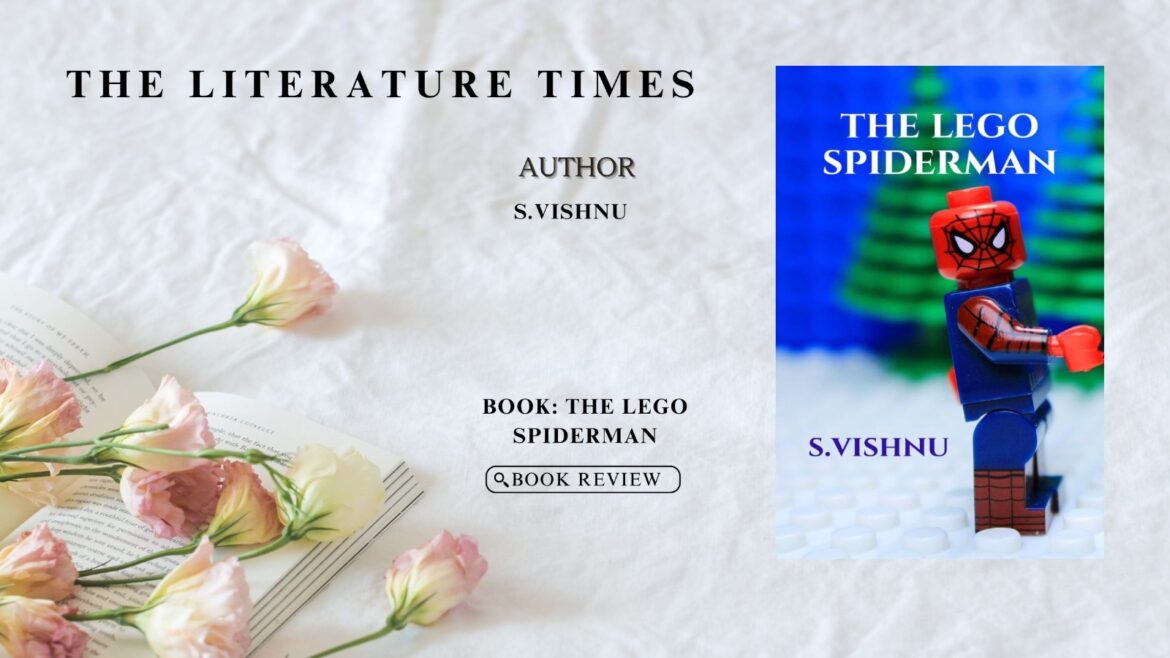
At thirteen, S. Vishnu has already developed a literary journey that spans multiple genres and formats, and The Lego Spiderman reflects the imaginative energy that can emerge when a young reader turns into a young writer. At the centre of the story is a simple, instantly accessible premise: a boy receives a Lego Spiderman kit as a birthday gift and discovers that opening the box is only the beginning of an unexpected adventure. From this starting point, Vishnu creates a story that combines fantasy with values that remain meaningful beyond the excitement of the magical experience—friendship, honesty and forgiveness. The result is a book that approaches familiar childhood ideas through an imaginative lens while keeping its emotional and moral concerns easy for young readers to understand.
One of the book’s most appealing strengths is the way an ordinary object becomes the doorway to extraordinary possibilities. A Lego kit is familiar to many children, associated with play, creativity and the freedom to build something from separate pieces. By placing such an object at the heart of a magical adventure, Vishnu works with an idea that naturally belongs to a young reader’s world. The premise does not require a complicated setup to generate curiosity: the birthday gift itself contains the promise of something more, and the surprise surrounding its opening provides the narrative invitation to explore. This imaginative foundation gives the story an accessible quality and demonstrates how everyday childhood experiences can become fertile ground for fiction.
The book also gains substance from its focus on friendship. In children’s literature, friendship is often presented as an uncomplicated source of happiness, but it can also be a space where young people learn responsibility, trust and empathy. The Lego Spiderman uses its magical adventure to engage with this broader idea. Rather than treating fantasy as an end in itself, the story connects the excitement of the adventure with values that have relevance in real life. Friendship becomes part of the book’s emotional framework, encouraging readers to think about how people treat one another and what makes relationships meaningful. This balance between imaginative storytelling and recognisable human concerns is particularly suitable for younger readers, who can enjoy the adventure while also reflecting on the behaviour and choices of its characters.
Honesty and forgiveness add another important layer to the story. Both values are especially significant in childhood because they are connected to the process of understanding consequences, taking responsibility and repairing relationships. By bringing these themes into a magical narrative, Vishnu has the opportunity to communicate them without making the book feel like a straightforward moral lesson. The fantasy setting creates room for values to emerge through story rather than instruction. Honesty can be understood not merely as a rule but as a quality that strengthens trust, while forgiveness can be viewed as an important part of moving beyond mistakes and preserving relationships. These themes give the book a sense of purpose beyond its central adventure and help make it more than a simple tale of a surprising birthday gift.
The writing approach suggested by the premise is one of directness and imaginative accessibility. Vishnu writes for an audience that is likely to respond strongly to movement, surprise, familiar objects and the possibility that the ordinary world can suddenly become extraordinary. The concept of Lego Spiderman provides an immediate visual and imaginative hook, while the underlying themes give the adventure emotional direction. For young readers, this combination can be valuable because it respects their appetite for fun while introducing ideas that support personal and social growth. The story’s appeal therefore lies not in complexity for its own sake, but in the ability to connect imagination with values in a form that younger audiences can readily approach.
Another noteworthy aspect is the author’s own reading-to-writing journey. Vishnu’s love for books began before he started school and gradually developed into writing, leading to his first published book in Grade 6. The Lego Spiderman sits within a wider body of work that includes Magical Stories & Poems, The Riddle Map, Dear Santa and Other Stories, Horror Mansion and How the Vegetables got their Taste. He has also co-authored ten Scholastic anthologies. This background is relevant when considering The Lego Spiderman because it places the book within an ongoing creative development rather than treating it as an isolated accomplishment. His range across genres suggests a willingness to explore different forms of storytelling, and this particular book draws strongly on the imaginative possibilities of childhood.
The book is likely to be especially valuable to children who enjoy fantasy, toys, superheroes and stories in which familiar experiences lead to unexpected discoveries. It can also appeal to parents, teachers and educators looking for fiction that offers entertainment alongside accessible values. The themes of friendship, honesty and forgiveness give adults natural points of discussion with younger readers without requiring the story to be approached solely as a lesson. At the same time, the premise remains sufficiently playful to preserve the sense of wonder that is essential to children’s adventure fiction. The book’s greatest reader value, therefore, comes from this combination: it invites children to imagine freely while quietly encouraging them to consider how their choices affect others.
Ultimately, The Lego Spiderman is an engaging example of how a young author can transform a familiar childhood object into a setting for adventure and reflection. Its central idea is straightforward, but its thematic direction gives it greater resonance. By bringing together magical adventure with friendship, honesty and forgiveness, S. Vishnu creates a story with both imaginative appeal and a clear human centre. The book also carries the encouraging perspective of a young writer who began reading early, moved into writing while still in school and has continued to experiment across genres. For young readers, the story offers an accessible invitation to enter a world where a birthday gift can become the beginning of something unexpected—and where the excitement of adventure can sit alongside lessons about how we live, trust and grow with others.