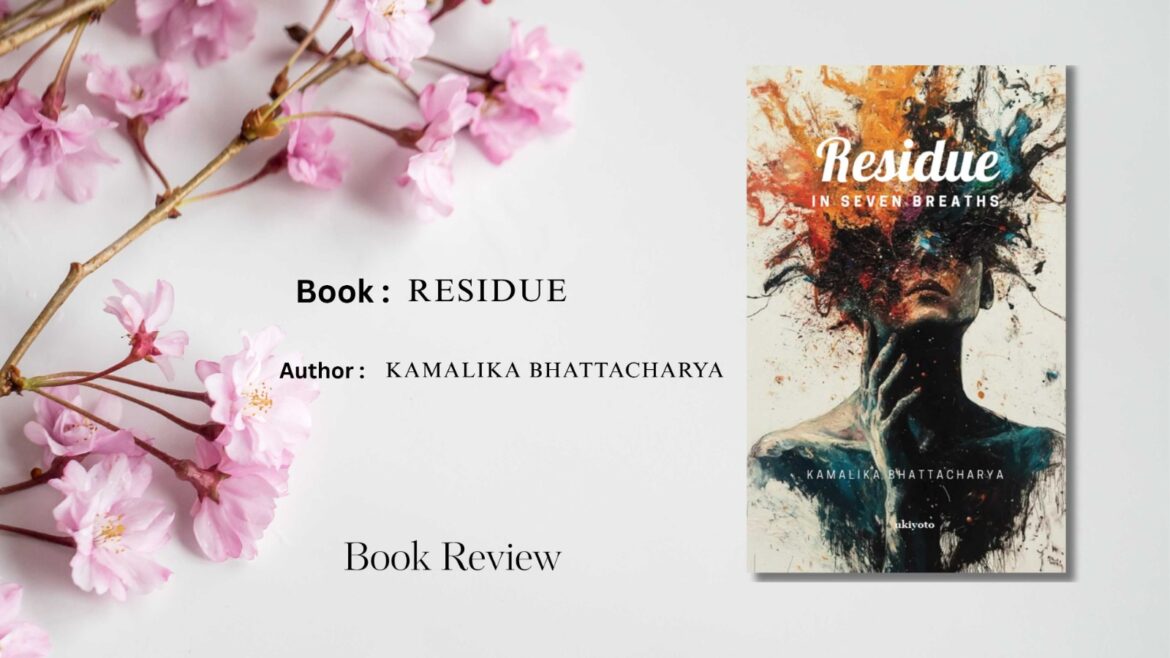
Some books tell stories that end with the final page. Others leave behind an emotional imprint that quietly lingers, returning in unexpected moments long after the reading is over. Residue by Kamalika Bhattacharya belongs firmly to the latter. It is not simply a book about love; it is an exploration of everything love leaves behind—the memories, the silences, the unanswered questions, and the quiet resilience that grows from carrying them. Rather than asking readers to believe that time erases emotional wounds, Residue gently reminds us that healing often comes not from forgetting but from learning to live with what remains.
The central idea of the book is both simple and profound: we do not move on from love; we move with its residue. That emotional residue appears in unfinished conversations, apologies spoken years too late, familiar places that awaken forgotten feelings, and moments when the past unexpectedly returns to sit beside us. Kamalika Bhattacharya transforms these everyday emotional experiences into compelling narratives that feel deeply personal while remaining universally relatable. The result is a work that resonates with anyone who has ever loved, lost, remembered, or wondered what might have been.
One of the book’s greatest strengths is its emotional sincerity. Kamalika does not rely on dramatic plot twists or exaggerated heartbreak to engage her readers. Instead, she understands that some of life’s deepest emotions emerge through ordinary moments. A pause in conversation, an unread message, a familiar melody, or an unexpected memory becomes enough to unlock an entire world of feeling. This quiet storytelling gives the book remarkable authenticity. Readers are never instructed how to feel; they are invited to discover their own emotions within the spaces between the words.
The writing itself reflects Kamalika Bhattacharya’s poetic sensibility. Every sentence carries a graceful rhythm, balancing literary elegance with emotional accessibility. Her prose is rich without becoming excessive, allowing the emotions to unfold naturally rather than being overwhelmed by elaborate language. There is a reflective quality throughout the narrative that encourages readers to slow down, revisit certain passages, and absorb the emotional weight hidden within seemingly simple observations.
Although Residue revolves around love, it avoids presenting romance as either idealized fantasy or tragic spectacle. Instead, love is portrayed as a deeply human experience filled with imperfections, misunderstandings, vulnerability, longing, and acceptance. The relationships in the book are not defined by whether they endure but by how they transform the people who experience them. This perspective offers a refreshing departure from conventional romantic narratives, replacing predictable endings with emotional truth.
The emotional progression within the stories is particularly compelling. Every chapter feels like another layer of understanding rather than merely another episode. Readers gradually realize that love is never confined to a single emotion. Joy often exists beside regret, hope accompanies sorrow, and acceptance emerges only after confronting both memory and loss. Kamalika allows these emotions to coexist naturally, reflecting the complexity of real human relationships.
Memory serves as one of the book’s most powerful themes. Rather than functioning as a simple recollection of the past, memory becomes an active presence that shapes identity and influences the present. The characters are not trapped by their memories, nor are they entirely free from them. Instead, they learn to understand themselves through the emotional traces left behind by their experiences. This nuanced portrayal makes the book deeply introspective without becoming overly philosophical.
Equally impressive is Kamalika’s ability to create emotionally believable characters. They are not extraordinary individuals navigating extraordinary circumstances; they are ordinary people confronting familiar emotional dilemmas. Their fears, hesitations, pride, longing, and moments of quiet courage make them feel remarkably authentic. Readers are likely to recognize fragments of themselves within these characters, whether through shared experiences or familiar emotional struggles.
Silence plays an equally significant role throughout Residue. Many of the book’s most moving moments occur not through spoken dialogue but through what remains unsaid. Kamalika understands that silence often communicates emotions more powerfully than words. Unfinished conversations become emotional landmarks, while delayed apologies reveal the lasting consequences of hesitation. This subtle treatment of silence adds remarkable depth to the storytelling and reinforces the book’s central message that absence often carries its own enduring presence.
The structure of the narrative also deserves appreciation. Kamalika’s background as both a poet and a writer of short fiction allows her to balance emotional intensity with disciplined storytelling. Each story contributes meaningfully to the larger emotional journey, creating a cohesive reading experience rather than a disconnected collection of reflections. The transitions between themes feel natural, allowing readers to move seamlessly through different emotional stages without losing narrative momentum.
Beyond romance, Residue is ultimately a meditation on emotional growth. It challenges the common belief that moving forward requires leaving the past behind. Instead, it argues that maturity comes from accepting our emotional history as an inseparable part of who we become. Love leaves marks upon every life it touches, and those marks need not be viewed as burdens. They can become sources of wisdom, empathy, and quiet strength.
Kamalika Bhattacharya’s literary voice continues to mature with remarkable confidence. Having established herself through poetry, short stories, and editorials, she demonstrates once again her gift for exploring the intricate emotional landscapes of human relationships. Her previous works have showcased her ability to blend passion, drama, and introspection, and Residue builds upon that foundation with greater emotional depth and narrative refinement.
What ultimately distinguishes Residue is its refusal to offer easy answers. It does not promise complete closure or effortless healing. Instead, it embraces the beautiful complexity of human emotion, acknowledging that some memories remain with us not because we are unable to let go, but because they have become part of our emotional identity. This compassionate understanding gives the book its lasting emotional power.
In an age where many love stories prioritize dramatic conflict and rapid resolution, Residue stands apart through its quiet confidence and emotional authenticity. It reminds readers that life’s most meaningful transformations often occur in silence, reflection, and acceptance rather than grand declarations. It is a thoughtful, beautifully written work that invites readers to revisit not only its pages but also their own memories with greater kindness and understanding.
Residue is more than a collection of stories about love—it is a moving exploration of the emotional echoes that shape every human heart. Kamalika Bhattacharya has crafted a deeply reflective and emotionally resonant work that lingers long after the final page, making it a rewarding read for anyone who believes that the greatest stories are not always about what ends, but about what quietly remains.