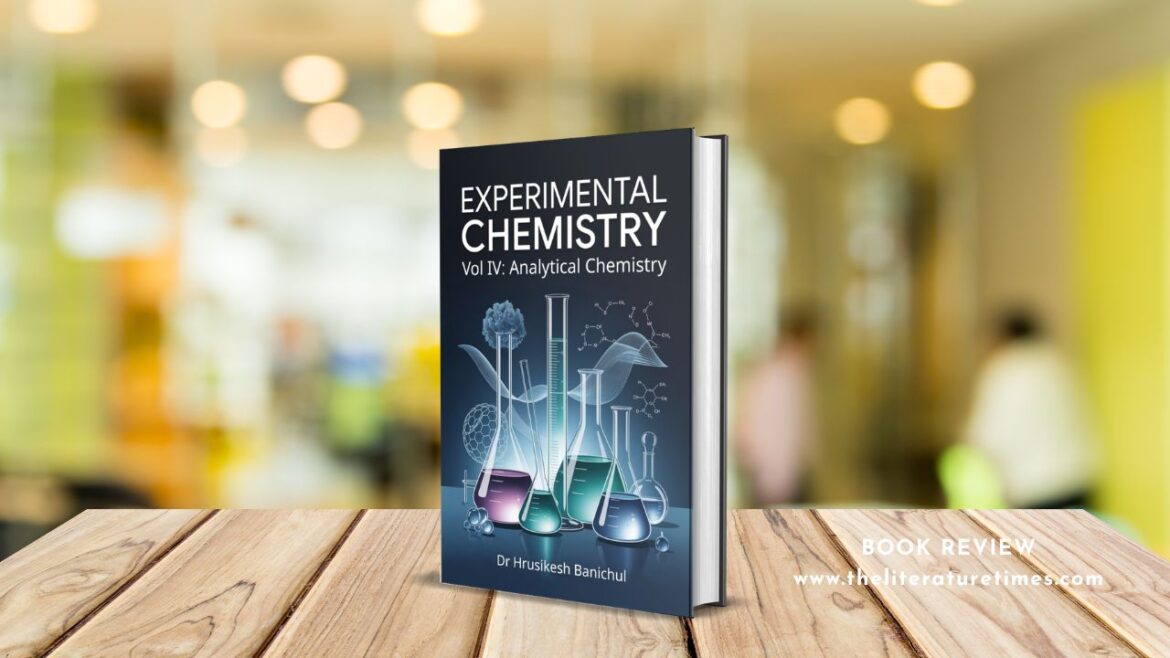
Experimental Chemistry Vol IV: Analytical Chemistry by Dr. Hrusikesh Banichul is a meticulously designed laboratory manual that stands as a valuable contribution to modern chemical education and applied analytical science. This volume is not merely a collection of experiments; it is a structured guide that connects theoretical chemistry with real-world applications, emphasizing precision, environmental responsibility, and data integrity.
The book primarily focuses on analytical chemistry, a branch that deals with the identification, separation, and quantification of chemical components. What makes this volume particularly significant is its strong emphasis on environmental monitoring and statistical validation of experimental results. In an era where environmental degradation and pollution have become global concerns, the author’s inclusion of water and soil quality analysis makes the book highly relevant for students, researchers, and professionals alike.
One of the most commendable aspects of this book is its comprehensive approach to instrumental analysis. Techniques such as spectrophotometry and chromatography are explained in a systematic and accessible manner. These methods form the backbone of modern analytical laboratories, and the author ensures that readers not only understand the operational procedures but also the scientific principles behind them. This dual approach enhances conceptual clarity and practical competence.
Another noteworthy strength of the volume lies in its focus on separation science. The detailed explanation of solvent extraction and spectrometric verification provides readers with a strong foundation in analytical separation techniques. These sections are particularly useful for students who are transitioning from basic chemistry to advanced laboratory work, where accuracy and method selection play a critical role.
A distinguishing feature of Experimental Chemistry Vol IV is its dedicated section on error analysis and statistical data interpretation. In scientific experimentation, results are meaningful only when they are reliable and reproducible. Dr. Banichul addresses this crucial aspect by introducing students to methods that help minimize experimental errors and improve the accuracy of data reporting. This integration of statistics with experimental chemistry significantly enhances the scientific rigor of the text.
The book also reflects the author’s extensive academic and research experience. Dr. Hrusikesh Banichul, with over fifteen years of expertise in teaching, industrial research, and applied R&D, brings a practical perspective to the subject. His background in sustainable catalysis and process development is evident in the structured and application-oriented approach of the book. The content is clearly designed to bridge the gap between laboratory learning and industrial application.
Furthermore, the author’s commitment to environmental responsibility is visible throughout the text. By emphasizing environmental testing of natural resources, the book encourages students to think beyond the laboratory and consider the broader impact of chemical processes on society and ecosystems. This makes the volume not only an academic resource but also a guide for responsible scientific practice.
In conclusion, Experimental Chemistry Vol IV: Analytical Chemistry is an essential resource for students of chemistry, researchers, and laboratory professionals. Its balanced integration of theory, practical methodology, instrumentation, and data analysis makes it a comprehensive and reliable reference. Dr. Banichul has successfully created a work that strengthens both the scientific understanding and analytical skills of its readers, making it a valuable addition to any chemistry curriculum or laboratory library.