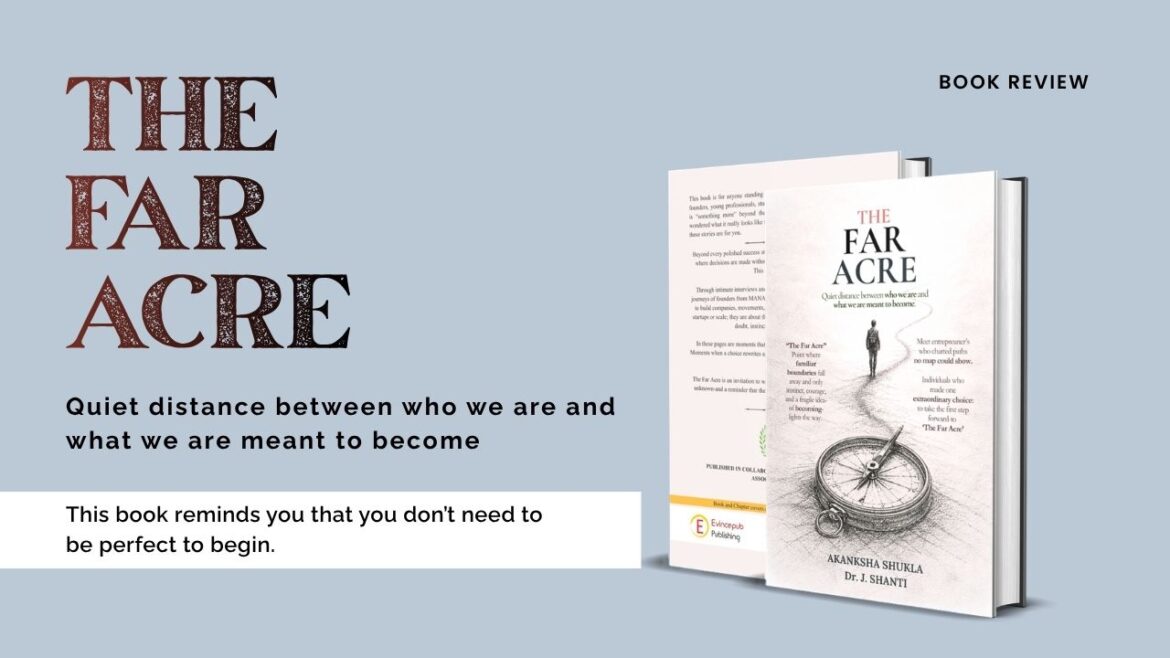
Title: The Far Acre
Author: Shukla, Dr. J. Shanti
ISBN: 9789373350646
Publisher: Evincepub Publishing
The Far Acre: Quiet Distance Between Who We Are and What We Are Meant to Become by Akanksha Shukla and Dr. J. Shanti is a deeply thoughtful and inspiring book that goes far beyond the usual idea of entrepreneurship. At first glance, it may seem like a collection of business stories, but as you start reading, it becomes clear that this book is really about people, their inner journeys, their struggles, and the quiet courage it takes to move forward when nothing is certain. The title itself is very meaningful. The “Far Acre” is not a physical place, but a space within every individual where growth begins. It is that moment in life when we step out of comfort, leave behind familiar paths, and choose to walk into something unknown. This idea runs through the entire book and gives it a very emotional and reflective tone. The authors have brought together real stories of entrepreneurs who are alumni of MANAGE, and what makes these stories special is their honesty. These are not polished success stories filled only with achievements. Instead, they show the real side of building something from scratch, including fear, doubt, failure, and small victories that slowly build into something meaningful. One of the strongest points of the book is its simple and clear writing style. The language is easy to understand, and the storytelling feels natural and engaging. It does not try to impress with complex words or technical terms. Instead, it focuses on connecting with the reader. This makes the book suitable not only for business students or entrepreneurs but also for anyone who is going through a phase of change or self-discovery. The stories feel relatable because they show that successful people are not very different from us. They are ordinary individuals who made one important choice to begin, even when they were not fully ready. This idea breaks the common myth that entrepreneurs are born with special talent or extraordinary confidence. The book clearly shows that what really matters is the willingness to take the first step and keep going despite challenges. Another important aspect of the book is how it connects personal growth with professional journeys. Each story is not just about building a company but also about building character. The entrepreneurs featured in the book come from different backgrounds and industries such as agriculture, food systems, technology, and social innovation, but they all share a common thread of courage and purpose. The book highlights how their personal values, relationships, and life experiences shaped their decisions. This makes the stories feel deeper and more meaningful. It is not just about what they achieved but about how they became who they are. The detailed storytelling also helps the reader understand the ground realities of entrepreneurship, especially in the Indian context. It shows how difficult it can be to work in sectors like agriculture where there are many challenges such as lack of infrastructure, financial limitations, and complex systems. At the same time, it also shows the impact that determined individuals can create when they focus on solving real problems. One of the most powerful parts of the book is how it presents failure and uncertainty. Instead of avoiding these topics, the authors bring them to the front. They show how setbacks are a natural part of the journey and how they help in learning and growth. This gives a very balanced and realistic view of entrepreneurship. It does not create false expectations but instead prepares the reader for what lies ahead. The book also talks about the importance of patience and long-term thinking. Many of the entrepreneurs in the book did not achieve success quickly. Their journeys took years of effort, learning, and adjustment. This is an important message in today’s fast-paced world where people often expect quick results. The book reminds us that meaningful work takes time and that the process is as important as the outcome. Another strong element is the emotional depth of the stories. The authors have not just focused on facts and events but have also captured the feelings and thoughts of the individuals. This makes the reader feel connected to the stories. At many points, the book feels like a conversation rather than a formal narrative. It invites the reader to reflect on their own life and choices. The idea of standing at the edge of the unknown is something that almost everyone can relate to. Whether it is choosing a career, starting something new, or making a personal decision, we all face moments where we are unsure but still feel the urge to move forward. The book speaks directly to these moments and offers a sense of comfort and encouragement. It does not give direct instructions or formulas for success, but it provides insights that help the reader think differently. This is what makes the book stand out from typical business books. It is not trying to teach in a strict way but is guiding through stories and experiences. The authors themselves bring a unique combination of perspectives. Akanksha Shukla’s background in social development and storytelling adds a human touch to the narratives, while Dr. J. Shanti’s academic and professional experience brings structure and depth. Together, they have created a book that is both thoughtful and practical. The book also highlights the role of institutions like MANAGE in shaping individuals. It shows how education and environment can influence thinking and open new possibilities. At the same time, it makes it clear that the real journey begins after that, when individuals step out into the real world and face its challenges. The structure of the book is also well planned. Each chapter focuses on a different story, but all of them connect to the central theme of the “Far Acre.” This creates a sense of continuity and keeps the reader engaged. Even though the stories are different, they all lead to a similar understanding that growth happens when we move beyond our comfort zone. The book also touches on the importance of values such as integrity, empathy, and responsibility. These qualities are shown through actions rather than just words, which makes them more impactful. In many ways, the book is also a reminder that success is not just about personal gain but about creating value for others. Many of the entrepreneurs in the book have worked in areas that benefit society, especially in rural and agricultural sectors. This adds a sense of purpose to their work and makes their journeys more meaningful. Overall, The Far Acre is a refreshing and meaningful read that offers much more than business lessons. It is a book about courage, patience, and self-discovery. It encourages readers to look within and think about their own “Far Acre,” the space where they can grow and become more than what they are today. It is especially helpful for young people who are confused about their path or afraid to take risks. The book gently tells them that it is okay to not have all the answers and that clarity often comes after we begin the journey. At the same time, it also offers valuable insights for experienced professionals by reminding them of the importance of staying grounded and connected to purpose. The simplicity of the language, the honesty of the stories, and the depth of the ideas make this book a memorable and impactful read. It is not just a book that you read once and forget. It is a book that stays with you and makes you think long after you have finished it.
Buy on Amazon: https://www.amazon.in/Far-Acre-distance-between-become/dp/9373350641
Review by Sameer Gudhate
For www.theliteraturetimes.com