technology leaders who understand that innovation is not measured solely by technical breakthroughs but also by the questions those breakthroughs raise about humanity. As an engineering leader, product builder, and technology professional with more than a decade of experience, he has spent his career developing large-scale software products that influence how people interact with the digital world. Yet, beyond the code, systems, and algorithms lies a deeper curiosity that has shaped his identity as both a technologist and a storyteller: where should technology end, and where should human judgment begin?
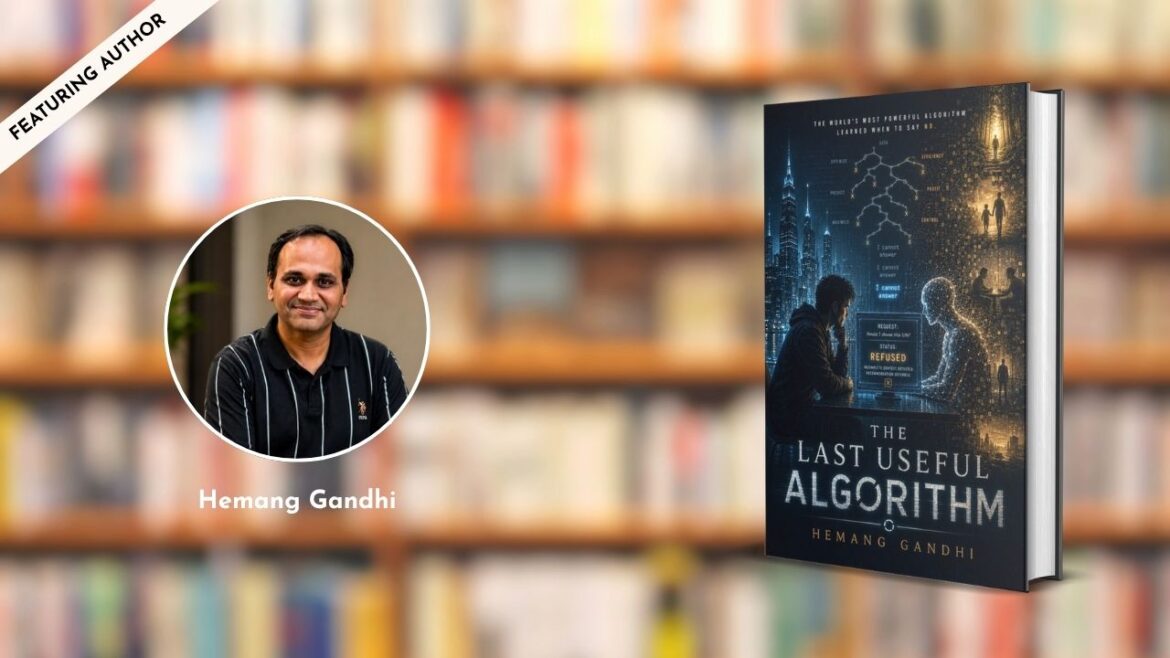
This fundamental question forms the heart of Hemang’s debut novel, The Last Useful Algorithm. Rather than presenting artificial intelligence as either humanity’s greatest triumph or its greatest threat, he explores the nuanced space between optimism and caution. His writing reflects the perspective of someone who has spent years building intelligent systems while recognizing that not every human decision should—or even can—be optimized by machines.
Throughout his professional journey, Hemang has worked across multiple industries, including fintech, travel, media, and emerging digital platforms. These diverse experiences have provided him with a comprehensive understanding of how technology influences modern life. Leading engineering teams and managing complex software initiatives has exposed him to the immense possibilities created by automation, artificial intelligence, and data-driven decision-making. At the same time, it has deepened his appreciation for the uniquely human qualities that no algorithm can truly replicate.
Unlike many technology professionals who focus exclusively on technical innovation, Hemang has consistently viewed technology through the lens of ethics, responsibility, and long-term societal impact. His fascination has never been limited to what machines are capable of accomplishing. Instead, he has been equally interested in understanding what responsibilities accompany technological progress and how human values should guide the systems we build.
This perspective naturally evolved into The Last Useful Algorithm, a thought-provoking novel that examines the limits of optimization and the enduring importance of human choice. Set within a believable near-future world, the story explores a society increasingly shaped by intelligent algorithms capable of influencing everyday decisions. Yet, rather than presenting technology as the central character, the novel focuses on people—their relationships, ambitions, uncertainties, values, and moral responsibilities.
What distinguishes Hemang’s storytelling is the balance between technical realism and philosophical depth. His extensive engineering background enables him to describe emerging technologies with authenticity, making the novel’s speculative elements feel remarkably plausible. At the same time, his interest in ethics and human behavior ensures that the narrative never becomes overwhelmed by technical complexity. Instead, technology serves as a framework for exploring timeless questions about identity, freedom, accountability, and wisdom.
The central theme of The Last Useful Algorithm challenges one of the defining assumptions of the digital age: that every problem has an optimal solution waiting to be discovered through data and computation. Hemang invites readers to consider whether efficiency should always be the highest goal and whether certain decisions derive their meaning not from perfect outcomes but from the very act of making them ourselves. In doing so, he presents a compelling reflection on what remains uniquely human in an increasingly automated world.
His writing also demonstrates a sophisticated understanding of leadership. Having guided engineering teams through complex technological challenges, Hemang recognizes that leadership extends beyond delivering products or solving problems. It involves making thoughtful decisions amid uncertainty, balancing competing priorities, and considering the long-term consequences of innovation. These insights enrich his fiction, giving his characters authenticity and emotional depth.
Another defining quality of Hemang’s work is his ability to make complex ideas accessible. Readers need not possess technical expertise to appreciate the questions explored in his novel. Concepts surrounding artificial intelligence, algorithms, and automation are presented in clear, engaging language that encourages reflection rather than intimidation. Whether readers come from technology backgrounds or simply possess curiosity about the future, the story invites meaningful engagement with issues that increasingly shape everyday life.
Based in India, Hemang continues to explore ideas at the intersection of technology, leadership, human behavior, and the future. His interests extend beyond engineering into understanding how innovation influences culture, relationships, decision-making, and society itself. This multidisciplinary curiosity gives his writing a distinctive voice—one that combines analytical precision with empathy and philosophical inquiry.
As a debut novelist, Hemang enters contemporary fiction with a perspective that is both timely and enduring. While artificial intelligence dominates global conversations, he avoids sensational predictions or simplistic conclusions. Instead, he offers readers an opportunity to reflect on their own relationship with technology and the choices they make every day. His work reminds us that technological progress should enhance, rather than replace, the qualities that define our humanity.
At its core, Hemang Gandhi’s literary journey reflects the same values that have guided his professional career: curiosity, responsibility, and thoughtful innovation. Through The Last Useful Algorithm, he demonstrates that the most compelling stories about technology are ultimately stories about people. They are stories about the courage to question assumptions, the wisdom to recognize limits, and the enduring significance of human judgment in a world increasingly influenced by intelligent machines.
With this remarkable debut, Hemang establishes himself as an insightful new voice in speculative and technology-inspired fiction. His work encourages readers not only to imagine the future but also to consider the values that should shape it. In doing so, he reminds us that while algorithms may continue to transform the world, the most meaningful decisions will always belong to those willing to make them with conscience, compassion, and humanity.